
Blog header

California State Income Tax: Complete 2026 Guide

Thursday, Jun 11, 2026

· by Alexander Caldwell – Financial Expert
California State Income Tax: Complete 2026 Guide

What Is California State Income Tax?

California state income tax is a mandatory tax levied on the earnings of individuals, trusts, and estates who reside in or derive income from the state of California. Managed by the California Franchise Tax Board (FTB), this revenue is a foundational pillar for funding public infrastructure, education, healthcare, and environmental initiatives across the state.

How California Income Tax Works: The Progressive Bracket System Explained

California relies on a progressive tax structure, meaning that your state income tax rate scales upward as your taxable income increases. Under this tax structure, your total income is broken down into segments, with each segment taxed at its corresponding marginal rate rather than applying a single flat rate to your entire earnings. This system ensures that higher earners contribute a larger percentage of their income back to the state.

California vs. Federal Income Tax: Key Differences

While both systems utilize progressive tax brackets, California’s tax code deviates significantly from federal guidelines in several critical areas:

  1. Capital Gains: Unlike the federal government, which offers preferential lower tax rates for long-term capital gains, California taxes all investment gains and capital gains as ordinary income at your standard marginal rate.
  2. Social Security Benefits: Social Security income is completely exempt from state taxation in California, providing a major relief for retirees, whereas the federal government may tax a portion of it.
  3. Standard Deductions: California establishes its own specific standard deduction thresholds and personal tax credits, which do not mirror the federal amounts.

Is California a Tax-Friendly State? (Tax Foundation Insights)

According to data and evaluations from the Tax Foundation, California regularly ranks as having one of the most demanding tax climates in the United States. Due to its multi-layered progressive bracket system and high statutory rates for upper-income earners, the overall tax burden is substantial. However, for low-to-moderate-income families, the effective tax rate can be relatively low because of generous state credits like the California Earned Income Tax Credit (CalEITC).

Who Has to File California State Income Tax?

Determining whether you need to file a California state tax return depends on three primary factors: your residency status, your filing status, and your total gross income (or California Adjusted Gross Income - CA AGI).

The Franchise Tax Board mandates that full-year residents, part-year residents, and even nonresidents must file a return if their gross income from all sources crosses the state's minimum threshold for their specific age and filing configuration.

A unique aspect of California tax law involves Registered Domestic Partners (RDPs). Under California's tax rules, individuals in a legally registered domestic partnership possess the same state tax rights and responsibilities as married couples. Therefore, RDPs must file their California state income taxes using married filing statuses (such as Married/RDP Filing Jointly or Married/RDP Filing Separately), even though federal tax laws do not recognize domestic partnerships in the same manner.

Additionally, part-year residents and nonresidents must file a return if they earned any California-sourced income—such as wages for physical work performed within state lines, business operations located in California, or gains from selling real property in the state—that exceeds the pro-rated standard deduction limits.

California State Income Tax Rates and Brackets

California features one of the most complex and expansive state income tax structures in the nation, consisting of nine distinct marginal tax brackets. For the 2026 tax year, these brackets scale progressively from a base rate of 1% up to a maximum standard rate of 12.3%.

The exact income thresholds for each bracket are adjusted dynamically every year to account for inflation, preventing taxpayers from slipping into higher brackets solely due to cost-of-living adjustments.

However, the statutory maximum does not stop at 12.3%. For high-net-worth individuals, California imposes an additional 1% Mental Health Services Tax on all taxable income that exceeds $1,000,000. When combined with the highest marginal bracket, this brings California's true top marginal state income tax rate to 13.3%—the highest state-level income tax rate in the country. This tier directly impacts luxury earners, corporate executives, and individuals realizing significant one-time capital gains, shaping your total tax liability dramatically based on how your income falls into these brackets.

California Residency Status and How It Affects Your Taxes

Your legal residency status dictates exactly how much of your income California is allowed to tax. The Franchise Tax Board closely audits residency claims, dividing taxpayers into three explicit categories:

  1. Full-Year Residents: If you are a permanent resident of California, the state taxes your worldwide income. It does not matter if your money was earned in California, another state, or internationally; your global earnings are subject to California's progressive tax brackets. The state utilizes the "closest connection" test to review factors like the location of your primary home, bank accounts, driver's license, and professional ties to determine permanent residency.
  2. Part-Year Residents: If you moved into or out of California during the tax year, you are classified as a part-year resident. In this scenario, California taxes all income you received during the portion of the year you were a resident, plus any California-sourced income you earned during the months you lived outside the state.
  3. Nonresidents: If you live entirely outside of California but performed contract work, owned a revenue-generating business, or sold real estate within the state, you are a nonresident. Nonresidents are taxed only on their California-sourced income. Income earned from your home state remains completely exempt from California tax liability.

California Filing Status Options

Choosing the correct filing status on your California tax return dictates your standard deduction amount and outlines the specific income thresholds for your progressive tax brackets. The California Franchise Tax Board (FTB) generally mirrors federal options, but with critical state-specific distinctions.

The primary filing statuses available are:

  1. Single: For taxpayers who are unmarried, legally separated, or divorced as of the last day of the tax year.
  2. Married Filing Jointly: For married couples who choose to combine their income and file a single joint return, which typically offers more favorable tax thresholds.
  3. Married Filing Separately: Used when spouses choose to keep their tax liabilities independent. However, because California is a community property state, income earned during the marriage must generally be split 50/50, adding layers of calculation complexity.
  4. Head of Household: Available to unmarried individuals who pay more than half the cost of keeping up a home for a qualifying dependent. The FTB heavily scrutinizes this status due to high rates of error and non-compliance.

Special Rules for Registered Domestic Partners (RDPs)

A major differentiator in California is the treatment of Registered Domestic Partners (RDPs). Because the federal government (IRS) does not recognize domestic partnerships, these couples must file as "Single" or "Head of Household" on their federal returns. Conversely, California law treats RDPs identically to married couples. Therefore, RDPs must file their state return using Married/RDP Filing Jointly or Married/RDP Filing Separately statuses. This creates a unique administrative scenario where taxpayers must prepare dummy federal returns to correctly compute their California Adjusted Gross Income (CA AGI).

Which California Tax Form Should You Use?

To simplify the filing process, the FTB provides three primary tax forms catered to different levels of income complexity and residency situations.

  1. Form 540 (Resident Income Tax Return): This is the standard form used by most full-year California residents. It is mandatory if your income exceeds certain thresholds, if you plan to itemize deductions, or if you have complex income sources such as capital gains, business revenue, or out-of-state income.
  2. Form 540 2EZ (California Resident Income Tax Return): Designed for full-year residents with straightforward financial situations. To qualify, your income must come solely from wages, salaries, tips, or taxable interest, and your total income must fall below specific state limits. It provides the quickest, most streamlined filing experience.
  3. Form 540NR (Nonresident or Part-Year Resident Income Tax Return): If you lived in California for only part of the year or if you were a complete nonresident who earned California-sourced income (such as remote contract work done for a physical CA location or selling CA real estate), you must file this form to determine what portion of your total income is taxable by the state.

California Taxable Income: What Gets Taxed and What Doesn't

California determines taxable income using its own statutory guidelines, meaning your federal Adjusted Gross Income (AGI) will likely require modifications before arriving at your California taxable income.

What Gets Taxed

  1. Wages, Salaries, and Self-Employment: All active income earned while physically present in the state is subject to standard progressive brackets.
  2. Investment Income and Capital Gains: In sharp contrast to federal tax laws, California treats all capital gains as ordinary income. Whether you hold an asset for ten days or ten years, your profits from selling stocks, cryptocurrency, or real estate are taxed at your full marginal state rate (up to 13.3%).
  3. Retirement Account Withdrawals: Distributing funds from private retirement accounts—such as a 401(k), 403(b), or traditional IRA—is treated as ordinary taxable income by the state.

What Is Exempt from Tax

  1. Social Security Benefits: California stands out as highly retiree-friendly in this specific regard—Social Security retirement benefits are 100% exempt from California state income tax.
  2. Municipal Bond Interest: Interest earned from bonds issued by the State of California or local California municipalities is entirely tax-free.
  3. Railroad Retirement and Specific Military Pay: Federal exemptions protect railroad retirement benefits, and specific active-duty military combat pay is protected from state taxation under California rules.

California Income Tax Deductions and Credits

Taxpayers can aggressively lower their final tax liability by navigating California's available standard deductions, itemized limitations, and specialized tax credits.

Standard vs. Itemized Deductions

The state allows you to claim a flat standard deduction based on your filing status, which is adjusted annually for inflation. Alternatively, you can choose to itemize your deductions if your individual allowable expenses (such as mortgage interest, disaster losses, and charitable donations) exceed the standard deduction amount.

  1. The SALT Cap Effect: While federal tax law caps the State and Local Tax (SALT) deduction at $10.000, California itemized rules do not allow you to deduct state income taxes paid on your state return. However, navigating itemized deductions remains critical for high-income earners minimizing their net state exposure.

Major California Tax Credits

Tax credits provide a dollar-for-dollar reduction of your actual tax bill, making them incredibly valuable. California features several powerful credits:

  1. California Earned Income Tax Credit (CalEITC): A highly impactful refundable credit designed to provide substantial financial relief to low-income working individuals and families.
  2. Young Child Tax Credit (YCTC): Families who qualify for the CalEITC and have a child under the age of 6 receive an additional refundable credit boost.
  3. Nonrefundable Renter's Credit: A modest credit available to qualified California residents who rent their primary property and whose adjusted gross income falls below statutory thresholds.


AC

Alexander Caldwell – Financial Expert

Alexander Caldwell is a financial expert specializing in payroll management, with over 12 years of experience in the industry. He earned his bachelor's degree in finance from the University of California, Berkeley. Throughout his career, Alexander has worked with businesses of all sizes, helping them streamline payroll processes and ensure compliance with tax regulations. At Online Pay Stub, he is dedicated to providing accurate and reliable payroll solutions, making it easier for employees and businesses to manage their financial records efficiently.
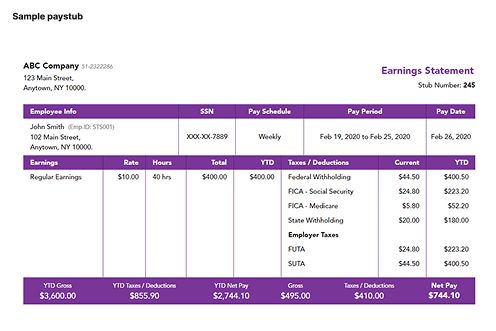
Sample Paystub
Enter Your Information icon

Enter Your Information

Select Your Favorite Theme icon

Select Your Favorite Theme

Download Your Stub! icon

Download Your Stub!

LogoCreate Online Paystub

Comments (0)

Loading comments...

Leave a Comment

0/2000
Utah State Taxes: What Every Resident Needs to Know in 2026

Jun 12, 2026

Utah State Taxes: What Every Resident Needs to Know in 2026

Utah runs one of the most straightforward tax systems in the country. A single flat income tax rate, a below-average property tax, and a fully funded public pension system put Utah in a strong fiscal position that benefits residents. The state ranks 15th overall on the 2026 State Tax Competitiveness Index, placing it comfortably in the top third nationally. What makes Utah's system worth understanding in detail is not just the headline rate — it is the credit structure that meaningfully reduces the tax burden for retirees, families, and lower-income earners in ways that the flat rate alone does not show.

Utah Income Tax Rate (2026)

Utah taxes individual income at a flat rate of 4.45% for 2026. Every resident pays the same percentage on their taxable income regardless of how much they earn. The same 4.45% rate applies to the corporate income tax as well, keeping the business and individual tax structures aligned.

For a single filer earning $65,000 with the federal standard deduction applied as the starting point for Utah taxable income:

ItemAmount
Gross income$65,000
Federal standard deduction (single)$15,750
Utah taxable income$49,250
Utah tax owed (4.45%)$2,191.63

Utah does not have its own standard deduction separate from the federal figure. Your Utah taxable income starts from your federal adjusted gross income with Utah-specific additions and subtractions applied from there. This tight conformity with federal rules keeps compliance relatively simple for most filers.

Utah raises revenue through three primary channels: individual income taxes account for 30.5% of total state and local tax revenue, general sales taxes account for 29.9%, and property taxes contribute 23.0%. The state collects $6,239 per capita in state and local taxes and carries $7,036 in per capita debt. Notably, Utah's public pension plans are 100% funded — the only state in the country at that level, which reflects decades of disciplined fiscal management.

Does Utah Tax Social Security Benefits?

Yes, but with meaningful credits that offset the tax for most retirees. Utah technically includes Social Security benefits in taxable income when those benefits are part of your federal adjusted gross income. The flat 4.45% rate then applies. However, the state offers a Social Security Benefits Credit that eliminates or substantially reduces that tax for qualifying income levels.

The full credit is available to:

Filing StatusFull Credit Income Threshold
Single$54,000 or less
Married Filing Separately$45,000 or less
Married Filing Jointly$90,000 or less
Head of Household / Qualifying Widow(er)$90,000 or less

Above these thresholds, the credit is reduced by $1 for every $4 of income until it phases out completely. For retirees with modest income, the practical effect is that Social Security benefits face little or no Utah income tax. For higher-income retirees, some tax will apply after the credit phases out.

One important restriction: you cannot claim both the Social Security Benefits Credit and the Retirement Tax Credit in the same year. You choose whichever credit produces the greater benefit for your situation.

Utah Retirement and Pension Income Tax

Most retirement and pension income received while a Utah resident is taxed at the flat 4.45% rate. This includes 401(k) and traditional IRA distributions, private pension payments, and annuity income. Utah offers no broad retirement income exclusion comparable to what Georgia ($65,000 exclusion at age 65+) or North Carolina (Bailey settlement exemptions) provide.

The primary relief mechanism for retirees is the Retirement Tax Credit, available to taxpayers born on or before December 31, 1952. The credit is worth up to $450 per taxpayer, which at a 4.45% rate corresponds to approximately $10,112 of retirement income being effectively untaxed.

Two restrictions apply: you cannot claim the Retirement Tax Credit if you are also claiming the Social Security Benefits Credit or the Military Retirement Tax Credit. Utah residents choose the single credit that provides the greatest benefit.

Military retirement income: Utah provides a tax credit for taxable military retirement pay. The credit equals the amount of taxable military retirement pay multiplied by the state's 4.45% income tax rate — effectively eliminating the Utah income tax on that income. Nonresident service members do not pay Utah tax on active-duty military pay, even when earned in Utah.

Utah Capital Gains Tax

Utah does not have a separate capital gains tax rate. Both short-term and long-term capital gains are treated as ordinary income and taxed at the standard flat rate of 4.45%. When capital gains are included in your federal adjusted gross income, they flow directly into your Utah taxable income and face the same rate as wages.

There is no preferential rate for long-term gains at the state level and no capital gains exemption for primary residence sales beyond what the federal exclusion provides. A Utah resident selling a rental property with a $150,000 gain owes federal capital gains tax at the applicable rate plus $6,675 to Utah (4.45% of $150,000).

Utah Sales Tax (2026)

Utah's state sales tax rate is 6.10%, which already includes a mandatory 1.25% local add-on that is applied statewide. Local governments layer additional rates on top of that, bringing the average combined state and local sales tax to 7.19% according to Tax Foundation data. AARP reports the average combined rate at 7.42% — the difference reflects methodological variations in how local rates are weighted.

Sales tax rates on vehicles range from 6.35% to 8.25% depending on the county of purchase. Gasoline-powered passenger vehicles require annual registration fees ranging from $100 to $300, with alternative-fuel vehicles and heavy vehicles facing higher fees.

Key sales tax exemptions in Utah:

  1. Prescription drugs: Exempt
  2. Medical equipment: Exempt
  3. Newspapers: Exempt
  4. Groceries: Utah taxes food at a reduced rate rather than fully exempting it

Alcohol: Utah charges its standard sales tax of 4.85% plus applicable local sales taxes on beer, wine, and spirits. Utah operates a state-controlled liquor system — spirits and wine are sold through state-run stores, while beer with lower alcohol content is available through grocery and convenience stores.

No lottery: Utah does not have a state lottery. Winnings from lotteries in other states are subject to Utah income tax at the flat 4.45% rate to the extent they are included in your federal adjusted gross income.

Utah Property Tax (2026)

Utah has one of the lowest property tax rates in the country. The effective property tax rate on owner-occupied homes is 0.48%, well below the national median of approximately 0.89%. The median property tax paid statewide is roughly $2,143.

County-level rates vary significantly:

CountyEffective RateMedian Tax Paid
Garfield County0.27% (lowest)Low
Rich CountyLow rate$859 (lowest median)
Emery and Carbon Counties0.62% (highest)Higher
Summit CountyMid-high$3,701 (highest median)

Utah's property tax system uses an assessed value approach. The state does not offer a homestead exemption in the traditional sense, but the combination of a low statutory rate and assessed-value limitations keeps bills manageable for most homeowners.

For context, a home worth $450,000 in Utah at a 0.48% effective rate generates an annual property tax bill of approximately $2,160. The same home in Texas at a 1.60% effective rate would cost $7,200 per year. Utah's property tax is a genuine and measurable advantage for homeowners, particularly given the state's rising home values.

Utah Gas Tax, Cigarette Tax, and Excise Taxes (2026)

Gas tax: Utah's gas tax is 38.55 cents per gallon according to Tax Foundation 2026 data. AARP reports the rate at 37.9 cents per gallon, a slight discrepancy reflecting different measurement dates. The federal gas tax adds 18.4 cents per gallon on top of Utah's state levy. Utah's rate is above average for the Mountain West region.

Cigarette excise tax: Utah charges $1.70 per pack of 20 cigarettes. Combined with the federal excise tax of $1.0066 per pack, the total cigarette tax burden is approximately $2.71 per pack before retail sales tax. Utah has historically maintained higher tobacco taxes as part of a public health policy rooted in the state's demographics and cultural norms.

Alcohol excise taxes: Utah imposes excise taxes on beer, wine, and spirits in addition to the standard sales tax on those products. Because most alcohol sales flow through state-controlled stores, the pricing structure reflects both excise taxes and markup policies set by the Utah Department of Alcoholic Beverage Services.

Utah Estate and Inheritance Tax

Utah has no estate tax and no inheritance tax. Assets passed to heirs at death are not subject to any Utah state tax, regardless of the size of the estate. The federal estate tax still applies to estates above the $15 million federal exemption threshold in 2026, but Utah adds nothing on top of that federal obligation.

For the vast majority of Utah residents, estate planning is driven entirely by federal rules. Utah's absence of a state-level estate tax removes one layer of planning complexity and cost compared to states like Oregon (which taxes estates above $1 million) or Massachusetts (which taxes above $2 million).


SEE MORE
North Carolina State Taxes: What Every Resident Needs to Know in 2026

Jun 12, 2026

North Carolina State Taxes: What Every Resident Needs to Know in 2026

North Carolina has spent the last decade systematically cutting and simplifying its tax structure. The state replaced a progressive income tax with a flat rate in 2014, repealed its estate tax, and has been reducing the flat rate every year since. For 2026, that reduction hits its current endpoint at 3.99%. Combined with a below-average property tax rate, a low corporate tax, and exemptions for Social Security income, North Carolina has quietly become one of the more competitive tax environments in the Southeast. Here is a full breakdown of what residents actually pay.

North Carolina Income Tax Rate (2026)

North Carolina taxes individual income at a flat rate of 3.99% for tax year 2026. Every filer pays the same percentage regardless of how much they earn. A single person earning $40,000 and a married couple earning $400,000 both pay 3.99% on their taxable income.

This rate is the result of a phased reduction plan enacted by the state legislature. The trajectory over recent years:

Tax YearFlat Rate
20244.50%
20254.25%
20263.99%

For a single filer earning $70,000 with the standard deduction applied, the math looks like this:

ItemAmount
Gross income$70,000
Standard deduction (single)$12,750
NC taxable income$57,250
NC tax owed (3.99%)$2,284.28

North Carolina's tax system ranks 13th overall on the 2026 State Tax Competitiveness Index, placing it in the top quarter of states nationally. The state raises revenue primarily through individual income taxes (29.0% of total), general sales taxes (28.8%), and property taxes (22.3%).

North Carolina Standard Deduction and Itemized Deductions

North Carolina's standard deduction for the 2025 tax year is $12,750 for single filers and $25,500 for joint filers. There is no personal exemption for filers, spouses, or dependents. The standard deduction is the simplest route for most North Carolina taxpayers.

If your deductible expenses exceed the standard deduction, you can itemize. North Carolina allows itemized deductions for:

  1. Charitable contributions
  2. Mortgage interest (capped at $20,000 combined with property taxes)
  3. Property taxes (capped at $20,000 combined with mortgage interest)

Most other deductions that existed before the 2013 tax reform are no longer available, including the Net Business Income deduction and the College Savings Program deduction. The result is a simpler system, but one with fewer levers for tax planning compared to states with broader itemized deduction menus.

Is Social Security Income Taxed in North Carolina?

No. North Carolina does not tax Social Security benefits. Regardless of how much you receive or what your other income sources are, your Social Security income is fully exempt from North Carolina state income tax and is not reported on your state return.

Federal taxes on Social Security still apply based on your provisional income. If your combined income (adjusted gross income plus tax-exempt interest plus half your Social Security benefits) exceeds $25,000 as a single filer or $32,000 as a married couple, a portion of your benefits becomes federally taxable. North Carolina adds nothing on top of that federal liability.

How North Carolina Taxes Retirement and Pension Income

Most retirement income is taxable in North Carolina at the flat 3.99% rate for tax year 2026. This includes distributions from 401(k) plans, traditional IRAs, and private pensions. The same rate applies regardless of your age or the size of your withdrawal.

There are two important exceptions worth knowing:

State employee and teacher pensions: Retirees from the North Carolina Teachers' and State Employees' Retirement System and the North Carolina Consolidated Judicial Retirement System may be able to exclude their retirement benefits from state income tax if they qualify under the Bailey settlement, which applies to vested members as of August 12, 1989.

Military retirement pay: Qualifying military retirees who served at least 20 years, or who retired due to a disability, can deduct their military retirement pay from North Carolina taxable income. A service member's spouse may also be eligible for certain deductions. Details are on the North Carolina Department of Revenue website.

North Carolina Capital Gains Tax

North Carolina does not have a separate capital gains tax rate. Both short-term and long-term capital gains are treated as ordinary income and taxed at the flat 3.99% state income tax rate for 2026. There is no preferential rate for long-term capital gains at the state level.

This contrasts with the federal system, where long-term capital gains (assets held more than one year) are taxed at 0%, 15%, or 20% depending on income. A North Carolina resident selling an investment property at a $200,000 gain owes federal long-term capital gains tax at the applicable rate plus 3.99% to North Carolina on that same gain.


North Carolina Sales Tax (2026)

North Carolina's state sales tax rate is 4.75%. Every county in the state adds its own local rate on top, ranging from 2% to 2.75%, bringing the total combined rate to between 6.75% and 7.50% depending on where you are. The average combined rate statewide is approximately 7%.

Selected county combined rates:

CountyCombined Rate
Avery, Brunswick, Camden, Dare and others6.75%
Most North Carolina counties7.00%
Alamance, Chatham, Durham, Orange, Wake7.50%
Cabarrus, Mecklenburg7.25%

Key exemptions and special rates:

  1. Groceries: Exempt from the state 4.75% rate, but subject to a 2% local tax
  2. Candy and soda: Taxed at the full rate (not treated as grocery staples)
  3. Prescription medications: Exempt
  4. Over-the-counter drugs: Not exempt, taxed at the full rate
  5. Prepared food: Taxed at 9%

The 9% rate on prepared food is notably high and applies broadly to restaurant meals, takeout, and food sold ready to eat.

North Carolina Property Tax (2026)

North Carolina's effective property tax rate is 0.66% of a home's assessed value, below the national median of approximately 0.89%. The typical homeowner in North Carolina pays about $2,044 annually in property taxes. Rates vary considerably by county:

  1. Lowest rate: Swain County at 0.22%
  2. Highest rate: Orange County at 0.96%
  3. Lowest median tax paid: Bertie County at $778
  4. Highest median tax paid: Orange County at $4,162

Property taxes are assessed and collected entirely at the county level. Counties also tax motor vehicles and personal property such as business equipment and machinery. North Carolina's Tag and Tax Together program combines annual vehicle registration renewal and vehicle property tax into a single payment made to the Division of Motor Vehicles.

Property tax breaks for older and disabled residents:

North Carolina offers three programs, though only one can be used at a time:

Homestead exemption: Available to residents age 65 or older who are totally and permanently disabled with 2025 income of $37,900 or less. The state excludes the greater of $25,000 or 50% of the appraised home value from property taxes.

Circuit Breaker program: Allows qualifying homeowners to limit property taxes to a percentage of their income. If your 2025 taxable income did not exceed $37,900, your property taxes are capped at 4% of your income. If income falls between $37,900 and $56,850, the cap is 5%. Taxes above those limits are deferred rather than forgiven and become due upon sale, transfer, or change of primary residence. The application deadline is June 1, 2026.

Veterans exemption: Honorably discharged veterans with a service-connected disability, or their never-remarried surviving spouse, can exclude $45,000 of appraised home value from property taxes. There is no age or income limit for this program.

North Carolina Gas Tax and Excise Taxes (2026)

Gas tax: North Carolina's motor fuels tax is 40.55 cents per gallon on regular gasoline, one of the higher state gas taxes in the Southeast. The Tax Foundation reports the rate as 41.25 cents per gallon for 2026. Diesel is taxed at the same rate. In most cases, the motor fuels tax replaces sales tax on fuel, though sales and use tax may apply in certain refunded fuel situations.

Cigarette tax: North Carolina's cigarette excise tax is $0.45 per pack of 20 cigarettes, well below the national average. The federal cigarette excise tax adds $1.0066 per pack.

Alcohol taxes:

BeverageExcise Tax
Beer$0.62 per gallon
Unfortified wine$0.26 per liter
Fortified wine$0.29 per liter
Liquor30% tax; sold only in state-run ABC stores

North Carolina operates a state-controlled liquor system. Spirits are sold exclusively through Alcoholic Beverage Control stores and taxed at 30% on top of the wholesale price before retail markup and sales tax.

Unauthorized substances tax: North Carolina has an unusual excise tax on illegal substances, including marijuana, cocaine, and illicit alcohol. Anyone caught possessing unauthorized substances has them confiscated and must pay a separate excise tax within 48 hours. This is one of a small number of such taxes that exist across the country.

North Carolina Estate and Inheritance Tax

North Carolina has no estate tax and no inheritance tax. Both were repealed as part of the 2013 Tax Simplification and Reduction Act. Heirs who receive assets from a North Carolina decedent owe no state tax on what they inherit.

The federal estate tax still applies to estates above the federal exemption threshold of $15 million per individual in 2026. For the vast majority of North Carolina estates, no tax applies at either the state or federal level.

Lottery winnings: North Carolina taxes lottery winnings as ordinary income at the state's flat rate of 4.25% for tax year 2025 and 3.99% for 2026. The state also withholds 24% for federal income taxes on winnings above $5,000.


SEE MORE
Nevada State Income Tax: What Every Resident and Newcomer Needs to Know in 2026

Jun 12, 2026

Nevada State Income Tax: What Every Resident and Newcomer Needs to Know in 2026

Nevada collects no personal income tax. That single fact drives more relocation decisions, retirement plans, and business conversations about the Silver State than any other. But zero income tax does not tell the whole story. Nevada funds its government through sales taxes, excise taxes, a gross receipts tax on businesses, and a gaming and hotel industry tax structure that most other states simply do not have. Here is a clear breakdown of what you actually pay living in Nevada in 2026.

Does Nevada Have a State Income Tax?

No. Nevada does not impose a personal income tax of any kind. Wages, salaries, freelance income, investment earnings, capital gains, retirement distributions, and lottery winnings are all completely free from state income tax. Nevada is one of nine states with no personal income tax, alongside Florida, Texas, Wyoming, South Dakota, Alaska, Tennessee, New Hampshire, and Washington.

This protection runs deep. Nevada's constitution bars the legislature from enacting a personal income tax without voter approval, giving residents and businesses a high degree of long-term certainty. For someone earning $150,000 a year who moves from California, where the top marginal rate reaches 13.3%, the annual state income tax savings can exceed $10,000 or more depending on deductions and filing status.

The tradeoff is real, though. Nevada leans hard on sales taxes, excise taxes, and gaming revenues to finance state services. Understanding those costs is essential before concluding that Nevada is simply a low-tax state.

Nevada Sales Tax (2026)

Nevada's state sales tax rate is 6.85%. Local governments layer their own rates on top, pushing the average combined state and local rate to 8.24%, which is well above the national average. At the county level, rates range from a low of 6.85% in Esmeralda, Eureka, and Mineral counties to a high of 16.89% in Washoe County, though the 16.89% figure reflects special district taxes that apply only in specific situations and not to all retail transactions.

More typical combined rates for major population centers:

CountyCombined Sales Tax Rate
Clark County (Las Vegas)8.375%
Washoe County (Reno)Up to 16.89% (varies by district)
Churchill County7.6%
Douglas County7.1%
Lyon County7.6%

Most goods and merchandise are subject to sales tax. Key exemptions include groceries purchased for home consumption, prescription drugs, newspapers, prosthetic devices, and other durable medical equipment. Prepared food sold at restaurants is taxable. Starting January 1, 2025, infant and adult diapers became exempt from Nevada sales tax, continuing a national trend of reducing the diaper tax burden on families.

Nevada Property Tax (2026)

Nevada has one of the lowest property tax rates in the country. The effective property tax rate on owner-occupied homes is 0.47% to 0.49%, well below the national median of approximately 0.89%. The median amount of property taxes paid in Nevada is roughly $2,143, also below the national median.

Property tax rates vary by county, and your effective rate depends on your home's assessed value and the local millage rates in your jurisdiction. Nevada caps annual increases in assessed value, which protects long-term homeowners from sharp tax spikes when property markets run hot.

For context, a homeowner with a $400,000 property in Nevada at a 0.47% effective rate pays approximately $1,880 per year in property taxes. The same home in Texas at a 1.60% effective rate would generate a $6,400 annual bill. Nevada's property tax structure is one of the genuine, measurable tax advantages the state offers relative to comparable no-income-tax states like Texas.

Are Social Security and Retirement Income Taxed in Nevada?

No. Because Nevada has no personal income tax, Social Security benefits, pension distributions, 401(k) and IRA withdrawals, military retirement pay, and all other forms of retirement income are completely free from state income tax. A retiree drawing $80,000 per year from a mix of Social Security and IRA distributions owes Nevada exactly zero in state income tax.

This makes Nevada one of the most retirement-friendly states in the country from a pure tax standpoint. Federal income taxes still apply to retirement income based on your total income level, but Nevada adds nothing on top of the federal obligation.

Are Capital Gains Taxed in Nevada?

No. Capital gains, whether short-term or long-term, are not subject to any Nevada state tax. Profits from selling stocks, real estate, a business, or other assets are completely exempt at the state level. Nevada also does not impose an investment income surtax or a capital gains surtax, both of which exist in several other states.

Federal capital gains tax still applies. Long-term capital gains are taxed federally at 0%, 15%, or 20% depending on your total taxable income. Nevada residents pay only the federal portion, with nothing added by the state. For investors and business owners planning a significant liquidity event, Nevada's zero capital gains treatment at the state level is a meaningful financial consideration.

Nevada Gross Receipts Tax: The Business Tax Alternative

Nevada does not have a traditional corporate income tax. Instead, it imposes a Commerce Tax, which is structured as a gross receipts tax rather than a tax on net profit. The Commerce Tax applies to businesses with annual Nevada gross revenue exceeding $4 million. Businesses below that threshold are exempt from filing.

Rates vary by industry, ranging from 0.051% to 0.331% of Nevada-sourced gross revenue. Mining operations face a separate Modified Business Tax and mining net proceeds tax structure. The Commerce Tax is significantly lighter than corporate income taxes in most other states, which is part of why Nevada attracts a disproportionate share of business incorporations and relocations relative to its population.

Nevada Gas Tax (2026)

Nevada's statewide gas tax is 23.81 cents per gallon on regular gasoline. Counties can levy additional local option gas taxes on top of the state rate, and those county additions can substantially increase the total fuel tax burden depending on where you live and drive.

The federal gas tax adds 18.4 cents per gallon on top of Nevada's state rate. For a driver covering 15,000 miles per year in a vehicle averaging 25 miles per gallon, the state gas tax alone costs approximately $143 per year. That is a modest amount relative to the income tax savings Nevada residents enjoy, but it scales with driving habits.

Nevada Excise Taxes on Cigarettes and Alcohol (2026)

Nevada's cigarette excise tax is $1.80 per pack of 20 cigarettes, one of the higher rates in the western United States. Adding the federal cigarette excise tax of $1.0066 per pack brings the combined burden to approximately $2.81 per pack before retail sales tax.

Alcohol excise taxes in Nevada are set by beverage type and alcohol content:

BeverageExcise Tax Rate
Beer$0.16 per gallon
Wine$0.70 per gallon
Liquor (distilled spirits)$3.60 per gallon

These excise taxes are collected at the wholesale level and embedded in retail prices. Retail sales of alcohol are also subject to Nevada's standard sales tax on top of the excise rate.

Nevada generates substantial additional revenue from gaming taxes and hotel room taxes, which effectively export a significant portion of the state's tax burden onto tourists rather than residents. That tourism-driven revenue model is a structural feature that distinguishes Nevada from every other no-income-tax state.

Nevada Estate and Inheritance Tax (2026)

Nevada has no estate tax and no inheritance tax. The state repealed its estate tax in 2005, and no inheritance tax has existed in its place. Heirs who receive assets from a Nevada decedent owe no Nevada state tax on what they inherit, whether cash, real estate, investments, or business interests.

The federal estate tax still applies to large estates above the federal exemption threshold, which is $15 million per individual in 2026. For the vast majority of Nevada estates, neither federal nor state estate tax applies. For high-net-worth individuals with estates approaching or exceeding the federal threshold, Nevada domicile eliminates one layer of potential taxation that would otherwise apply in states like Oregon ($1 million threshold) or Massachusetts ($2 million threshold).

Nevada's Overall Tax Ranking and Revenue Structure

Nevada's tax system ranks 20th overall on the 2026 State Tax Competitiveness Index published by the Tax Foundation. That ranking reflects Nevada's strong individual income tax score (tied for first with other no-income-tax states) offset by weaker scores on sales taxes and property taxes.

Nevada raises tax revenue through three primary sources:

Revenue SourceShare of Total
General sales taxes45.3%
Other taxes (gaming, excise, fees)32.6%
Property taxes22.1%

The state collects $6,365 in state and local tax per capita, slightly above the national average, and carries $7,055 in per capita debt. Public pension plans are 86% funded.

The 45.3% reliance on sales taxes is one of the highest sales tax dependency ratios in the country. Combined with gaming revenues classified under "other taxes," Nevada's fiscal structure is highly exposed to economic cycles that affect consumer spending and tourism. During recessions, Nevada's revenues can fall sharply. That cyclicality is worth understanding if you are evaluating Nevada's long-term fiscal stability as part of a residency or business decision.

Federal Income Tax Still Applies to Nevada Residents

Living in Nevada eliminates state income tax but does not reduce federal obligations. Most Nevada residents still need to file a federal return each year and pay federal income tax on wages, investment income, retirement distributions, and other taxable income.


SEE MORE