
Washington Income Tax: Rates, Rules, and What Residents Pay in 2026
Monday, Jul 27, 2026
· by Alexander Caldwell – Financial Expert
Washington State does not impose a general personal income tax on wages and salaries in 2026. Most employees, retirees, and individual taxpayers therefore pay a 0% Washington income tax rate on their ordinary income. However, residents may still owe federal income tax, payroll premiums, sales tax, property tax, business taxes, and Washington’s capital gains tax.
This answer will change for some high-income taxpayers in the future. Washington enacted a new 9.9% individual income tax that is scheduled to take effect on January 1, 2028. It will generally apply only to Washington taxable income exceeding a $1 million household deduction.
Washington Income Tax at a Glance
| Tax or deduction 2026 rule | |
| Washington tax on wages and salaries | 0% |
| Washington personal income tax | None in 2026 |
| Federal income tax | Applies based on federal rules |
| Washington capital gains tax | 7% on the first $1 million of taxable Washington capital gains and 9.9% above that amount |
| Paid Family and Medical Leave premium | 1.13% total premium on covered wages |
| WA Cares premium | Generally 0.58% of applicable gross wages |
| New high-income tax | 9.9% beginning in 2028 on Washington taxable income above the applicable $1 million household deduction |
Washington’s Department of Revenue currently describes the state as having neither an individual nor a traditional corporate income tax. Instead, the state relies on taxes such as retail sales tax, property tax, excise taxes, and the Business and Occupation tax.
Does Washington Have a State Income Tax in 2026?
No, Washington does not have a broad state income tax on ordinary personal income in 2026. An employee generally does not owe Washington income tax on wages, salary, bonuses, tips, pension payments, or ordinary retirement-account withdrawals.
The absence of a Washington personal income tax does not eliminate federal tax obligations. Washington residents may still need to file federal Form 1040 and pay federal income tax based on their taxable income, deductions, credits, and filing status. Federal tax brackets are progressive, which means different portions of income can be taxed at different rates.
For most residents, this means:
- There is no Washington income-tax bracket for ordinary wages in 2026.
- Employers generally do not withhold Washington personal income tax.
- Most individuals do not file a standard Washington state income-tax return.
- Federal income tax, Social Security tax, and Medicare tax may still be withheld.
Some residents may still have separate Washington filing requirements for capital gains tax, business taxes, or tax-credit applications.
Is Washington Introducing an Income Tax?
Yes. Washington enacted a new individual income-tax system that is scheduled to begin on January 1, 2028. The tax rate will be 9.9%, but it will not apply to every dollar earned by affected households.
The new system includes a $1 million standard deduction per household. The same household-level deduction generally applies regardless of whether taxpayers file as single, married filing jointly, married filing separately, or registered domestic partners. The threshold is also intended to be adjusted for inflation over time.
For example, if a household has $1,100,000 of Washington taxable income after applicable adjustments, the 9.9% rate would generally apply to $100,000, not the entire $1.1 million.
The tax will first apply to income earned during the 2028 tax year. The first returns and payments are expected to be due in April 2029.
How Washington Taxable Income Will Be Calculated
The calculation will generally begin with federal adjusted gross income. Washington-specific modifications, deductions, allocations, exemptions, and credits will then be applied.
The rules include provisions addressing:
- Washington residents and part-year residents
- Nonresidents with Washington-source income
- Wages and business income connected with Washington
- Pass-through income from LLCs, partnerships, and S corporations
- Credits for certain B&O taxes and taxes paid to other jurisdictions
- Coordination with Washington’s capital gains tax
The law is designed to prevent the same Washington capital gain from being taxed twice under both the capital gains system and the new income-tax system.
Employers are not expected to withhold the new tax directly from regular paychecks. Affected taxpayers will generally make payments themselves, including estimated payments when required.
Because the implementation date is still in the future, taxpayers should check Washington Department of Revenue guidance again before making decisions involving residency, business sales, bonuses, stock compensation, or pass-through income.
Why Are Washington Taxes Deducted From My Paycheck?
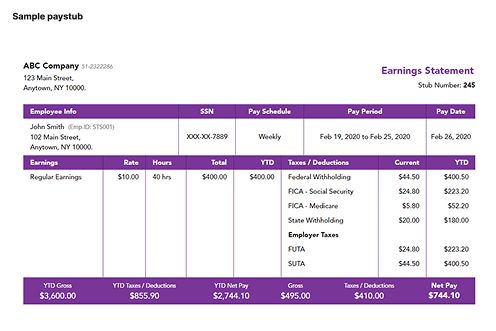
A Washington deduction on a paycheck is not necessarily state income-tax withholding. It may represent federal withholding or a Washington payroll program.
Common paycheck deductions include:
- Federal income-tax withholding
- Social Security and Medicare taxes
- Washington Paid Family and Medical Leave premiums
- WA Cares Fund premiums
- Employee benefits and retirement-plan contributions
Paid Family and Medical Leave
Washington’s total Paid Family and Medical Leave premium is 1.13% in 2026. Employees pay 71.43% of the total premium, while covered employers generally pay 28.57%.
The premium applies to covered gross wages, excluding tips, up to the applicable Social Security wage cap. For 2026 premium calculations, the program lists a wage cap of $184,500.
Small employers with fewer than 50 employees generally do not have to pay the employer portion, although they must still collect the employee portion unless they choose to cover it for their workers.
WA Cares Fund
The WA Cares premium is generally 0.58% of an employee’s applicable gross wages. Unlike Paid Family and Medical Leave, WA Cares premiums are not subject to the Social Security wage cap.
These payroll premiums help explain why an employee may see deductions associated with Washington even though the state does not impose a general wage-based income tax in 2026.
How Does the Washington Capital Gains Tax Work?
Washington imposes a capital gains excise tax on certain long-term capital gains allocated to the state. It is separate from a general tax on wages, salaries, interest, or ordinary household income.
Beginning with the 2025 tax year, the first $1 million of taxable Washington capital gains is taxed at 7%. Taxable gains exceeding $1 million are taxed at a combined rate of 9.9%.
For gains earned during 2025 and reported in 2026, the annual standard deduction is $278,000. This deduction is adjusted for inflation and applies per individual, married couple, or domestic partnership rather than separately for each spouse.
The capital gains calculation can generally be understood as follows:
- Calculate federal net long-term capital gains.
- Remove gains and losses that are not allocated to Washington.
- Apply Washington exemptions and deductions.
- Apply the annual standard deduction.
- Tax the first $1 million of remaining taxable Washington gains at 7%.
- Apply the additional 2.9% tax to taxable gains above $1 million.
A person is generally not required to file a Washington capital gains return when all gains are exempt or net long-term gains remain below the standard deduction.
What Is Exempt From Washington Capital Gains Tax?
Washington’s capital gains tax generally does not apply to:
- Sales or exchanges of real estate
- Transactions inside qualifying retirement accounts
- Certain depreciable business property
- Certain agricultural and livestock assets
- Qualifying family-owned small-business sales
- Certain timber and commercial fishing assets
The real estate exemption can apply to residential and commercial property. Transactions within qualifying retirement accounts are also excluded, which means ordinary investment activity inside a 401(k), IRA, or similar qualifying account is not subject to Washington capital gains tax.
For the 2025 tax year only, the 2026 capital gains return and payment deadline was moved from April 15 to May 1, 2026.
What Taxes Do Washington Residents Pay Instead?
Washington funds public services through several other taxes rather than a broad personal income tax.
Sales and Use Tax
Washington imposes retail sales tax on many goods and taxable services. The total rate depends on the location because local city and county taxes are added to the state rate. Washington publishes updated local sales and use tax tables each quarter.
Use tax may apply when taxable goods or services are used in Washington but the seller did not collect the correct retail sales tax.
Property Tax
Property owners may pay taxes based on assessed property values and the levy rates established by local taxing districts. Actual bills vary by county, city, school district, and other local jurisdictions.
Some senior citizens, people with disabilities, and qualifying households may be eligible for property-tax exemptions or deferral programs.
Estate Tax
Washington has a separate estate tax. This is not an income tax and generally applies to qualifying estates rather than income received by an individual during life.
For deaths occurring from January 1 through June 30, 2026, the filing threshold and exclusion amount is $3,076,000. For deaths on or after July 1, 2026, the amount is $3 million.
Do Washington Businesses Pay Income Tax?
Washington does not impose a traditional corporate income tax in 2026, but many businesses must pay Business and Occupation tax.
The B&O tax is based on gross receipts rather than net profit. This distinction is important because a business may owe B&O tax even when its expenses leave it with little or no profit. Rates and available deductions depend on how the business activity is classified.
LLCs, sole proprietors, independent contractors, partnerships, and corporations may have obligations involving:
- B&O tax
- Retail sales tax
- Use tax
- Employer payroll reporting
- Unemployment insurance
- Paid Family and Medical Leave
- WA Cares withholding
- Local business taxes or licenses
Self-employed individuals may also owe federal self-employment tax and federal estimated income-tax payments.
Beginning in 2028, business income passed through to an owner’s federal individual return may be considered when calculating the new Washington high-income tax. The law includes potential credits for certain B&O and public utility taxes and provides a pass-through entity election in qualifying situations.
How Do Residency and Remote Work Affect Washington Income Tax?
In 2026, simply becoming a Washington resident does not create a general state tax on wages. However, residency and work location can still affect taxes owed to other states.
A Washington resident who physically works in another state may owe income tax to that state on income earned there. For example, Oregon can tax Oregon-source income earned by a nonresident working in Oregon. Working for an Oregon company from a home located in Washington does not automatically make all wages Oregon-source income. The location where the services are performed can matter.
Residency can also matter for:
- Washington capital gains allocation
- Business nexus and B&O tax
- Stock compensation
- Bonuses earned across multiple states
- Partnership and pass-through income
- The new income tax beginning in 2028
Moving to Washington shortly before selling a business or a large investment does not automatically guarantee that the gain will avoid another state’s tax. Domicile, the location of the asset, the location of business activity, and the income-sourcing rules of each state should be reviewed.
Does Washington Tax Retirement Income?
Washington does not impose a general state income tax on Social Security benefits, pensions, 401(k) withdrawals, IRA distributions, or ordinary retirement income in 2026.
Transactions occurring inside qualifying retirement accounts are also exempt from Washington’s capital gains tax. However, taxable investment sales made outside a retirement account may still be covered by the capital gains rules when the gains exceed the applicable deduction.
Retirees should also distinguish income tax from Washington estate tax, property tax, sales tax, and long-term care premiums that may have applied while they were working.
Can Washington Residents Receive a State Tax Refund?
Washington residents may qualify for the Working Families Tax Credit even though the state does not have a general personal income-tax return.
The Working Families Tax Credit is a refundable payment for eligible individuals and families. During the 2026 application period, qualifying applicants can receive up to $1,330.
Eligibility depends on factors such as household income, family size, Washington residency, age, identification requirements, and eligibility connected with the federal Earned Income Tax Credit. Applicants must submit a separate Washington application to receive the payment.
The credit is not a refund of state wage withholding. It is a refundable state tax credit designed to return part of the taxes paid through Washington’s broader tax system.
Washington State vs. Washington, D.C. Income Tax
Washington State and Washington, D.C. have different tax systems.
Washington State does not impose a broad personal income tax in 2026. Washington, D.C. does impose an individual income tax on qualifying residents and requires eligible residents to file Form D-40.
Anyone searching for Washington income-tax rates should confirm whether the information applies to Washington State or the District of Columbia.
Washington State has a 0% general personal income-tax rate on ordinary wages and salaries in 2026. Residents still pay federal income tax and may encounter Washington payroll premiums, sales tax, property tax, capital gains tax, estate tax, or business taxes.
The most important upcoming change is the new 9.9% tax scheduled to begin in 2028. It will generally apply only to Washington taxable income above a $1 million household deduction, with the first returns expected in 2029.
For most employees and retirees, the practical answer remains simple: Washington does not tax ordinary wages, Social Security benefits, pensions, or standard retirement withdrawals in 2026. High-income households, investors, business owners, remote workers, and people planning a major sale should review the separate capital gains and upcoming 2028 income-tax rules carefully.

Alexander Caldwell – Financial Expert
Alexander Caldwell is a financial expert specializing in payroll management, with over 12 years of experience in the industry. He earned his bachelor's degree in finance from the University of California, Berkeley. Throughout his career, Alexander has worked with businesses of all sizes, helping them streamline payroll processes and ensure compliance with tax regulations. At Online Pay Stub, he is dedicated to providing accurate and reliable payroll solutions, making it easier for employees and businesses to manage their financial records efficiently.


Comments (0)
Loading comments...


