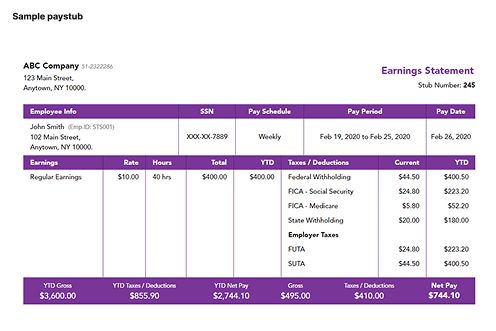
Understanding your paystub (or payslip) is crucial for managing your finances and ensuring you're being paid correctly. Here is a clear, professional guide written in English that explains the key components of a paystub.
A Guide to Understanding Your Paystub
At first glance, a paystub can look like a confusing wall of numbers and acronyms. However, it is actually a vital document that breaks down your total earnings, the taxes you owe, and the benefits you receive.
1. Gross Pay vs. Net Pay
These are the two most important numbers on your stub:
- Gross Pay: The total amount of money you earned before any deductions or taxes are taken out. If you are salaried, this is usually your annual salary divided by the number of pay periods.
- Net Pay (Take-Home Pay): This is the actual amount that hits your bank account. It is calculated as:
Gross Pay - Deductions = Net Pay
2. Common Tax Deductions
Regardless of where you work, the government usually takes a cut. You will likely see:
- Federal Income Tax: Money withheld for the national government.
- State/Local Tax: Depending on your location, a portion of your pay goes to your state or city.
- FICA (Social Security & Medicare): In the U.S., these are mandatory payroll taxes that fund retirement and healthcare programs for seniors.
3. Voluntary Deductions (Benefits)
These are costs you have agreed to pay out of your paycheck, often for your own benefit:
- Health Insurance: Your share of the premiums for medical, dental, or vision plans.
- Retirement Contributions (401k/IRA): Money you set aside for your future. These are often "pre-tax," meaning they lower your taxable income.
- HSA/FSA: Contributions to health savings accounts.
4. Summary of Hours and Rates
If you are an hourly employee, your paystub will detail:
- Regular Hours: Your standard working hours.
- Overtime (OT): Hours worked beyond the standard 40-hour week, usually paid at a higher rate (e.g., $1.5 \times$ regular pay).
- PTO/Sick Leave: Hours used for vacation or illness.
Why You Should Check It Regularly
Errors happen. It’s a good habit to review your paystub every month to ensure your withholding status is correct and that you are being credited for all the hours you worked.
Pro Tip: Always keep a digital or physical copy of your paystubs. You will need them as proof of income when applying for a mortgage, renting an apartment, or taking out a loan.

-a0495c9e.png)