
Idaho State Income Tax: Rates, Filing Rules, Deductions, and Credits
Wednesday, Jul 29, 2026
· by Alexander Caldwell – Financial Expert
Idaho imposes an individual state income tax. For 2025 income reported during the 2026 filing season, Idaho applies a 5.3% rate to taxable income above $4,811 for single filers and $9,622 for married filers. Taxable income up to those thresholds is taxed at 0%.
As of July 29, 2026, the Idaho State Tax Commission has not published its complete individual income tax rate schedule or return forms for income earned during the 2026 tax year. The latest official schedule covers 2025 income, with returns due April 15, 2026. Taxpayers planning for income earned in 2026 should check for updated rates and thresholds before filing in 2027.
Idaho State Income Tax at a Glance
| Tax itemLatest published rule | |
| Individual income tax rate | 5.3% |
| Zero-rate threshold for single filers | $4,811 |
| Zero-rate threshold for married filers | $9,622 |
| Full-year resident return | Form 40 |
| Part-year and nonresident return | Form 43 |
| 2025 return deadline | April 15, 2026 |
| Supplemental wage withholding | 5.3% when paid separately |
| Residency presence test | More than 270 days |
| Capital gains deduction | Up to 60% of qualifying gain |
| Food Tax Credit | Generally $155 per eligible person |
| Social Security benefits | Exempt from Idaho income tax |
| Individual estimated payments | Not required by Idaho |
The 5.3% rate became effective on January 1, 2025, replacing the previous 5.695% rate. Idaho’s rate schedule gives single and married taxpayers a limited amount of taxable income subject to a 0% rate before the 5.3% rate begins.
Does Idaho Have a State Income Tax?
Yes, Idaho has an individual state income tax. Residents generally report taxable income from all sources, including income earned outside Idaho. Part-year residents report income received while residing in Idaho and Idaho-source income received during their nonresident period. Nonresidents generally report only Idaho-source income.
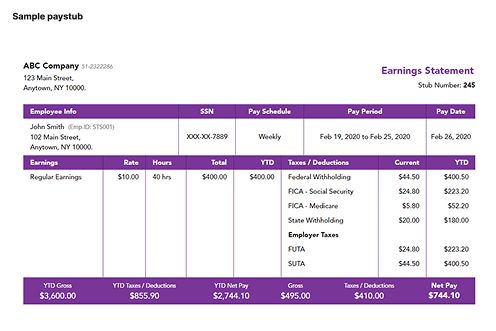
Idaho income tax is separate from federal income tax. An employee may therefore have federal income tax, Idaho state income tax, Social Security tax, and Medicare tax deducted from the same paycheck.
Idaho generally begins its calculation with federal taxable income rather than creating an entirely separate income calculation. State-specific additions, subtractions, deductions, and credits are then applied to calculate the final Idaho tax.
What Is the Idaho Income Tax Rate?
The latest published Idaho individual income tax rate is 5.3% for the 2025 tax year. It applies to taxable income above the applicable 0% threshold.
Idaho Income Tax Rate for Single Filers
| Idaho taxable incomeRate | |
| $1 to $4,811 | 0% |
| $4,812 and above | 5.3% |
Idaho Income Tax Rate for Married Filers
| Idaho taxable incomeRate | |
| $1 to $9,622 | 0% |
| $9,623 and above | 5.3% |
The rate is applied to Idaho taxable income, not directly to gross salary. Deductions and Idaho adjustments are calculated before the rate schedule is used.
Is Idaho’s Income Tax Flat?
Idaho is commonly described as a flat-tax state because it applies one positive rate of 5.3% after the initial 0% band.
However, the first $4,811 of taxable income for single filers and the first $9,622 for married filers are taxed at 0%. This means a taxpayer’s effective rate can be lower than 5.3%.
Idaho Income Tax Example
Suppose a single filer has $60,000 of Idaho taxable income after deductions and adjustments.
A simplified calculation would be:
| CalculationAmount | |
| Idaho taxable income | $60,000 |
| Amount taxed at 0% | $4,811 |
| Amount subject to 5.3% | $55,189 |
| Estimated Idaho tax | $2,925.02 |
This calculation does not include tax credits, withholding, capital gains deductions, or other state adjustments.
How Is Idaho Taxable Income Calculated?
Idaho taxable income generally begins with federal taxable income. Idaho additions and subtractions are then used to account for differences between federal and state tax law.
The calculation usually follows these steps:
- Complete the federal income tax return.
- Transfer federal taxable income to the Idaho return.
- Add income or deductions treated differently by Idaho.
- Subtract income that Idaho excludes.
- Claim qualifying Idaho deductions.
- Apply the Idaho tax rate schedule.
- Subtract Idaho tax credits and payments.
Common Idaho subtractions can include Social Security benefits, qualifying retirement benefits, United States government obligation interest, and qualifying capital gains.
Idaho updated its 2025 forms in 2026 to reflect federal conformity changes. These updates included larger standard deduction amounts and deductions connected with qualifying tips, overtime compensation, car loan interest, and the enhanced senior deduction.
Who Must File an Idaho Income Tax Return?
Whether a person must file depends on residency status, filing status, age, and gross income. Idaho residents, qualifying part-year residents, and nonresidents with Idaho-source income may have a filing obligation.
Idaho Resident Filing Thresholds
For 2025 returns filed in 2026, the gross income thresholds are:
| Filing status and ageFiling threshold | |
| Single, under 65 | $15,750 |
| Single, 65 or older | $17,750 |
| Married filing separately | $5 |
| Married filing jointly, both under 65 | $31,500 |
| Married filing jointly, one spouse 65 or older | $33,100 |
| Married filing jointly, both spouses 65 or older | $34,700 |
| Head of household, under 65 | $23,625 |
| Head of household, 65 or older | $25,625 |
| Qualifying surviving spouse, under 65 | $31,500 |
| Qualifying surviving spouse, 65 or older | $33,100 |
Gross income for filing purposes can include wages, interest, dividends, rent, business receipts, and gains from property sales.
A person may also file an Idaho return to:
- Claim a refund of Idaho withholding
- Claim the Food Tax Credit
- Claim refundable tax credits
- Report Idaho-source income
- Correct an earlier Idaho return
- Claim a credit for taxes paid to another state
A person who files a federal return only to pay federal self-employment tax may not necessarily have to file an Idaho return. The Idaho gross income and residency tests still need to be reviewed.
Form 40 vs. Form 43
Full-year Idaho residents generally use Form 40. Part-year residents and nonresidents generally use Form 43.
Form 40
Form 40 is the Idaho Individual Income Tax Return for full-year residents. Residents generally report income from all sources, including income earned in other states or countries.
Form 43
Form 43 is used by:
- Part-year Idaho residents
- Idaho nonresidents
- Taxpayers who have both resident-period and nonresident-period income
Part-year residents report all income received while living in Idaho, plus Idaho-source income received while living elsewhere. Nonresidents report income connected with Idaho sources.
When Is the Idaho Tax Return Due?
The Idaho return for 2025 income was due April 15, 2026. Income earned during the 2026 tax year will normally be reported on a return filed in 2027. The exact 2027 filing deadline should be confirmed after Idaho publishes the 2026 forms.
Idaho provides an automatic filing extension for qualifying taxpayers, but the extension does not give additional time to pay. Tax due must generally be paid by the original deadline to avoid payment penalties and interest.
Taxpayers can file through approved tax software or use Idaho’s Taxpayer Access Point to manage payments and account information.
Idaho Residency and the 270-Day Rule
A person is generally an Idaho resident when they are domiciled in Idaho for the entire year. A person domiciled elsewhere can also be treated as an Idaho resident when they maintain a home in Idaho for the entire year and spend more than 270 days in the state.
Domicile means the place a person considers their permanent home. Factors that may affect domicile include:
- Location of the primary home
- Time spent in Idaho
- Family location
- Employment and business connections
- Driver’s license
- Vehicle registration
- Voter registration
- Mailing address
- Financial accounts
- Property ownership
- Statements made in legal documents
A person can own an Idaho property without necessarily becoming an Idaho resident. However, maintaining an Idaho home and spending more than 270 days in the state can create resident status even when the person claims domicile elsewhere.
A taxpayer moving out of Idaho should retain evidence showing when the move occurred and when a new domicile was established.
Idaho Income Tax for Nonresidents
Nonresidents generally pay Idaho income tax only on Idaho-source income.
Idaho-source income can include:
- Wages for services physically performed in Idaho
- Business income connected with Idaho
- Rental income from Idaho property
- Gains from Idaho real or tangible property
- Partnership or pass-through income allocated to Idaho
- Compensation connected with earlier Idaho employment
Income earned while physically working in Idaho can be taxable even when the worker lives in Washington, Oregon, Utah, Nevada, or another state. Idaho does not have a general wage-tax reciprocity agreement that automatically exempts neighboring-state employees.
Nonresidents should allocate wages according to the portion of services performed in Idaho. Stock compensation, deferred bonuses, and other payments connected with several work locations can require a separate allocation.
Idaho Income Tax for Remote Workers
Remote-worker taxation generally depends on where the employee physically performs the services.
A person working from a home in Idaho for an out-of-state company generally earns Idaho-source compensation because the services are performed in Idaho.
A nonresident working entirely outside Idaho for an Idaho employer does not automatically have Idaho-source wages solely because the company is located in Idaho. However, Idaho workdays, business travel, stock compensation, and other Idaho connections can create taxable income.
Idaho treats compensation from stock options as connected with Idaho when the employee performed Idaho services between the grant date and vesting date. The income can remain subject to Idaho withholding even when the employee lives elsewhere when the option is exercised.
Idaho Paycheck Withholding
Employers generally withhold Idaho income tax from wages paid for services performed in Idaho. Employees use Form ID W-4 to determine their state withholding.
Idaho withholding can apply to:
- Regular wages
- Salaries
- Tips
- Bonuses
- Commissions
- Overtime pay
- Severance pay
- Back pay
- Certain awards and fringe benefits
When supplemental wages are paid separately, employers can generally withhold 5.3%. Alternatively, the payment can be combined with regular wages and taxed through the normal payroll calculation.
Withholding is an advance payment toward the final Idaho tax liability. It is not necessarily the taxpayer’s effective annual rate.
Employees should review Form ID W-4 after changes involving marriage, dependents, employment, income, or residency.
Idaho Capital Gains Tax
Idaho generally includes capital gains in individual taxable income. Gains that do not qualify for a special deduction are generally taxed under the standard Idaho income tax rate.
Idaho allows a deduction of up to 60% of qualifying net capital gain income from the sale or exchange of qualifying Idaho property. Taxpayers calculate the deduction using Form CG.
Qualifying assets can include:
- Idaho real property held for at least 12 months
- Tangible business property used in a revenue-producing enterprise
- Certain livestock
- Timber held for the required period
- Certain qualifying partnership interests
The deduction does not generally apply to intangible property such as publicly traded stocks, bonds, standard LLC interests, S corporation shares, or cryptocurrency. Simply being an Idaho resident does not make every investment gain eligible.
A nonresident selling qualifying Idaho property may also be able to claim the deduction, subject to Idaho-source income rules and Form CG requirements.
Does Idaho Tax Retirement Income?
Idaho does not tax Social Security benefits, even when part of those benefits is taxable on the federal return. Railroad Retirement Board benefits and certain Canadian Social Security benefits are also excluded.
Most private pension income, traditional IRA distributions, and 401(k) withdrawals can be taxable in Idaho. Limited retirement-benefit deductions are available for qualifying pensions.
Potentially qualifying benefits include:
- Civil Service Retirement System pensions
- Foreign Service Retirement and Disability System pensions
- Qualifying military retirement pensions
- Certain Idaho firefighter pensions
- Certain Idaho police retirement benefits
The pensioner generally must meet age, disability, filing-status, and plan requirements. A federal FERS pension does not qualify under the same rule as a CSRS pension.
Idaho recalculates the maximum retirement deduction each year, so taxpayers should use the instructions for the specific return year.
Idaho Food Tax Credit
The Idaho Food Tax Credit helps residents offset sales tax paid on food.
For 2025 returns, the credit is generally $155 for each eligible resident and qualifying dependent. A taxpayer who submits qualifying food-tax receipts may claim up to $250 instead.
An eligible Idaho resident may be able to claim the credit even when they do not otherwise have to file an income tax return. The credit can be reduced for months in which the claimant received qualifying food assistance, was incarcerated, or did not meet legal residency requirements.
Other Idaho Deductions and Credits
Idaho provides several state-specific deductions and credits.
First-Time Homebuyer Deduction
A qualifying Idaho resident can deduct contributions and interest from an Idaho First-Time Home Buyer Savings Account.
The annual deduction limit is generally:
- $15,000 for a single filer or married taxpayer filing separately
- $30,000 for a married couple filing jointly
The account has a lifetime contribution and interest limit of $100,000. The funds must be used for an eligible first home.
IDeal College Savings Deduction
Contributions to Idaho’s qualifying college savings program can reduce Idaho taxable income. Federal education savings plans established outside Idaho do not necessarily qualify for the Idaho deduction.
Idaho Medical Savings Account
Qualifying contributions and interest associated with an Idaho Medical Savings Account can be deducted under state rules. A federal Health Savings Account is not automatically treated as an Idaho Medical Savings Account.
Charitable Tax Credits
Idaho offers credits for qualifying contributions to certain educational, cultural, youth, and rehabilitation organizations.
The educational charities credit is generally limited to the smallest of:
- $500 per taxpayer or $1,000 for a joint return
- 50% of Idaho income tax
- 50% of the qualifying contribution
The youth and rehabilitation credit has lower annual limits.
Credit for Taxes Paid to Another State
An Idaho resident who pays income tax to another state on the same income may qualify for a credit. The credit is intended to reduce double taxation but may not equal the entire amount paid to the other jurisdiction.
Idaho Income Tax for Self-Employed Workers
Self-employed Idaho residents generally pay state income tax on taxable business profits. Federal self-employment tax can also apply separately.
Unlike many states, Idaho does not require individuals to make quarterly estimated income tax payments. A freelancer, independent contractor, or business owner can still make voluntary payments using Form 51 or Idaho’s online payment service.
Voluntary payments can help taxpayers avoid a large balance when filing, particularly when they receive:
- Self-employment income
- Rental income
- Investment income
- Capital gains
- Retirement income without withholding
- Pass-through business income
A sole proprietor generally reports business income through the individual Idaho return. Partnerships, S corporations, LLCs, and other pass-through entities can have separate filing, composite-return, and nonresident-owner payment requirements.
Eligible pass-through entities can also consider Idaho’s affected-business-entity election. An entity making this election cannot claim the Idaho capital gains deduction on a sale of qualifying Idaho property.
Final Summary
Idaho’s latest published individual income tax schedule applies to 2025 income reported during the 2026 filing season. Taxable income up to $4,811 for single filers and $9,622 for married filers is taxed at 0%. Taxable income above those amounts is taxed at 5.3%.
Full-year residents generally use Form 40 and report income from all sources. Part-year residents and nonresidents use Form 43 and report income based on residency periods and Idaho sourcing.
Idaho does not tax Social Security benefits and provides a Food Tax Credit of generally $155 per eligible person. It also offers limited retirement deductions and a deduction of up to 60% for capital gains from qualifying Idaho property.
Remote workers, nonresidents, business owners, investors, and people moving into or out of Idaho should pay particular attention to Idaho-source income, the 270-day residency rule, capital gains qualification, and withholding requirements.
Because Idaho has not yet published its complete 2026 individual return guidance, rates and thresholds for income earned during 2026 should be confirmed before filing in 2027.
This article provides general information and is not personalized tax or legal advice.

Alexander Caldwell – Financial Expert
Alexander Caldwell is a financial expert specializing in payroll management, with over 12 years of experience in the industry. He earned his bachelor's degree in finance from the University of California, Berkeley. Throughout his career, Alexander has worked with businesses of all sizes, helping them streamline payroll processes and ensure compliance with tax regulations. At Online Pay Stub, he is dedicated to providing accurate and reliable payroll solutions, making it easier for employees and businesses to manage their financial records efficiently.


Comments (0)
Loading comments...


