
Michigan State Income Tax: Rate, City Taxes & Filing Rules 2026
Wednesday, Jul 29, 2026
· by Alexander Caldwell – Financial Expert
Michigan has a flat individual income tax rate of 4.25% for the 2026 tax year. The same state rate generally applies regardless of whether a taxpayer is single, married, or in a higher income group. However, 24 Michigan cities impose separate municipal income taxes, so residents and people working in those cities may owe local tax in addition to the state tax.
Michigan confirmed in April 2026 that the individual income tax rate would remain at 4.25% for income earned from January 1 through December 31, 2026. The state’s automatic rate-reduction formula was not triggered for this tax year.
Michigan Income Tax at a Glance
| Tax item 2026 rule | |
| State individual income tax rate | 4.25% |
| Tax structure | Flat tax |
| Wage withholding rate | 4.25% |
| State tax return | Form MI-1040 |
| Estimated tax threshold | Generally more than $500 expected due |
| Local city income taxes | Imposed by 24 cities |
| Michigan capital gains rate | Generally 4.25% |
| Michigan EITC | 30% of the qualifying federal credit |
| Social Security benefits | Exempt from Michigan income tax |
| Military retirement benefits | Generally exempt |
| Retirement phase-in subtraction | Up to 100% of the applicable limit in 2026 |
| Reciprocal states | Illinois, Indiana, Kentucky, Minnesota, Ohio, and Wisconsin |
Michigan does not use progressive individual income tax brackets. Instead, taxable income is generally subject to one statewide rate after Michigan additions, subtractions, exemptions, and credits are applied.
Does Michigan Have a State Income Tax?
Yes, Michigan imposes a state individual income tax on residents and on qualifying Michigan-source income earned by nonresidents. The 2026 rate is 4.25%.
Michigan residents are generally taxed on salaries, wages, commissions, business income, investment income, rental income, and other taxable income, even when some of that income is earned outside Michigan. A credit may be available when a resident pays income tax to another nonreciprocal state or qualifying government jurisdiction.
Nonresidents generally owe Michigan income tax only on income earned in or attributable to Michigan. Reciprocal agreements can exempt certain employee wages, but they do not automatically exempt business income, rental income, capital gains connected with a Michigan business, or Michigan gambling winnings.
What Is the Michigan Income Tax Rate for 2026?
The Michigan state income tax rate is 4.25% for the 2026 tax year. This rate applies to Michigan taxable income after allowable adjustments and exemptions.
Michigan law includes a formula that can temporarily reduce the rate when state general fund revenue grows faster than inflation. For 2026, general fund revenue declined while inflation increased, so the conditions for a reduction were not met. The rate therefore remained at 4.25%.
Is Michigan’s Income Tax Flat or Progressive?
Michigan uses a flat individual income tax system. It does not have multiple state tax brackets in which higher portions of income are taxed at increasingly higher percentages.
A taxpayer with $50,000 of Michigan taxable income and a taxpayer with $500,000 generally face the same 4.25% state rate. Their total tax bills differ because one has more taxable income, not because they are placed in different state brackets.
The effective tax rate on gross earnings can still be lower than 4.25% because Michigan taxable income may be reduced by personal exemptions, retirement subtractions, Social Security exclusions, and other adjustments.
How Is Michigan Taxable Income Calculated?
Michigan income tax calculations generally begin with federal adjusted gross income. Michigan-specific additions and subtractions are then used to determine Michigan taxable income.
The calculation normally follows these steps:
- Complete the federal income tax return.
- Transfer federal adjusted gross income to Form MI-1040.
- Add income that Michigan taxes differently from the federal government.
- Subtract income that Michigan excludes.
- Claim applicable personal and dependent exemptions.
- Calculate tax at 4.25%.
- Add any use tax or other applicable amounts.
- Subtract credits, withholding, and estimated payments.
Common Michigan subtractions can include qualifying Social Security income, certain retirement and pension benefits, military retirement, United States government obligation income, and qualifying income earned in reciprocal states.
Michigan has also decoupled from certain recent federal tax provisions. This means that some deductions allowed on a federal return can require an addition or slower deduction schedule on the Michigan return.
Michigan Personal Exemption
Michigan provides personal and dependent exemptions that reduce taxable income before the 4.25% rate is applied.
The source analysis identifies a $5,800 personal exemption amount. This amount applied for the 2025 tax year and is also used in Michigan’s current 2026 retirement guidance examples. Taxpayers should confirm the final exemption amount in the official 2026 MI-1040 instructions because Michigan exemption amounts can be adjusted.
Taxpayers can generally claim an exemption for themselves and qualifying dependents. Additional special exemptions may be available for qualifying taxpayers who are deaf, blind, disabled, or veterans with certain disabilities.
Michigan Tax Example
Suppose a single taxpayer has $75,000 of federal adjusted gross income, no Michigan additions, and a $5,800 personal exemption.
The simplified calculation would be:
| Calculation | Amount |
| Federal adjusted gross income | $75,000 |
| Personal exemption | $5,800 |
| Michigan taxable income | $69,200 |
| Tax at 4.25% | $2,941 |
This example does not include city income taxes, credits, retirement deductions, investment adjustments, or taxes paid to another state.
Does Michigan Have Local Income Taxes?
Michigan does not impose a statewide county income tax, but 24 cities levy municipal taxes related to income. City income taxes are separate from the Michigan individual income tax return and can have their own forms, rates, filing requirements, and administrators.
The cities are:
- Albion
- Battle Creek
- Benton Harbor
- Big Rapids
- Detroit
- East Lansing
- Flint
- Grand Rapids
- Grayling
- Hamtramck
- Highland Park
- Hudson
- Ionia
- Jackson
- Lansing
- Lapeer
- Muskegon
- Muskegon Heights
- Pontiac
- Port Huron
- Portland
- Saginaw
- Springfield
- Walker
The Michigan Department of Treasury administers Detroit’s income tax. Most other cities administer their own local forms, payments, refunds, and taxpayer assistance. Michigan Treasury is scheduled to begin administering Flint income taxes for the 2026 and later tax years beginning January 1, 2027.
Detroit Income Tax
Detroit imposes a separate income tax on residents and on qualifying Detroit-source income earned by nonresidents.
The commonly applicable rates are:
| Taxpayer | Detroit rate |
| Detroit resident | 2.4% |
| Nonresident earning income in Detroit | 1.2% |
| Detroit corporation | 2% |
A Detroit resident can therefore face a combined marginal income tax rate of 6.65% before credits:
- 4.25% Michigan state income tax
- 2.4% Detroit resident income tax
A nonresident who physically works in Detroit generally pays Detroit tax only on qualifying compensation earned for work performed in the city. Remote workdays performed outside Detroit may need to be excluded through the city’s allocation process.
City income tax is not automatically included in the final Michigan MI-1040 calculation. A separate city return may be required.
Who Must File a Michigan Income Tax Return?
A taxpayer generally must file a Michigan individual income tax return when income included in federal adjusted gross income exceeds the allowable Michigan exemption amount.
A return may also be required when:
- Michigan tax was withheld
- The taxpayer has Michigan-source income
- Estimated payments were made
- The taxpayer wants to claim a refundable credit
- The taxpayer owes use tax
- A nonresident has income attributable to Michigan
- A part-year resident earned income while living in Michigan
Michigan residents, part-year residents, and nonresidents generally use Form MI-1040. Nonresidents and part-year residents also use Schedule NR to allocate income. Schedule 1 reports Michigan additions and subtractions, while Schedule W reports withholding.
A resident of a reciprocal state whose only Michigan income is qualifying employee compensation generally does not need to file a Michigan return. However, filing is required to recover Michigan tax withheld by mistake.
When Is the Michigan Tax Return Due?
Michigan individual income tax returns are normally due on April 15 following the end of the tax year. Income earned during 2026 will generally be reported on a return due in April 2027.
A federal extension generally extends the time to file the Michigan return, but it does not provide additional time to pay the tax. Taxpayers expecting to owe tax should make an extension payment by the original deadline.
The April 15, 2026 deadline referenced in some supplied data applied to 2025 income reported during the 2026 filing season. It should not be confused with the filing deadline for income earned in 2026.
Michigan Residency Rules
Michigan residents generally pay Michigan tax on taxable income from all sources. Nonresidents generally pay tax only on Michigan-source income. Part-year residents report income according to the period during which they were Michigan residents and any Michigan-source income received while they were nonresidents.
Michigan residency is usually based on domicile, meaning the place a taxpayer considers their permanent home. Relevant factors can include:
- Location of the primary home
- Time spent in Michigan
- Driver’s license
- Voter registration
- Vehicle registration
- Family location
- Employment and business connections
- Financial accounts
- Mailing address
- Property ownership
Moving to another state does not necessarily end Michigan residency on its own. The taxpayer should establish a new domicile and retain records showing the date and permanence of the move.
Michigan Nonresident and Remote-Worker Taxes
A nonresident generally owes Michigan income tax on wages for services physically performed in Michigan unless a reciprocal agreement applies.
An employee working remotely outside Michigan for a Michigan employer generally does not have Michigan-source wages solely because the employer is located in Michigan. The physical location where the employee performs the services is normally important.
A Michigan resident working remotely from another state remains taxable by Michigan on wages, salary, and guaranteed payments. The resident may qualify for a credit when tax is properly paid to a nonreciprocal state or another qualifying jurisdiction.
Special allocation rules can apply to:
- Bonuses
- Commissions
- Restricted stock
- Stock options
- Deferred compensation
- Severance payments
- Partnership income
- Business income
Remote workers should also check whether their city of residence or workplace imposes a municipal income tax.
Michigan Income Tax Reciprocity
Michigan has wage-tax reciprocity agreements with:
- Illinois
- Indiana
- Kentucky
- Minnesota
- Ohio
- Wisconsin
Residents of these states are generally not subject to Michigan income tax or Michigan withholding on salaries, wages, and other qualifying employee compensation earned in Michigan. They remain taxable by their home state.
Reciprocity does not generally cover:
- Self-employment income
- Business income
- Rental income
- Michigan gambling winnings
- Partnership income
- Capital gains connected with Michigan business activity
A Michigan resident working in a reciprocal state generally pays Michigan income tax rather than the other state’s income tax on qualifying wages. If the reciprocal state withholds tax incorrectly, the taxpayer usually needs to file a nonresident return there to claim a refund.
Michigan Paycheck Withholding
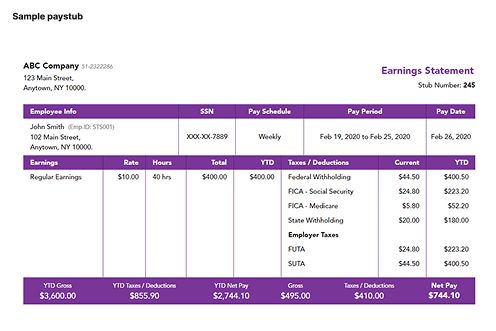
Michigan’s wage withholding rate is 4.25% for 2026. Employees use Form MI-W4 to report exemptions and request additional withholding.
The amount deducted from a paycheck is an advance payment toward the employee’s final Michigan tax liability. It is not necessarily the exact amount the employee will owe after preparing the annual return.
Withholding can differ from the final tax because of:
- Personal and dependent exemptions
- Multiple jobs
- Spousal income
- Bonuses and commissions
- Investment income
- Self-employment income
- Retirement distributions
- Tax credits
- City income taxes
- Income earned in another state
Pension and annuity recipients can use Form MI W-4P to change Michigan withholding from qualifying retirement payments. Michigan’s official 2026 wage withholding rate is 4.25%.
Michigan Capital Gains Tax
Michigan does not generally have a separate preferential state rate for long-term capital gains. Capital gains included in Michigan taxable income are normally taxed at the same 4.25% rate as wages and other ordinary income.
This can include gains from:
- Stocks
- Cryptocurrency
- Investment property
- Business interests
- Mutual funds
- Real estate
- Other capital assets
Federal holding-period rules and exclusions can affect the gain that enters federal adjusted gross income. Michigan then applies its own additions and subtractions.
A taxpayer may need Form MI-1040D when the Michigan treatment of capital gains and losses differs from the federal calculation.
Investment Income Subtraction
Certain taxpayers born before 1946 may qualify for a Michigan investment income subtraction. The supplied analysis identifies limits of $14,688 for single or separate filers and $29,376 for joint filers, subject to coordination with retirement-benefit subtractions.
Because the subtraction depends on birth year, filing status, retirement income, and annual inflation adjustments, taxpayers should use the final 2026 instructions before claiming it.
Michigan Income Tax for Self-Employed Workers
Self-employed Michigan residents generally pay the 4.25% individual income tax on taxable business profits. Federal self-employment tax may apply separately.
Freelancers, independent contractors, sole proprietors, and other taxpayers may need to make quarterly estimated payments when they expect to owe more than $500 for 2026 after withholding and credits. Safe-harbor rules based on current-year or prior-year tax can reduce underpayment penalties.
Estimated payments are normally made using Form MI-1040ES.
A sole proprietor or single-member LLC generally reports business income on the owner’s individual return. C corporations are subject to Michigan’s separate 6% Corporate Income Tax. Eligible pass-through entities can also consider Michigan’s flow-through entity tax election.
Does Michigan Tax Retirement Income?
Michigan does not tax Social Security benefits. It also generally excludes military retirement benefits and qualifying Railroad Retirement benefits.
Other retirement income can qualify for a subtraction depending on the type of benefit, taxpayer’s birth year, filing status, and the calculation method selected.
Michigan’s retirement subtraction phase-in reached 100% for the 2026 tax year. Eligible taxpayers can choose the most beneficial available method, including the birth-year tier method, the phase-in method, or a special subtraction for qualifying fire, police, and corrections retirees.
Qualifying retirement benefits can include:
- Defined benefit pensions
- Traditional IRA distributions
- Certain 401(k) distributions
- Certain 403(b) distributions
- Other qualifying defined contribution plan payments
Deferred compensation does not always qualify as retirement income. The subtraction is limited, and the applicable maximum is adjusted annually.
Public Act 24 of 2025 also allows qualifying taxpayers born after 1952 who are at least 67 to claim both the Michigan standard deduction and the Social Security subtraction for tax years 2026 through 2028. The standard deduction is still reduced by the personal exemption amount.
Michigan Tax Credits
Michigan provides several refundable and nonrefundable credits that can reduce a taxpayer’s final liability.
Michigan Earned Income Tax Credit
The Michigan Earned Income Tax Credit for Working Families generally equals 30% of the taxpayer’s qualifying federal Earned Income Tax Credit.
Because it is refundable, an eligible taxpayer may receive a refund even when the credit exceeds the Michigan income tax owed.
Homestead Property Tax Credit
The Michigan Homestead Property Tax Credit provides relief to qualifying homeowners and renters whose property taxes or calculated rent burden are high relative to total household resources.
The supplied analysis identifies:
- A maximum credit of up to $1,900
- A phaseout beginning at $62,500 of total household resources
- A general eligibility limit of $71,500
- A requirement to occupy the Michigan homestead for at least six months
These figures should be checked against the final 2026 MI-1040CR instructions before filing because credit limits can change by tax year.
The Homestead Property Tax Credit is different from the Principal Residence Exemption. The Principal Residence Exemption reduces certain school operating property taxes, while the homestead credit is claimed through the income tax system.
Credit for Tax Paid to Another State
Michigan residents may qualify for a nonrefundable credit when income is taxed by a nonreciprocal state, the District of Columbia, a Canadian province, or certain local governments outside Michigan.
The credit is generally not available for wages earned in one of Michigan’s reciprocal states because those wages should be taxed only by Michigan.
Michigan has a flat state individual income tax rate of 4.25% for the 2026 tax year. The rate applies regardless of filing status or income level, although exemptions, subtractions, and credits can reduce taxable income or the final amount owed.
Michigan does not impose county income taxes, but 24 cities levy separate municipal income taxes. Detroit residents, for example, can pay a 2.4% city tax in addition to the 4.25% state rate.
Residents are generally taxed on income from all sources. Nonresidents are taxed on Michigan-source income, while residents of Illinois, Indiana, Kentucky, Minnesota, Ohio, and Wisconsin can generally use reciprocity to avoid Michigan tax on qualifying employee wages.
Social Security and military retirement benefits are generally exempt. The retirement and pension subtraction phase-in reaches 100% in 2026, although deduction limits and eligibility still depend on the taxpayer’s circumstances.
Taxpayers should pay particular attention to city income taxes, reciprocal-state employment, remote work, estimated payments, retirement deductions, and the distinction between gross income and Michigan taxable income.
This article provides general information and does not replace personalized tax or legal advice.

Alexander Caldwell – Financial Expert
Alexander Caldwell is a financial expert specializing in payroll management, with over 12 years of experience in the industry. He earned his bachelor's degree in finance from the University of California, Berkeley. Throughout his career, Alexander has worked with businesses of all sizes, helping them streamline payroll processes and ensure compliance with tax regulations. At Online Pay Stub, he is dedicated to providing accurate and reliable payroll solutions, making it easier for employees and businesses to manage their financial records efficiently.


Comments (0)
Loading comments...


