New Hampshire Paycheck Calculator
Estimate your New Hampshire take-home pay. New Hampshire has no state income tax on wages, so this calculator covers federal tax, Social Security and Medicare.
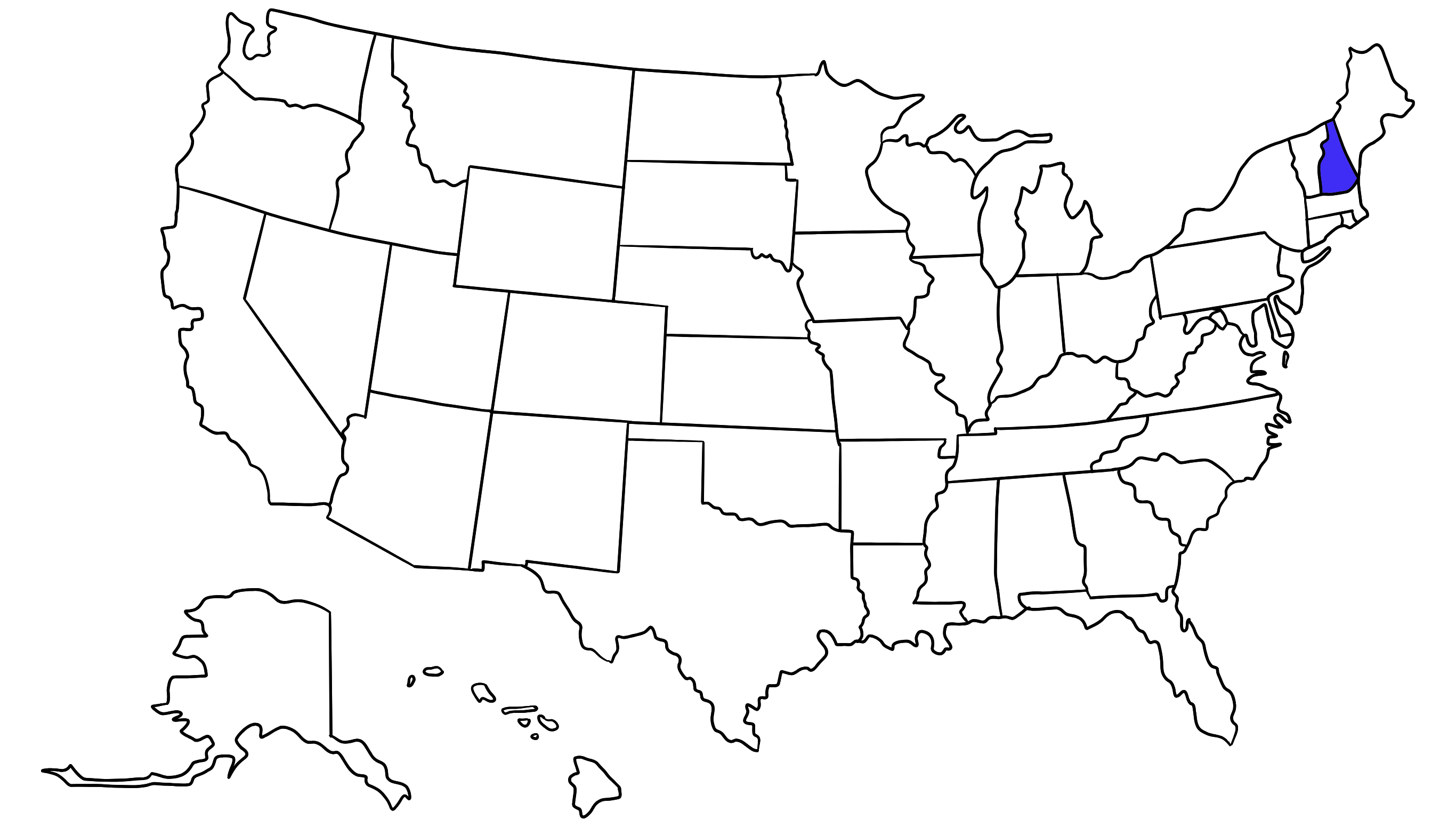
 Create Your New Hampshire Pay Stub
Estimate Your New Hampshire Paycheck
Enter your pay details below. This is an estimate for informational purposes only.
Any overtime?
Estimated Results (per pay period)
This calculator provides estimates only and is not tax, legal or accounting advice. Federal tax uses the 2026 IRS withholding formula (Publication 15-T, Worksheet 1A) assuming a standard Form W-4 with no additional adjustments. New Hampshire does not levy a state income tax on wages, so no state withholding is calculated. It also uses the 2026 Social Security wage base. It supports Single/MFS, Married Filing Jointly/Qualifying Surviving Spouse, Head of Household and Nonresident Alien federal filing statuses (Nonresident Alien withholding follows the IRS Notice 1392 wage-addback procedure), and calculates overtime pay at 1.5x the hourly rate. It does not account for local taxes or additional allowances/credits. Actual withholding depends on your W-4, employer payroll system and individual circumstances. Consult a tax professional or payroll provider for exact figures.
Sources: IRS Publication 15-T (2026), Social Security Administration. Last verified: August 14, 2026.
Estimate New Hampshire net pay using federal withholding, FICA and employee deductions under the state's no-wage-income-tax structure.
The New Hampshire paycheck calculator estimates take-home pay after federal income tax, Social Security, Medicare and other employee deductions. New Hampshire does not impose a broad individual income tax on wages, so there is no standard New Hampshire wage income tax withholding line in a normal employee paycheck calculation.
New Hampshire also repealed its former Interest and Dividends Tax for taxable periods beginning after December 31, 2024. In 2026, an employee's payroll estimate is therefore driven mainly by federal withholding, FICA, benefit deductions and the employee's gross compensation.
What a New Hampshire Paycheck Calculator Should Include
The calculator should show how gross wages become net pay while keeping employer taxes out of the employee deduction calculation.
| Payroll Component | 2026 New Hampshire Treatment |
|---|---|
| New Hampshire wage income tax | No broad individual income tax on wages |
| Former Interest and Dividends Tax | Repealed for taxable periods beginning after December 31, 2024 |
| Federal income tax | Based on Form W-4 and 2026 IRS withholding methods |
| Social Security | 6.2 percent on covered wages up to $184,500 |
| Medicare | 1.45 percent on covered wages |
| New Hampshire unemployment tax | Employer contribution, not a normal employee deduction |
| Current minimum wage | Federal minimum wage of $7.25 per hour under current New Hampshire law |
| Net pay | Gross pay minus federal taxes and other employee deductions |
How Is New Hampshire Take-Home Pay Calculated?
New Hampshire take-home pay starts with gross wages then subtracts employee-side federal taxes and legitimate payroll deductions. No state wage income tax is added to the calculation.
Estimated Net Pay = Gross Pay - Federal Withholding - Social Security - Medicare - Other Employee Deductions
That page also explains the repeal of the former Interest and Dividends Tax.
Inputs That Can Change a New Hampshire Paycheck
The lack of state wage income tax makes the state side simpler, but the paycheck result still depends on employee-specific payroll information.
- Hourly rate or annual salary
- Regular hours
- Overtime hours
- Pay frequency
- Federal Form W-4 information
- Pre-tax deductions
- Post-tax deductions
- Additional federal withholding
- Bonuses or commissions
- Year-to-date wages
Federal Income Tax Withholding in New Hampshire
Federal income tax is normally the largest tax-withholding variable on a New Hampshire paycheck. The result depends on taxable wages, pay frequency and the employee's Form W-4 elections under the 2026 IRS withholding methods.
An employee who changes filing information, adds dependent credits or requests extra withholding can see a different net paycheck even when gross salary does not change.
Social Security and Medicare in 2026
Social Security generally applies at 6.2 percent to covered employee wages up to the $184,500 wage base for 2026. Medicare generally applies at 1.45 percent to covered wages without a general wage ceiling.
Additional Medicare Tax can apply after one employer pays an employee more than $200,000 in Medicare wages during the calendar year. YTD wages become important when the current paycheck approaches these annual thresholds.
New Hampshire Hourly Paycheck Calculator
For hourly employees, multiply the employee's regular rate by compensable hours then add qualifying overtime or other taxable earnings before federal taxes are calculated.
Hourly Gross Pay = Regular Hours × Hourly Rate + Overtime + Other Taxable Earnings
New Hampshire's current minimum wage law ties the state minimum to the federal minimum wage, which remains $7.25 per hour as of August 24, 2026. A 2026 proposal to establish higher state rates died at the end of the legislative session and did not change the current law.
Overtime in a New Hampshire Paycheck
Covered nonexempt employees generally qualify for overtime under federal law after more than 40 hours worked in a workweek. New Hampshire does not use the Nevada-style daily overtime rule for ordinary payroll calculations.
The employer should calculate overtime before applying payroll taxes because overtime changes gross and taxable wages for the pay period.
New Hampshire Salary and Biweekly Paycheck Calculator
For salaried employees, convert annual salary into gross pay for the actual payroll frequency before federal withholding is calculated.
| Pay Frequency | Typical Pay Periods per Year |
|---|---|
| Weekly | 52 |
| Biweekly | 26 |
| Semimonthly | 24 |
| Monthly | 12 |
A $72,000 salary produces about $2,769.23 of gross pay on a standard 26-period biweekly schedule before employee deductions. The same salary produces $3,000 per check on a 24-period semimonthly schedule.
Pre-Tax Benefits Can Still Change Federal Taxable Wages
Pre-tax deductions matter even without a state wage income tax. A qualifying health plan deduction, retirement contribution or other benefit can change the wages subject to federal income tax or another federal payroll tax.
The calculator should apply the actual tax treatment for each benefit. A deduction labeled pre-tax does not automatically reduce every federal tax base.
New Hampshire Unemployment Tax Is an Employer Cost
New Hampshire unemployment compensation tax is paid by employers. The taxable wage base is $14,000 per employee under current state unemployment insurance rules.
Because this is an employer contribution, it should not appear as a standard employee deduction that reduces take-home pay. Keeping employer taxes separate prevents the calculator from understating employee net pay.
Why New Hampshire Net Pay Can Still Vary Widely
Two employees with equal gross salary can receive different net checks because of Form W-4 elections, health benefits, retirement contributions, garnishments, additional federal withholding, bonuses or other payroll differences.
A no-state-income-tax environment reduces one payroll variable, but it does not turn net pay into a fixed percentage of gross wages.
YTD Wages and High-Earner Payroll
Year-to-date wages help the calculator apply federal annual limits correctly. Social Security should stop after an employee reaches the annual wage base with the employer.
YTD Medicare wages help determine when Additional Medicare Tax withholding begins. Accurate cumulative information is particularly important for high earners and large late-year bonuses.
From Estimate to Pay Stub
A paycheck calculator predicts or reviews the gross-to-net result. A pay stub should document the actual completed payroll. After the numbers have been reconciled, the New Hampshire pay stub generator can organize genuine earnings, federal taxes, deductions and net pay.
Businesses that need a broader payroll-document workflow can use the online paystub generator after confirming the underlying payment information.
Methodology and Accuracy
This page reflects current New Hampshire tax and wage law, New Hampshire Employment Security guidance, 2026 IRS federal withholding methods and the Social Security Administration's 2026 wage base. Because wage law or tax law can change, employers should verify current official guidance when finalizing payroll.
Frequently Asked Questions
How Much Tax Is Taken From a Paycheck in New Hampshire?
The amount depends mainly on federal income tax, Social Security, Medicare and other employee deductions. New Hampshire does not impose a broad individual state income tax on wages.
How Do I Calculate Take-Home Pay in New Hampshire?
Start with gross pay then subtract federal withholding, Social Security, Medicare and other employee deductions. Do not add a standard New Hampshire wage income tax deduction.
Does New Hampshire Have State Income Tax on Wages?
No. New Hampshire does not impose a broad individual state income tax on wages. Its former Interest and Dividends Tax was repealed for taxable periods beginning after December 31, 2024.
What Is the New Hampshire Minimum Wage in 2026?
Under current law as of August 24, 2026, New Hampshire follows the federal minimum wage of $7.25 per hour. A 2026 proposal to create a higher state minimum wage did not become law.
How Does Overtime Affect a New Hampshire Paycheck?
Overtime increases gross wages before taxes are calculated. Covered nonexempt employees generally qualify for federal overtime after more than 40 hours in a workweek.
How Do Pre-Tax Deductions Change Net Pay in New Hampshire?
Pre-tax deductions can reduce the wage base used for one or more federal taxes. The exact effect depends on the benefit and the tax rules that apply.