Oregon Paycheck Calculator
Estimate your Oregon take-home pay. See federal tax, Oregon state tax, Social Security and Medicare withheld from your paycheck.
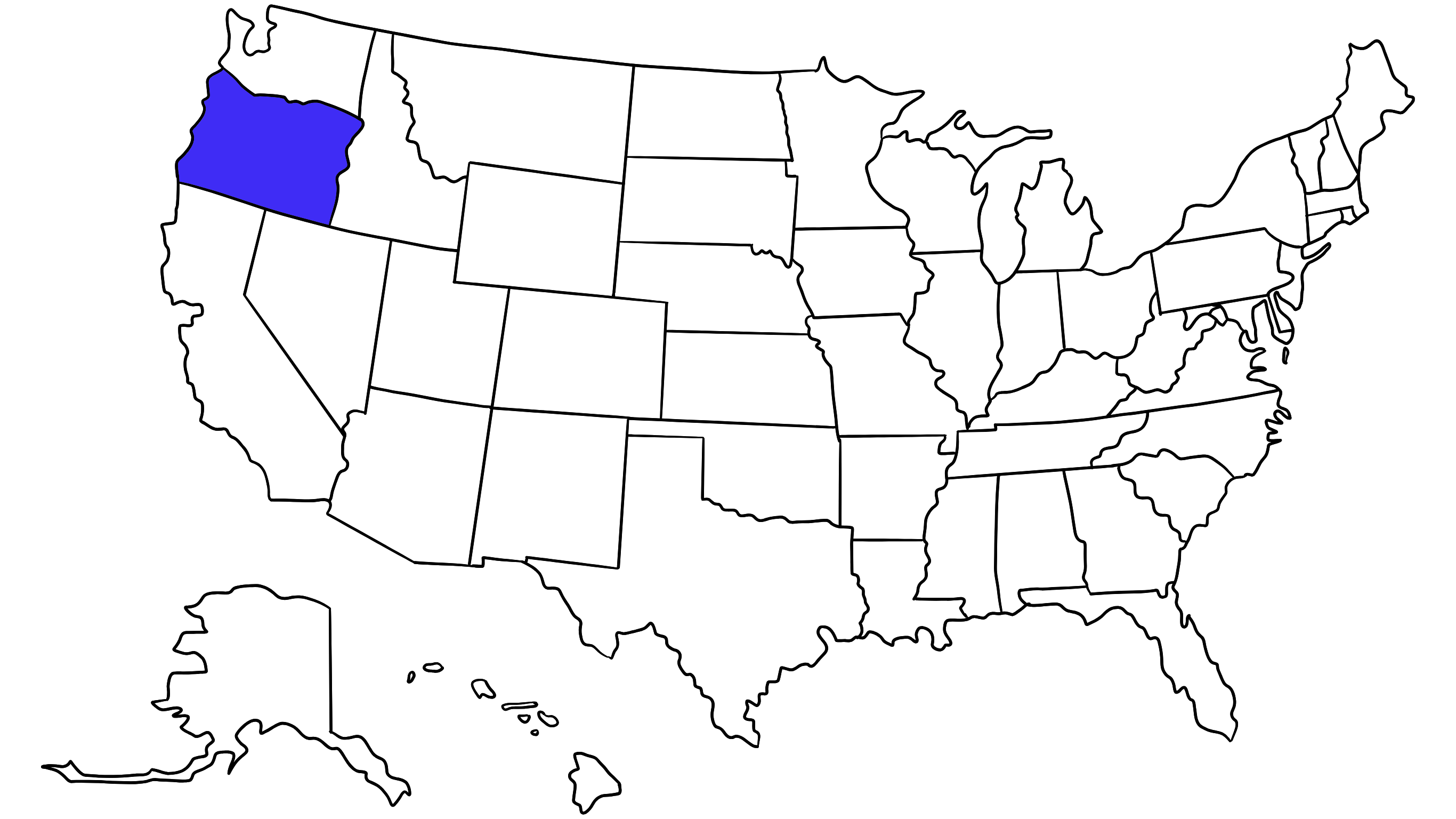
 Create Your Oregon Pay Stub
Estimate Your Oregon Paycheck
Enter your pay details below. This is an estimate for informational purposes only.
Any overtime?
Estimated Results (per pay period)
This calculator provides estimates only and is not tax, legal or accounting advice. Federal tax uses the 2026 IRS withholding formula (Publication 15-T, Worksheet 1A) assuming a standard Form W-4 with no additional adjustments. Oregon state tax uses the official 2026 withholding formula from Oregon DOR — Pub. 150-206-436 Withholding Tax Formulas (federal-tax subtraction & per-allowance credit not modeled; top bracket threshold approximated), assuming standard withholding with no additional allowances or credits. It also uses the 2026 Social Security wage base. It supports Single/MFS, Married Filing Jointly/Qualifying Surviving Spouse, Head of Household and Nonresident Alien federal filing statuses (Nonresident Alien withholding follows the IRS Notice 1392 wage-addback procedure), and calculates overtime pay at 1.5x the hourly rate. It does not account for local taxes or additional allowances/credits. Actual withholding depends on your W-4, employer payroll system and individual circumstances. Consult a tax professional or payroll provider for exact figures.
Sources: IRS Publication 15-T (2026), Oregon DOR — Pub. 150-206-436 Withholding Tax Formulas (federal-tax subtraction & per-allowance credit not modeled; top bracket threshold approximated), Social Security Administration. Last verified: August 14, 2026.
An Oregon paycheck calculator estimates take-home pay by applying federal payroll taxes, Oregon income tax withholding, the Statewide Transit Tax, Paid Leave Oregon contributions plus any employee deductions that apply. Oregon has more state payroll layers than a simple income-tax-only calculation, so each deduction should be handled separately.
Three Oregon Payroll Items Can Change the Result Before Other Deductions
Oregon employees can see several state-specific payroll amounts in addition to federal tax. The most important 2026 items for a paycheck estimate are Oregon income tax withholding, the Statewide Transit Tax and Paid Leave Oregon.
| Oregon Payroll Item | 2026 Treatment |
|---|---|
| Oregon income tax withholding | Calculated from Oregon withholding rules and the employee's Form OR-W-4 information |
| Statewide Transit Tax | 0.1 percent of qualifying employee wages, equal to $1 per $1,000 |
| Paid Leave Oregon | 1 percent total contribution rate on covered wages up to $184,500; employees generally pay 60 percent of the total rate |
| Oregon unemployment insurance | Generally an employer payroll tax, not a standard employee paycheck deduction |
Keeping these items separate improves the estimate and makes it easier to compare calculator results with a real Oregon pay statement.
Start With the Right Oregon Paycheck Inputs
The calculator should start with the employee's actual pay arrangement. A strong estimate uses wage information, tax elections and benefit deductions that match the payroll period being modeled.
- Annual salary or hourly rate
- Regular hours and overtime hours
- Pay frequency
- Federal Form W-4 information
- Oregon Form OR-W-4 information
- Pre-tax deductions such as eligible retirement or benefit contributions
- Post-tax deductions when the user wants them reflected in net pay
- Year-to-date wages when annual wage limits matter
Once the user has the payroll inputs, an online paystub workflow can later be used to document genuine final payroll information. The calculator itself should remain focused on estimating gross-to-net pay.
Oregon Withholding Uses Form OR-W-4
Oregon uses its own withholding form rather than relying on the current federal Form W-4 for state withholding. Form OR-W-4 tells the employer how to calculate Oregon income tax withholding based on the employee's state allowances and other elections.
For 2026, Oregon publishes withholding formulas and tables for employers. The Department of Revenue states that computer payroll systems and many common payroll situations should use the withholding formulas rather than a simple fixed percentage.
The paycheck calculator should use the withholding method that applies to the current payroll instead of trying to reproduce an annual tax return.
Paid Leave Oregon Is 0.6 Percent for the Standard Employee Share in 2026
Paid Leave Oregon keeps a 1 percent total contribution rate for 2026 on subject wages up to $184,500. Employees generally pay 60 percent of the total contribution, which is a standard employee share of 0.6 percent of covered wages.
Large employers generally pay the remaining 40 percent. Small employers with fewer than 25 employees are generally not required to pay the employer portion, but they still withhold the employee contribution unless an approved arrangement changes the payroll treatment.
The Statewide Transit Tax Remains 0.1 Percent
Oregon employers should continue withholding the Statewide Transit Tax at 0.1 percent, or 0.001, in 2026. The tax applies to wages of Oregon residents and to wages of nonresidents for services performed in Oregon, subject to statutory exceptions.
This tax is different from TriMet or Lane Transit payroll taxes. Those district payroll taxes are generally employer-paid and should not be treated as ordinary employee deductions. The Statewide Transit Tax is the employee wage withholding item relevant to the standard paycheck estimate.
Federal Payroll Taxes Apply on Top of Oregon Payroll Deductions
Oregon employees also pay federal payroll taxes. For 2026, Social Security is 6.2 percent of covered wages up to $184,500. Medicare is generally 1.45 percent with no general wage base limit.
Federal Additional Medicare Tax withholding begins after an employer pays an employee more than $200,000 in Medicare wages during the year. Federal income tax depends on Form W-4 information, taxable wages and pay frequency.
Oregon Hourly Pay Depends on Work Location
Oregon has three minimum wage zones, so work location can change the starting wage before taxes are calculated. From July 1, 2026 through June 30, 2027, the Portland metro rate is $16.80 per hour, the standard rate is $15.55 and the nonurban rate is $14.55.
A calculator should not assume one statewide hourly minimum. The employer or employee should use the actual legal rate for the work location and classification.
How the Oregon Paycheck Calculation Flows
The calculation begins with regular earnings, overtime plus other taxable compensation for the pay period. Taxes and payroll contributions are then applied in the correct order using the wage bases that apply to each item.
Estimated Net Pay = Gross Pay - Federal Taxes - Oregon Withholding - Statewide Transit Tax - Paid Leave Employee Share - Other Employee Deductions
Not every deduction reduces every tax base. Eligible pre-tax benefit deductions can change federal or Oregon taxable wages differently depending on the plan. The calculator should therefore treat pre-tax deductions according to their actual payroll tax treatment.
Hourly, Salary and Overtime Scenarios Should Not Be Mixed
A salary calculation usually divides annual salary by the number of payroll periods. An hourly calculation uses rate multiplied by hours then adds overtime or other earnings when applicable.
Overtime can increase gross wages enough to change Oregon withholding and other payroll deductions for that period. The calculator should use the overtime earnings actually expected rather than assuming every employee receives the same overtime multiplier in every situation.
Why Your Oregon Paycheck Can Differ From the Calculator
A real paycheck may include payroll details that are not entered into a general calculator. Examples include garnishments, employer-specific benefit plans, retroactive pay, bonus withholding, prior payroll corrections, approved Paid Leave equivalent plans or year-to-date wage limits.
The calculator is best used to estimate take-home pay and review the effect of payroll inputs. The employer's final payroll calculation remains the source of the actual wage payment.
Turn Final Oregon Payroll Numbers Into a Pay Statement
After gross wages, taxes and employee deductions have been finalized, the next step is documentation. Oregon employers have detailed itemized pay-statement obligations, so the employee-facing record should match the completed payroll calculation.
The Oregon pay stub generator can organize genuine final payroll figures into a clear statement after the paycheck estimate has been confirmed.
Online Paystub is intended for lawful payroll, business and recordkeeping use. It should not be used to fabricate wages, employment history or payment information.
Frequently Asked Questions
How much tax is taken from a paycheck in Oregon?
The result can include federal income tax, Social Security, Medicare, Oregon income tax withholding, the Statewide Transit Tax plus Paid Leave Oregon and other employee deductions that apply.
How do I calculate take-home pay in Oregon?
Start with gross pay then subtract federal taxes, Oregon withholding, the 0.1 percent Statewide Transit Tax, the applicable Paid Leave employee contribution plus other employee deductions.
Does Oregon have state income tax on wages?
Yes. Oregon employers withhold state personal income tax from covered wages using Oregon withholding rules and Form OR-W-4 information.
What is the Oregon Paid Leave employee contribution for 2026?
The total Paid Leave contribution rate is 1 percent of covered wages up to $184,500. Employees generally pay 60 percent of that total rate, equal to 0.6 percent of covered wages.
How do pre-tax deductions affect Oregon take-home pay?
Eligible pre-tax deductions can reduce one or more taxable wage bases. The effect depends on the benefit and the tax, so a deduction should not automatically be removed from every wage base.