Washington Paycheck Calculator
Estimate your Washington take-home pay. Washington has no state income tax on wages, so this calculator covers federal tax, Social Security and Medicare.
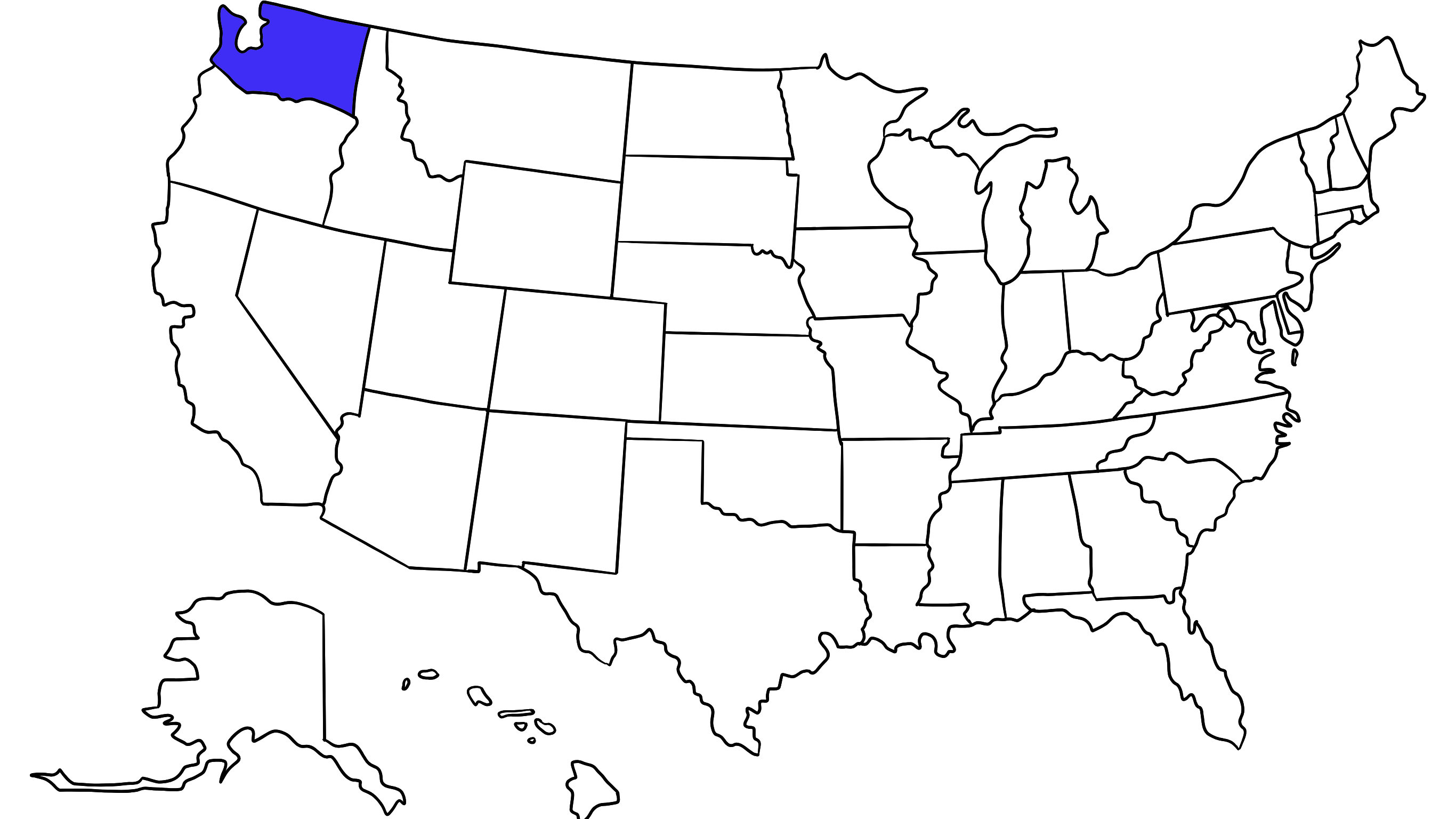
 Create Your Washington Pay Stub
Estimate Your Washington Paycheck
Enter your pay details below. This is an estimate for informational purposes only.
Any overtime?
Estimated Results (per pay period)
This calculator provides estimates only and is not tax, legal or accounting advice. Federal tax uses the 2026 IRS withholding formula (Publication 15-T, Worksheet 1A) assuming a standard Form W-4 with no additional adjustments. Washington does not levy a state income tax on wages, so no state withholding is calculated. It also uses the 2026 Social Security wage base. It supports Single/MFS, Married Filing Jointly/Qualifying Surviving Spouse, Head of Household and Nonresident Alien federal filing statuses (Nonresident Alien withholding follows the IRS Notice 1392 wage-addback procedure), and calculates overtime pay at 1.5x the hourly rate. It does not account for local taxes or additional allowances/credits. Actual withholding depends on your W-4, employer payroll system and individual circumstances. Consult a tax professional or payroll provider for exact figures.
Sources: IRS Publication 15-T (2026), Social Security Administration. Last verified: August 14, 2026.
A Washington paycheck calculator should not stop after federal taxes simply because the state does not currently impose an individual income tax. In 2026, many Washington workers can have Paid Family and Medical Leave premiums, WA Cares contributions plus a workers' compensation employee share in addition to federal income tax, Social Security, Medicare and other deductions.
Washington Has No Individual Income Tax in 2026
Washington does not currently impose an individual income tax, so a 2026 paycheck should not include ordinary Washington state income tax withholding.
The Washington Department of Revenue confirms that the state does not currently have an individual income tax. A new high-income tax enacted in 2026 is scheduled to begin January 1, 2028, so it does not change ordinary 2026 paycheck withholding.
Washington Paychecks Can Have Several State Program Deductions
The main Washington-specific employee deductions in 2026 can include Paid Family and Medical Leave, WA Cares plus a workers' compensation contribution that varies by risk classification.
| Payroll Item | 2026 Washington Treatment |
|---|---|
| Washington individual income tax | No current individual income tax withholding in 2026. |
| Paid Family and Medical Leave | 1.13 percent total premium on covered gross wages up to the $184,500 Social Security cap. Employees pay up to 71.43 percent of the total premium under the standard split. |
| WA Cares | 0.58 percent of covered gross wages for nonexempt workers. There is no Social Security wage cap on the WA Cares premium. |
| Workers' compensation | Workers pay part of Washington industrial insurance premiums. The employee amount depends on the employer's risk classification and applicable 2026 hourly rates. |
| Social Security | 6.2 percent on covered employee wages up to $184,500 in 2026. |
| Medicare | 1.45 percent on covered wages with no general wage cap. |
| Federal income tax | Based on the employee's Form W-4 and 2026 federal withholding methods. |
Paid Family and Medical Leave Uses a 1.13 Percent Premium in 2026
Washington Paid Leave uses a total 2026 premium rate of 1.13 percent of covered gross wages up to the Social Security wage cap.
Under the standard 2026 split, employees can pay 71.43 percent of the total premium and employers with 50 or more employees pay 28.57 percent. Employers with fewer than 50 employees are generally not required to pay the employer share, but they still collect the employee premium unless they choose to cover some or all of it.
The employee portion should be calculated only on covered wages and only up to the 2026 Social Security cap of $184,500. Employers cannot collect missed Paid Leave premiums retroactively in later pay periods.
WA Cares Is a Separate 0.58 Percent Payroll Premium
WA Cares generally requires a 0.58 percent employee contribution on covered wages and it does not stop at the Social Security wage cap.
The WA Cares Fund states that employers calculate the premium as gross wages multiplied by 0.0058. Unlike Paid Leave, WA Cares does not cap contributions at the Social Security taxable maximum.
Approved exemptions matter. Employers must stop deducting WA Cares premiums from workers who provide an approved exemption letter. Certain groups, including some non-immigrant work visa holders, may also qualify for exemption treatment under current rules.
Workers' Compensation Can Also Appear on a Washington Paycheck
Washington is unusual because workers contribute a meaningful share of industrial insurance premiums, so a complete paycheck estimate may need a workers' compensation deduction.
Washington L&I adopted a 4.9 percent average workers' compensation rate increase for 2026. Workers pay about one-quarter of premiums on average, but the actual amount depends on the employer's risk classification and the applicable hourly rates.
Because the employee contribution is not a single statewide percentage of wages, a calculator should use the employer's actual risk-class rate when precision matters. A generic statewide flat deduction would be misleading.
Washington Minimum Wage and Overtime Affect Gross Pay
Washington's statewide minimum wage is $17.13 per hour in 2026, with some local jurisdictions requiring higher rates.
Gross wages should be calculated before any payroll deductions are applied. Covered nonexempt employees generally qualify for overtime after more than 40 hours in a workweek and the regular rate can include more than the base hourly wage when certain additional compensation is involved.
If the gross-pay side is wrong, even accurate PFML, WA Cares and federal tax calculations will produce the wrong take-home pay.
Federal Taxes Still Matter Even Without Washington Income Tax
Federal income tax, Social Security and Medicare can still reduce a Washington paycheck even though ordinary Washington state income tax withholding is zero.
For 2026, Social Security is generally 6.2 percent on covered employee wages up to $184,500. Medicare is generally 1.45 percent on covered wages with no general wage cap. Additional Medicare Tax withholding begins after an employer pays more than $200,000 in Medicare wages to an employee during the calendar year.
Federal income tax withholding depends on Form W-4 information, taxable wages and pay frequency. Pre-tax benefit deductions can also change the wage base used for one or more federal taxes.
A Simplified Washington Net Pay Formula
Washington take-home pay can be summarized as gross wages minus federal taxes plus the state program deductions that actually apply to the employee.
Estimated Net Pay = Gross Pay - Federal Withholding - Social Security - Medicare - Paid Leave Employee Premium - WA Cares, if applicable - Workers' Compensation Employee Share - Other Employee Deductions.
The formula is intentionally simplified. Paid Leave has a wage cap, WA Cares does not and workers' compensation is risk-class specific. Those differences should remain separate in the calculator.
After the Estimate, Document the Actual Washington Payroll
Use the paycheck calculator to estimate the gross-to-net result then use the confirmed payroll amounts to create the employee-facing wage record.
The Washington pay stub generator can organize actual earnings, federal taxes, Paid Leave, WA Cares, workers' compensation and other deductions after payroll is finalized. For a broader workflow, the online paystub tool can be used with verified payroll information.
Calculator Accuracy and Responsible Use
A paycheck calculator provides an estimate from the wage, withholding and deduction inputs entered for the selected pay period.
Actual payroll can differ because of benefits, multiple jobs, supplemental wages, garnishments, exemptions, local rules, special withholding instructions or payroll rounding. Employers should use current official guidance and their own payroll records when processing wages. Online Paystub is intended for lawful payroll, business and recordkeeping purposes. Do not use calculator results or generated records to fabricate employment, inflate income or misrepresent payment history.
Frequently Asked Questions
Does Washington Have State Income Tax on Wages in 2026?
No. Washington does not currently impose an individual income tax, so ordinary 2026 wages do not have Washington individual income tax withholding.
What Is the Washington Paid Leave Premium in 2026?
The total Paid Family and Medical Leave premium is 1.13 percent of covered gross wages up to the $184,500 Social Security cap. Employees can pay up to 71.43 percent of the total premium under the standard split.
How Much Is the WA Cares Deduction?
WA Cares generally uses a 0.58 percent employee premium on covered gross wages. The premium does not stop at the Social Security wage cap, but approved exemptions can remove the deduction.
What Is Washington's Minimum Wage in 2026?
Washington's statewide minimum wage is $17.13 per hour in 2026. Some local jurisdictions require higher minimum wages.
Can Workers' Compensation Be Deducted From a Washington Paycheck?
Yes. Washington workers pay part of industrial insurance premiums. The employee share depends on the applicable risk classification and hourly rate, so it is not one statewide percentage of wages.