Wisconsin Paycheck Calculator
Estimate your Wisconsin take-home pay. See federal tax, Wisconsin state tax, Social Security and Medicare withheld from your paycheck.
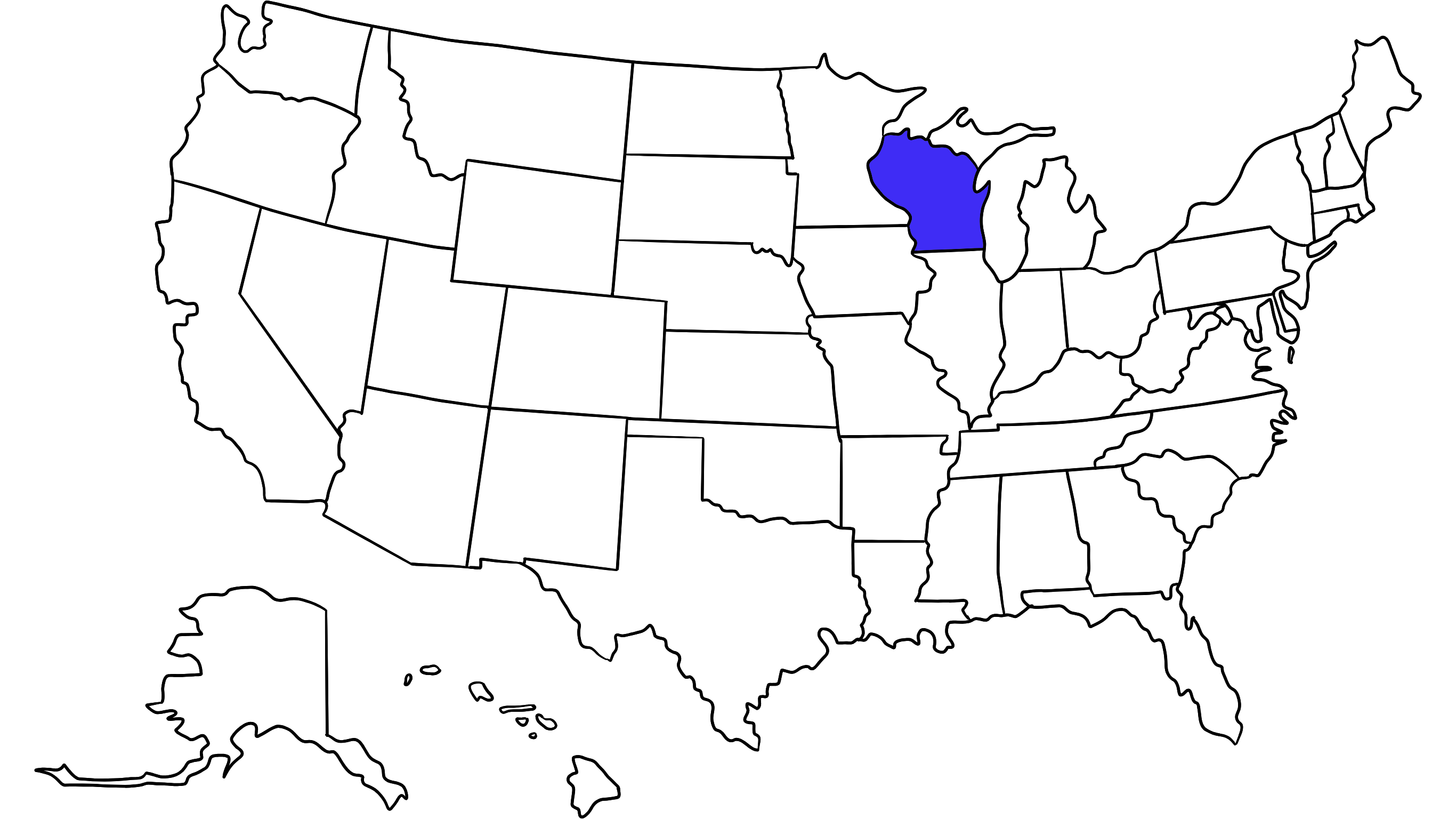
 Create Your Wisconsin Pay Stub
Estimate Your Wisconsin Paycheck
Enter your pay details below. This is an estimate for informational purposes only.
Any overtime?
Estimated Results (per pay period)
This calculator provides estimates only and is not tax, legal or accounting advice. Federal tax uses the 2026 IRS withholding formula (Publication 15-T, Worksheet 1A) assuming a standard Form W-4 with no additional adjustments. Wisconsin state tax uses the official 2026 withholding formula from Wisconsin DOR — Publication W-166 Withholding Tax Guide (max std. deduction used; WI's income-phased deduction not modeled), assuming standard withholding with no additional allowances or credits. It also uses the 2026 Social Security wage base. It supports Single/MFS, Married Filing Jointly/Qualifying Surviving Spouse, Head of Household and Nonresident Alien federal filing statuses (Nonresident Alien withholding follows the IRS Notice 1392 wage-addback procedure), and calculates overtime pay at 1.5x the hourly rate. It does not account for local taxes or additional allowances/credits. Actual withholding depends on your W-4, employer payroll system and individual circumstances. Consult a tax professional or payroll provider for exact figures.
Sources: IRS Publication 15-T (2026), Wisconsin DOR — Publication W-166 Withholding Tax Guide (max std. deduction used; WI's income-phased deduction not modeled), Social Security Administration. Last verified: August 14, 2026.
The Wisconsin paycheck calculator estimates net pay after federal income tax, Wisconsin income tax withholding, Social Security, Medicare and other payroll deductions. Wisconsin does not use one flat paycheck tax rate, so the employee's withholding status, WT-4 exemptions, pay frequency and taxable wages all matter.
What Information Does a Wisconsin Paycheck Calculator Need?
An accurate estimate starts with real payroll inputs. The Wisconsin Department of Revenue withholding calculator uses pay per period, pay periods per year, withholding status and withholding exemptions because each input can change the state amount.
| Input | Why It Matters |
|---|---|
| Hourly rate or annual salary | Sets the starting compensation. |
| Regular and overtime hours | Determines hourly gross wages. |
| Pay frequency | Changes per-paycheck gross wages and withholding. |
| Federal Form W-4 | Controls federal income tax withholding. |
| Wisconsin Form WT-4 | Provides state withholding status and exemptions. |
| Pre-tax deductions | Can reduce one or more taxable wage bases. |
| Post-tax deductions | Reduce net pay after applicable taxes. |
| Additional withholding | Can increase the amount taken from the paycheck. |
| YTD wages | Needed when federal annual payroll tax thresholds matter. |
Wisconsin Withholding Uses Form WT-4 and the State Withholding Guide
Wisconsin employers use Form WT-4 information together with the state withholding method. The employee's withholding status and number of exemptions can change the amount withheld even when two employees earn the same gross pay.
The Department of Revenue maintains Publication W-166 plus an official withholding calculator. A paycheck estimate should follow those state methods instead of multiplying every check by the top income tax rate.
Payroll withholding is only one part of the employee's annual tax picture.
Wisconsin Individual Income Tax Rates for 2026
Wisconsin's 2026 individual income tax rates range from 3.50 percent to 7.65 percent. The bracket thresholds vary by filing status, which is another reason a paycheck calculator should not use one flat statewide percentage.
| Filing Status | 2026 Bracket Range | Rates |
|---|---|---|
| Single or Head of Household | $0 to over $332,720 | 3.50, 4.40, 5.30 and 7.65 percent |
| Married Filing Jointly | $0 to over $443,630 | 3.50, 4.40, 5.30 and 7.65 percent |
| Married Filing Separately | $0 to over $221,820 | 3.50, 4.40, 5.30 and 7.65 percent |
These annual tax brackets are useful context, but employer withholding still follows the state withholding method and the employee's WT-4 information.
How Wisconsin Net Pay Is Estimated
Wisconsin take-home pay begins with gross earnings. The calculator then applies the tax treatment of eligible pre-tax deductions, estimates federal and Wisconsin withholding, calculates Social Security and Medicare then subtracts remaining employee deductions.
Estimated Net Pay = Gross Pay - Employee Taxes - Other Employee Deductions
Hourly Wages and Overtime in Wisconsin
Hourly employees should calculate regular wages from actual hours worked then add qualifying overtime before payroll taxes are applied. Wisconsin generally requires covered workers to receive time and one-half their regular rate for hours worked over 40 in a workweek.
Wisconsin's general minimum wage is $7.25 per hour for non-opportunity employees. Special rates can apply to opportunity employees and tipped workers, so the calculator should use the employee's actual legal wage rate rather than assume one rate for every worker.
Wisconsin Salary, Biweekly and Semimonthly Paychecks
For salaried employees, convert annual compensation to current-period gross pay using the actual payroll frequency. Biweekly payroll normally uses 26 regular periods while semimonthly payroll uses 24, so the gross amount per check is not the same.
The pay frequency also affects federal and Wisconsin withholding calculations. Selecting the wrong frequency can distort both the gross-pay allocation and the estimated tax amount.
Federal Taxes on a Wisconsin Paycheck
Federal income tax withholding depends on the employee's 2026 Form W-4 information plus taxable wages and pay frequency. It is separate from Wisconsin withholding.
For 2026, Social Security generally applies at 6.2 percent to covered wages up to $184,500. Medicare generally applies at 1.45 percent with no general wage ceiling. Additional Medicare Tax withholding begins after one employer pays more than $200,000 in Medicare wages to an employee during the calendar year.
Pre-Tax Benefits Can Change More Than One Tax Calculation
Pre-tax deductions can change federal taxable wages, Wisconsin taxable wages or FICA wages depending on the benefit. The impact is not identical for every deduction.
A traditional 401(k) contribution usually reduces federal income tax wages but generally remains subject to Social Security and Medicare. Certain cafeteria-plan benefits can receive different payroll tax treatment. A calculator is more reliable when the deduction type is known instead of entered as a generic pre-tax amount.
Wisconsin Withholding Is Not the Same as Final State Tax
Payroll withholding is a prepayment toward the employee's state income tax, not the final tax return calculation. Credits, deductions, other income, spouse income, part-year residency and tax already paid can change the final amount due or refunded.
A paycheck calculator should therefore estimate current withholding without promising that the result equals the employee's final Wisconsin income tax liability.
Why a Wisconsin Paycheck Estimate May Differ From Payroll
Actual net pay can differ because of WT-4 elections, federal W-4 entries, additional withholding, bonuses, benefit deductions, taxable fringe benefits, garnishments, payroll rounding or incomplete YTD wages.
Employers should compare the estimate with the current Wisconsin withholding guide and their payroll records before making an actual payment.
Turn the Final Calculation Into a Payroll Record
A paycheck calculator estimates the payment. A pay stub documents the actual payroll transaction after wages, taxes and deductions have been finalized.
Once the numbers are confirmed, the Wisconsin pay stub generator can organize genuine payroll information into a clear employee statement.
For a broader lawful document workflow, you can make online paystub records after the underlying payroll data has been verified.
Frequently Asked Questions
How much tax is taken from a paycheck in Wisconsin?
The amount depends on federal Form W-4 information, Wisconsin WT-4 status and exemptions, taxable wages, pay frequency, FICA plus other payroll deductions. There is no single statewide percentage that fits every paycheck.
What are Wisconsin income tax rates for 2026?
Wisconsin individual income tax rates are 3.50 percent, 4.40 percent, 5.30 percent and 7.65 percent across filing-status-specific taxable-income brackets.
Does Wisconsin use a state withholding form?
Yes. Form WT-4 provides Wisconsin withholding status and exemptions. Employees who need to change state withholding generally submit a new WT-4 to the employer.
How does overtime affect a Wisconsin paycheck?
Covered workers generally receive time and one-half for hours worked over 40 in a workweek. Overtime raises gross pay before payroll taxes and deductions are calculated.
How do pre-tax deductions change Wisconsin take-home pay?
Eligible pre-tax deductions can lower one or more taxable wage bases. The exact effect depends on the benefit and its federal and Wisconsin tax treatment.