Maryland Paycheck Calculator
Estimate your Maryland take-home pay. See federal tax, Maryland state tax, Social Security and Medicare withheld from your paycheck.
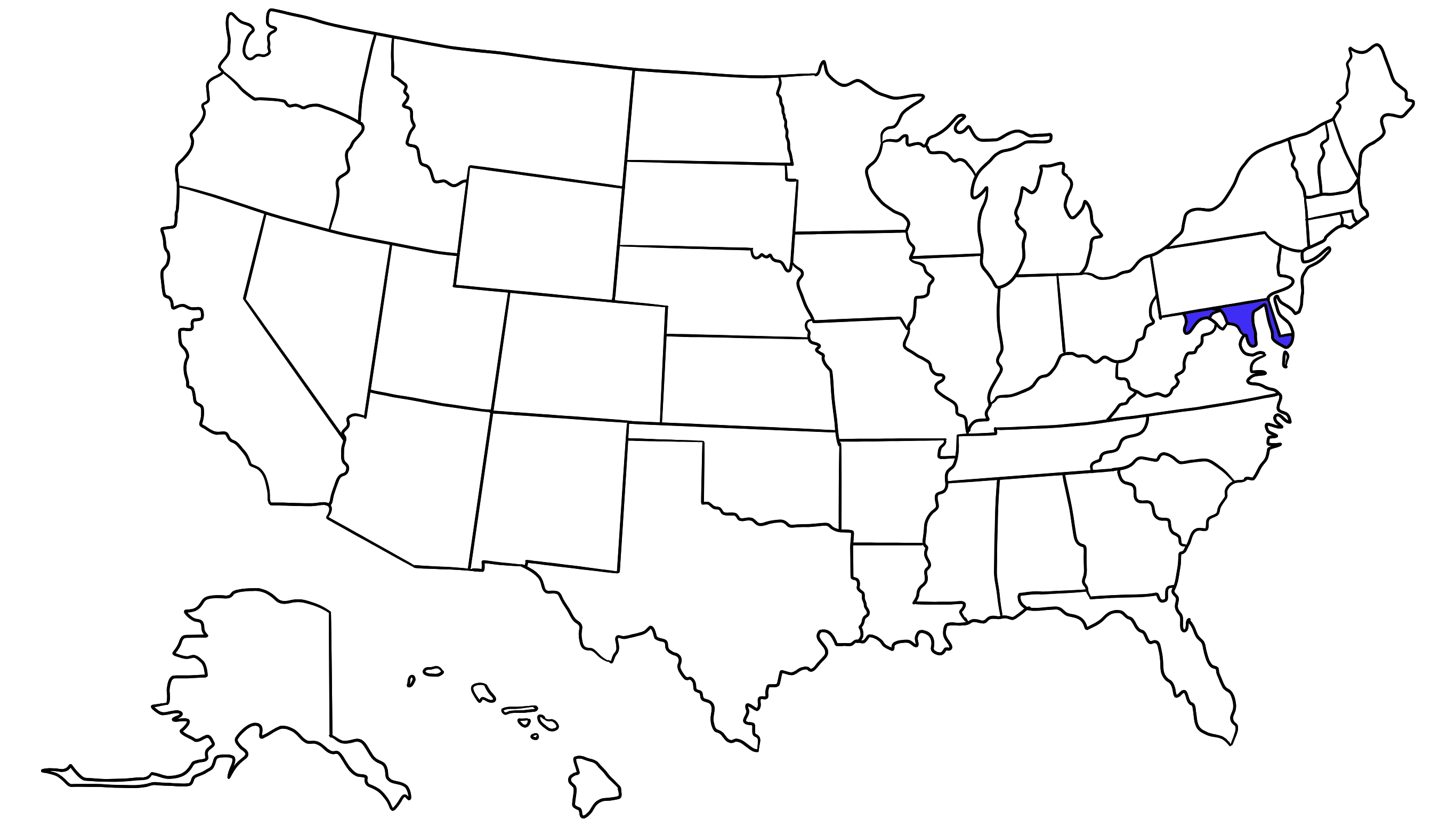
 Create Your Maryland Pay Stub
Estimate Your Maryland Paycheck
Enter your pay details below. This is an estimate for informational purposes only.
Any overtime?
Estimated Results (per pay period)
This calculator provides estimates only and is not tax, legal or accounting advice. Federal tax uses the 2026 IRS withholding formula (Publication 15-T, Worksheet 1A) assuming a standard Form W-4 with no additional adjustments. Maryland state tax uses the official 2026 withholding formula from Maryland Comptroller — Tax Rate Schedules I & II. County/local tax is estimated using a flat 3.20% rate (the top of Maryland's 2.25%-3.20% county range); your actual county rate may be lower. It also uses the 2026 Social Security wage base. It supports Single/MFS, Married Filing Jointly/Qualifying Surviving Spouse, Head of Household and Nonresident Alien federal filing statuses (Nonresident Alien withholding follows the IRS Notice 1392 wage-addback procedure), and calculates overtime pay at 1.5x the hourly rate. It does not account for additional allowances/credits. Actual withholding depends on your W-4, employer payroll system and individual circumstances. Consult a tax professional or payroll provider for exact figures.
Sources: IRS Publication 15-T (2026), Maryland Comptroller — Tax Rate Schedules I & II, state-only (county/local tax excluded), Social Security Administration. Last verified: August 14, 2026.
Use the Maryland Paycheck Calculator to estimate take-home pay after federal income tax, Social Security, Medicare, Maryland state income tax and applicable local income tax withholding. Maryland is different from many states because the employee's county or Baltimore City residence can materially affect payroll withholding.
For 2026, Maryland's individual state tax schedule ranges from 2% to 6.5%, although Maryland law does not permit a rate below 4.75% to be used for withholding purposes. Local income tax also applies to Maryland residents, with 2026 local rates varying by county or Baltimore City. Employers use Form MW507 to determine exemptions and other employee withholding information.
Source: Maryland Withholding Tax Facts 2026
How to Use the Maryland Paycheck Calculator
To estimate a Maryland paycheck, enter gross wages, payroll frequency, filing information and the employee's Maryland locality. A reliable estimate needs both state and local withholding inputs.
- Gross taxable wages
- Pay frequency
- Federal Form W-4 information
- Maryland Form MW507 information
- County of residence or Baltimore City
- Number of Maryland exemptions
- Pre-tax deductions
- Post-tax deductions
- Overtime, commissions or bonuses
- Year-to-date wages when relevant
What Federal Taxes Come Out of a Maryland Paycheck?
A Maryland paycheck can include federal income tax withholding, Social Security and Medicare in addition to state income tax. Federal withholding is calculated separately from the state calculation.
Federal Income Tax Withholding
Federal income tax withholding depends on taxable wages, payroll frequency and the information on the employee's Form W-4. Employers use the IRS 2026 withholding methods rather than one flat federal percentage.
Source: IRS Publication 15-T (2026)
Social Security and Medicare
Social Security and Medicare are federal payroll taxes that generally apply in addition to federal and state income tax withholding.
| Payroll Tax | Employee Rate | 2026 Wage Treatment |
|---|---|---|
| Social Security | 6.2% | Applies to covered wages up to $184,500 |
| Medicare | 1.45% | Applies to covered wages with no annual wage limit |
| Additional Medicare Tax | 0.9% | Employer withholding begins after wages paid exceed $200,000 |
The employer generally matches the regular Social Security and Medicare employee portions. The Additional Medicare Tax is not matched by the employer.
Source: SSA 2026 Contribution and Benefit Base
Source: IRS Publication 15 (2026)
How Maryland State Income Tax Withholding Works in 2026
Maryland withholding uses state rate schedules together with employee exemptions and local tax. The final payroll withholding amount can therefore differ for employees with the same gross wages but different filing statuses or places of residence.
For 2026, Maryland's individual tax rate schedules range from 2% at the lowest taxable income levels to 6.5% at the highest levels. The Comptroller notes that Maryland law does not permit a rate below 4.75% to be used for withholding tax purposes.
| State Tax Feature | 2026 Maryland Rule |
|---|---|
| Individual tax rate schedule | 2.00% to 6.50% depending on taxable net income |
| Minimum rate used for withholding purposes | 4.75% |
| Exemption value in withholding tables | $3,200 per exemption |
| Employee state withholding form | Form MW507 |
Source: Maryland Withholding Tax Facts 2026
Maryland Local Income Tax Can Change Your Paycheck
Maryland local income tax is based on taxable income and the employee's county or Baltimore City residence. The local rate is separate from the state tax rate, so locality is an essential paycheck calculator input.
The Comptroller's 2026 guidance groups withholding tables into local-rate bands from 2.25% through 3.30%. Actual county rates vary. Some examples from the 2026 schedule are:
| Locality | 2026 Local Rate |
|---|---|
| Worcester County | 2.25% |
| Talbot County | 2.40% |
| Garrett County | 2.65% |
| Washington County | 2.95% |
| Montgomery County | 3.20% |
| Baltimore City | 3.20% |
| Kent County | 3.30% |
Anne Arundel County and Frederick County use income-based local rate schedules for 2026, so a single countywide percentage does not describe every taxpayer in those jurisdictions.
Source: Maryland Withholding Tax Facts 2026
What Is Maryland Form MW507?
Form MW507 is the Maryland Employee's Withholding Certificate. Employers use it to determine the number of exemptions claimed and other Maryland withholding information.
For the 2026 withholding tables, employers treat each exemption as $3,200. Employees with circumstances that affect exemptions or withholding should provide an updated MW507 when required.
Source: Maryland Employer Withholding Guide 2026
How Maryland Withholding Works for Nonresidents
Maryland nonresident withholding can differ from resident withholding because nonresidents generally do not pay Maryland local income tax. The state instead requires an additional state withholding amount based on the lowest local tax rate.
The 2026 Maryland Withholding Tax Facts state that nonresidents generally do not have a local tax rate. An additional state tax is withheld using the lowest local rate of 2.25%.
Source: Maryland Withholding Tax Facts 2026
How to Estimate a Maryland Paycheck
A Maryland paycheck estimate should calculate state and local withholding separately before combining them with federal payroll taxes and other deductions.
- Determine gross taxable wages for the pay period.
- Identify the employee's filing status and Maryland Form MW507 information.
- Apply the appropriate exemption amount.
- Determine the employee's Maryland county or Baltimore City local tax rate.
- Calculate Maryland state and local withholding using the applicable method.
- Calculate federal income tax withholding.
- Calculate Social Security and Medicare.
- Subtract other payroll deductions to estimate net pay.
Maryland Hourly Paycheck Calculator
A Maryland hourly paycheck estimate begins with the employee's hourly rate and the number of hours worked during the pay period.
Hourly Rate × Regular Hours = Regular Gross Pay
Add taxable overtime, commissions, bonuses or other compensation that belongs in the pay period before calculating applicable withholding and payroll deductions.
Maryland Salary Paycheck Calculator
For salaried employees, gross pay per paycheck is generally calculated by dividing annual salary by the number of payroll periods in the year.
- Weekly: annual salary ÷ 52
- Biweekly: annual salary ÷ 26
- Semimonthly: annual salary ÷ 24
- Monthly: annual salary ÷ 12
Gross salary is not the same as take-home pay. Federal taxes, state withholding and other payroll deductions are applied after gross wages for the period are determined.
Gross Pay vs. Net Pay in Maryland
Gross pay is compensation before payroll taxes and deductions. Net pay is the amount remaining after applicable withholding and other payroll deductions.
Gross Pay - Taxes - Payroll Deductions = Estimated Net Pay
The difference between gross and net pay in Maryland can be affected by federal withholding, state income tax, pre-tax benefits, retirement contributions, insurance deductions and other payroll elections.
Why Your Maryland Paycheck May Be Different
Your actual Maryland paycheck may differ from an estimate because state and local withholding depend on employee-specific facts and the payroll period.
- County or Baltimore City residence
- Form MW507 exemptions
- Filing status
- Income-based local rates in Anne Arundel or Frederick County
- Bonuses or commissions
- Overtime
- Pre-tax deductions
- Additional withholding
- Nonresident status
- Payroll corrections
Frequently Asked Questions
What Is the Maryland Income Tax Rate for 2026?
Maryland's individual state income tax schedule ranges from 2% to 6.5% depending on taxable net income. Maryland law does not permit a rate below 4.75% to be used for withholding purposes.
Does Maryland Have Local Income Tax?
Yes. Maryland residents may have local income tax based on their county or Baltimore City residence. Local rates differ by jurisdiction.
What Is Form MW507?
Form MW507 is Maryland's Employee's Withholding Certificate. Employers use it to determine exemptions and other state withholding information.
What Is the Maryland Exemption Value for 2026 Withholding Tables?
Employers use $3,200 as the value of one exemption in the 2026 withholding tables.
Do Maryland Nonresidents Pay Local Income Tax Withholding?
Generally, nonresidents do not have a local Maryland tax rate. The 2026 guidance states that additional state tax is withheld using the lowest local tax rate of 2.25%.
Is a Maryland Paycheck Calculator Exact?
No. It provides an estimate. Actual withholding can differ because of county rates, exemptions, filing status, supplemental wages and payroll adjustments.