Maryland Personal Finance Guide and Research
Ask a Maryland worker what their state income tax rate is and most will name a number from the bracket table. That number is never the whole answer. Every resident also pays a county income tax on the same wages, collected on the same return, at a rate set by where they sleep rather than where they work. Here is how the pieces fit together in 2026.
 Create Your Maryland Pay Stub
Maryland Resources
Jump straight to what you need.

The 4.75% you hear about is only the state's half
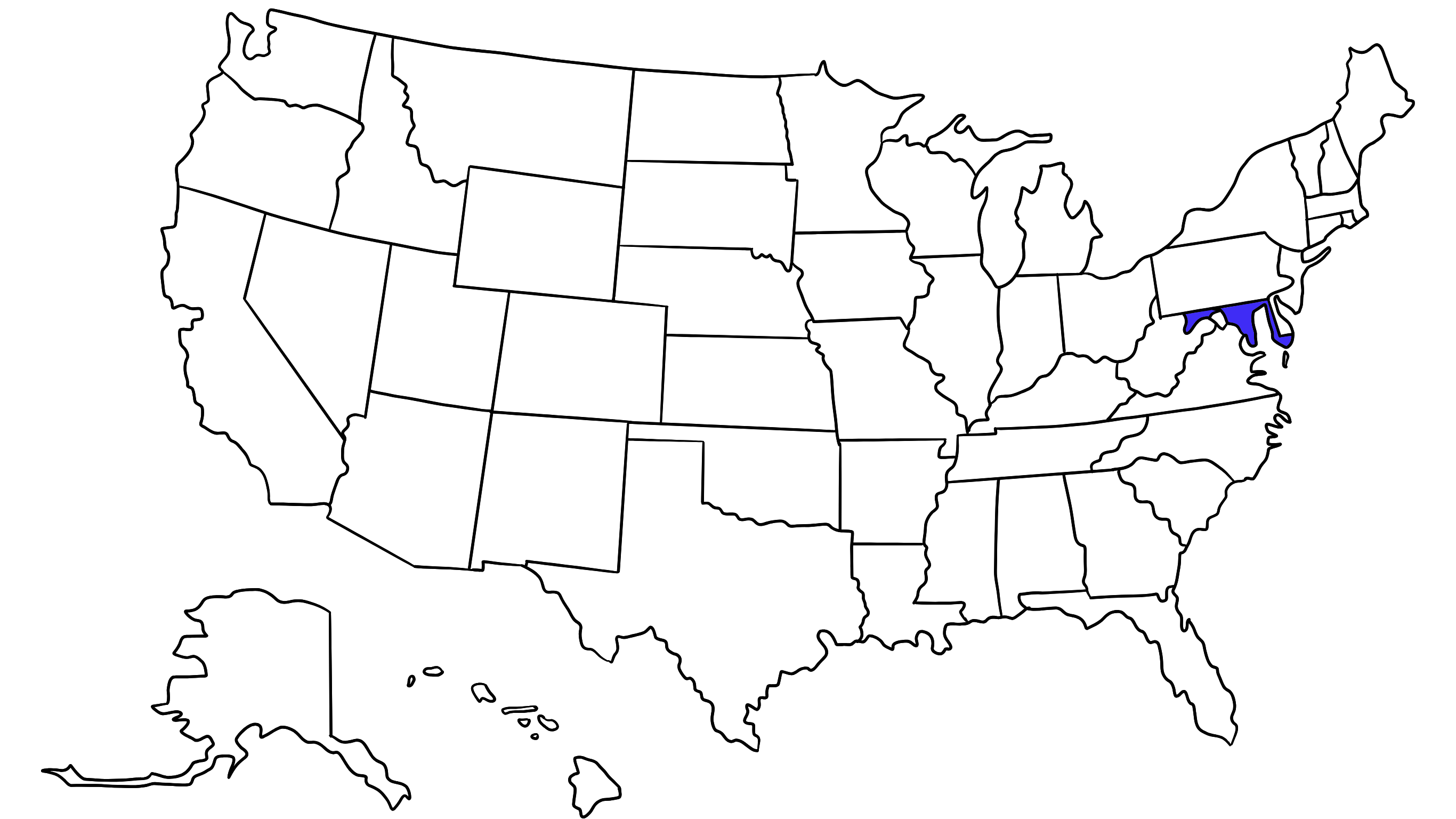
The most common Maryland misconception goes like this: "I earn under $100,000, so my state income tax is 4.75%." The 4.75% bracket does cover taxable income from $3,000 to $100,000 for single filers, which is where most Maryland earners sit. But Maryland is unusual in requiring all 23 counties and Baltimore City to levy their own income tax on the same taxable income. That local piece runs from 2.25% in Worcester County to 3.30% in Dorchester and Kent, with 3.20% the most common rate, shared by Baltimore City, Baltimore County, Montgomery, Prince George's and Howard.
So a Baltimore resident in the 4.75% state bracket is really paying 4.75% plus 3.20% on each additional dollar. The county tax follows residence as of December 31, not the office address. Two colleagues at the same bench in Baltimore can carry different local lines if one lives in the city and the other across the line in Anne Arundel, which uses a graduated local schedule of its own, as does Frederick.
There is a second, quieter misconception: that a new hire's county rate is set automatically. It is not. Without a completed Form MW507 on file, the Comptroller's 2026 tables require withholding at the maximum 3.30% local rate. That form directly changes the size of the first check.
What people assume versus what the Comptroller applies
| The assumption | The 2026 rule |
|---|---|
| My rate is the bracket rate, 4.75% | State bracket plus a county rate of 2.25% to 3.30%, both on Form 502 |
| The county tax follows my employer's location | It follows your county of residence on December 31 |
| Maryland has eight brackets ending at 5.75% | Ten brackets since the 2025 session, ending at 6.5% above $1,000,000 single or $1,200,000 joint |
| The standard deduction phases out for higher earners | The phase-in was repealed. The cap is $3,350 single or $6,700 joint and head of household |
| Sales tax varies by county like the income tax | 6% statewide with no local add-on anywhere |
| I should see a FAMLI deduction in 2026 | Contributions start January 1, 2027. A 2026 FAMLI line is running ahead of the law |
| Nonresidents skip the county tax | They pay a flat 2.25% special nonresident rate instead, unless reciprocity applies |
The last row deserves a note. Maryland has reciprocity agreements for wage income with the District of Columbia, Virginia, West Virginia and Pennsylvania. A Pennsylvania resident on a Baltimore payroll pays Pennsylvania on those wages, not Maryland, so Maryland tax should not be coming out of that check once the arrangement is documented with the employer.
A lab technician in Baltimore, paid every two weeks
Consider a lab technician at a Baltimore hospital campus earning $30 an hour on a 40-hour week, filing single and living in the city, where the local rate is 3.20%. Over a biweekly period that is 80 hours of wages. Online Paystub's Maryland paycheck calculator produced the following breakdown using 2026 federal tables, the state brackets and the Baltimore City rate.
| Line | Amount per check |
|---|---|
| Gross pay (80 hours at $30.00) | $2,400.00 |
| Federal income tax | $204.15 |
| Maryland state income tax | $99.92 |
| Maryland county tax (estimated at 3.20%) | $68.68 |
| Social Security (6.2%) | $148.80 |
| Medicare (1.45%) | $34.80 |
| Estimated take-home pay | $1,843.65 |
Figures come from the Online Paystub Maryland paycheck calculator for 2026. Local taxes, health premiums and retirement contributions are not included.
The Maryland line is the one to study. It is the state and local pieces combined, which is why it looks large next to what a single 4.75% rate would produce. Move the same technician to a Worcester County address and only that line changes.
Ten brackets, one deduction cap and a surcharge most people will never see
Maryland's state schedule taxes income in layers: 2% on the first $1,000, 3% on the next $1,000, 4% on the next $1,000, then 4.75% all the way to $100,000. Above that the rate climbs in steps, 5% to $125,000, 5.25% to $150,000, 5.5% to $250,000, 5.75% to $500,000, 6.25% to $1,000,000 and 6.5% beyond. Joint filers and heads of household reach each step at higher thresholds, with the top rate starting at $1,200,000. The two highest brackets are new, added by the 2025 legislative session and first applied to tax year 2025.
The standard deduction is capped at $3,350 for single and married-filing-separately taxpayers and $6,700 for joint, head-of-household and surviving-spouse filers, up from the former $2,800 and $5,600. The 2025 legislation also removed the income-based phase-in, so the full amount is available at every income level.
Two more features matter at the top and bottom of the income range. Filers with federal adjusted gross income above $350,000 owe a 2% surcharge on net capital gains, which is never withheld from wages. At the other end, Social Security income is fully exempt from Maryland tax, with partial exclusions for pension, 401(k) and military retirement income.
Six percent from Ocean City to Bethesda, with two exceptions
After the two-layer income tax, the sales tax is a relief. Maryland charges 6% on taxable retail sales and permits no county or city sales tax, so the rate is identical in Ocean City, Bethesda and downtown Baltimore. Grocery-type food for home consumption from a substantial grocery business is exempt, as are prescription drugs. Prepared food, candy, soft drinks and most clothing are taxed.
The two exceptions are alcohol and software. Alcoholic beverages carry a 9% rate. Since July 1, 2025 the former exemption for customized software has been gone. Taxable software or SaaS used commercially in an enterprise computer system is taxed at 3%, while the same product sold for individual use is taxed at the full 6%. A remote seller becomes responsible for collecting once Maryland revenue passes $100,000 or 200 separate transactions in the current or prior calendar year. Sales tax is a business-side tax and should never appear as a deduction on an employee's earnings statement.
Paydays, the $15 floor and the eight items every wage statement must carry
Maryland's minimum wage is $15.00 an hour for employers of every size, in force since January 1, 2024 under the Fair Wage Act of 2023, which also abolished the old lower tier for small employers. Three jurisdictions go higher: Montgomery County at $17.65 for large employers, rising to $18.00 on July 1, 2026, Howard County at $16.00 for employers with 15 or more workers and Prince George's County at $15.00 with an increase scheduled for January 1, 2027. Tipped workers must receive at least $3.63 in direct wages. Overtime follows the federal 1.5 times rule after 40 hours in a week.
Pay must arrive at least semimonthly, with monthly pay allowed only for executive, administrative and professional staff. Final wages are due by the next regular payday. Since October 1, 2024, the Pay Stub and Pay Statement Act, which amended section 3-504 of the Wage Payment and Collection Law, requires a written or electronic statement each pay period showing eight items: the employer's registered name, address and phone number, the pay date and pay period dates, hours worked for non-exempt employees, the rate of pay, gross and net pay, each deduction by name and amount, any additional pay such as bonuses or commissions and, for piece-rate workers, the rate and number of pieces. The Commissioner of Labor and Industry can assess up to $500 per affected employee for a statement that falls short. Online Paystub's Maryland pay stub generator lays out all eight fields from confirmed payroll figures.
Employers carry unemployment insurance alone: new employers pay 2.6% on the first $8,500 of each worker's wages, with no employee share, so a SUI line should never appear among the deduction codes on a Maryland check. FAMLI contributions begin January 1, 2027, with benefits from January 3, 2028.
Frequently Asked Questions
Which county rate applies if I live in Frederick County but work in Montgomery County?
Your county of residence on December 31, so Frederick's graduated local schedule rather than Montgomery's 3.20%. Both the state and local amounts are reported on Form 502.
What happens if I never turned in Form MW507?
Your employer must withhold at the maximum local rate, 3.30% under the Comptroller's 2026 tables, until the form is on file. Any excess comes back when you file.
Is there local sales tax anywhere in Maryland?
No. The 6% rate applies statewide, with 9% on alcoholic beverages and a 3% rate for taxable SaaS used in an enterprise computer system.
Should a 2026 Maryland pay statement show a FAMLI deduction?
No. Family and Medical Leave Insurance contributions begin January 1, 2027. A FAMLI line dated 2026 is premature.
Does Maryland tax Social Security?
No. Social Security income is fully exempt from Maryland tax. Partial exclusions apply to pension, 401(k) and military retirement income.