A Research-Based Guide to North Carolina Finances
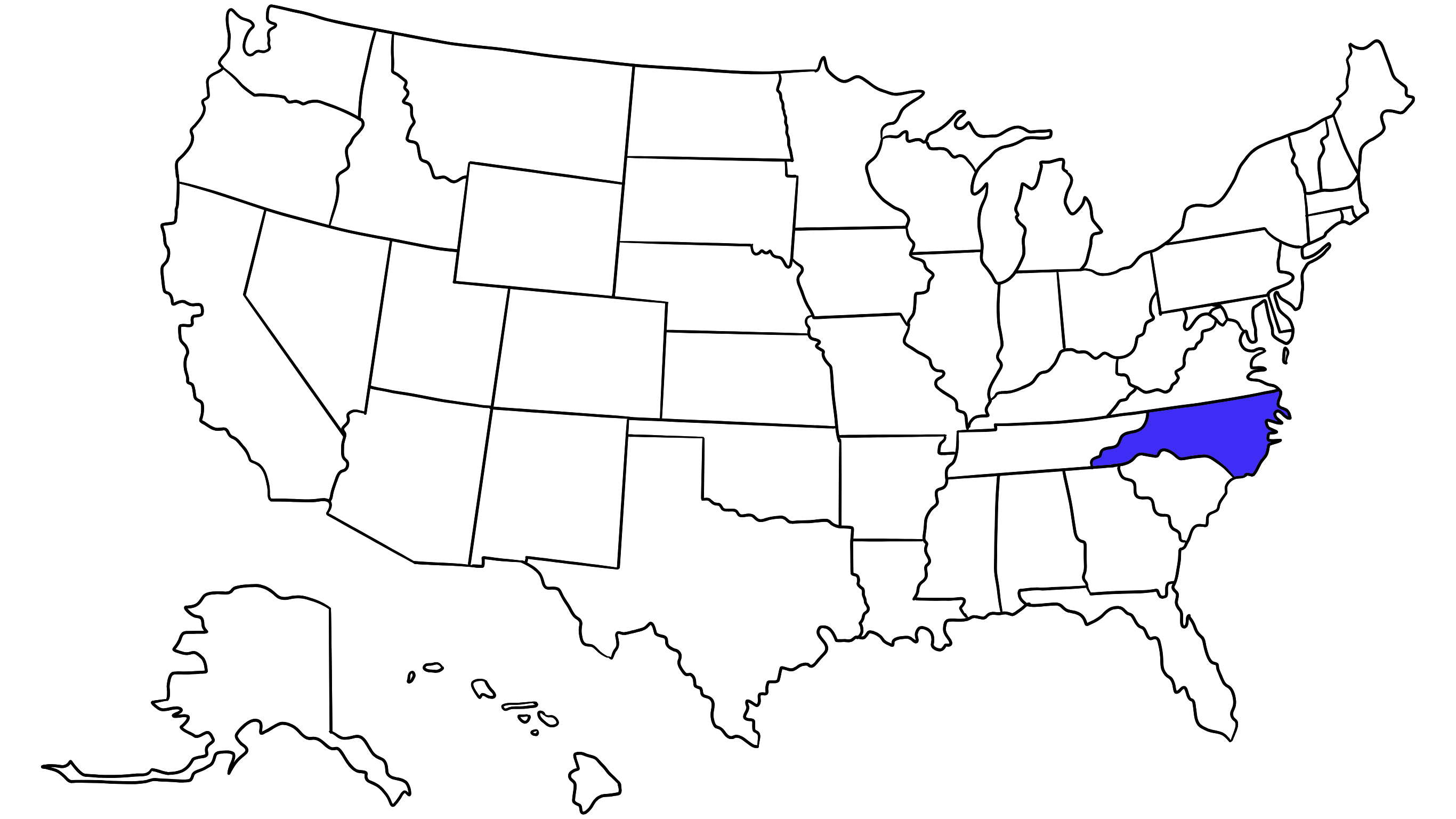
Furniture plants around Hickory, hospitals in Charlotte and research campuses near Durham all draw workers from Virginia, Tennessee, South Carolina and Georgia. North Carolina taxes the wages those commuters earn on its side of the line, at a flat rate that has dropped every year since 2022. Here is how the state treats people who cross in, people who live here and the checks both groups receive.
 Create Your North Carolina Pay Stub
North Carolina Resources
Jump straight to what you need.

The state line matters more than the employer's address
North Carolina sources wages to where the work is physically done. A Tennessee resident who drives into a Hickory finishing plant five days a week earns North Carolina-source income for every one of those days, even though the paycheck is spent at home. That worker files Form D-400 with Schedule PN, which multiplies federal taxable income by the ratio of North Carolina-source income to income from all sources. Only the North Carolina share is taxed here.
The rule cuts the other way too. A resident of Wilmington who works from a home office for a company based in Atlanta has North Carolina-source income because the services are performed in North Carolina. A nonresident who works from Virginia for a Raleigh employer and never sets foot in the state is generally not taxed by North Carolina on those wages.
North Carolina has no reciprocal wage agreement with any neighboring state, so a commuter cannot file a form with the employer to stop North Carolina withholding. Whether the home state offers a credit for the tax paid here is a question for the home state's return. Residents, meanwhile, owe North Carolina tax on income from everywhere. A resident must file when gross income tops the threshold for their filing status, which mirrors the standard deduction. Nonresident aliens must file whenever a federal return is required.
Five years of cuts, one flat number and no county add-on
North Carolina replaced its brackets with a single flat rate and has been lowering that rate on a legislated schedule. No county or city adds a local income tax, so the state line is the only individual income tax on a North Carolina check.
| Tax year | Flat rate |
|---|---|
| 2022 | 4.99% |
| 2023 | 4.75% |
| 2024 | 4.5% |
| 2025 | 4.25% |
| 2026 | 3.99% |
Further cuts are written into the law, but they depend on the state hitting revenue targets. The rate through 2026 is guaranteed; the ones after it are not.
Taxable income starts at federal adjusted gross income, then takes North Carolina's own additions and deductions. The standard deduction is $12,750 for single filers and married filing separately, $25,500 for joint returns and $19,125 for head of household. Unlike the federal deduction, it does not grow for filers who are 65 or older or blind. North Carolina itemized deductions are not the same list as federal itemized deductions, so a taxpayer who itemizes federally should not assume the state figure matches.
Seven things a new hire in Hickory should check in the first week
- Which withholding form you signed. Form NC-4 lets you report allowances built from federal and state adjustments, the child deduction, itemized deductions and credits. If you plan to take only the standard deduction and the child deduction, the shorter NC-4EZ does the job.
- The state percentage on the first statement. Withholding comes from Department of Revenue tables rather than a straight 3.99% of gross. The calculation used in the example below works out to 4.09% of wages after the standard deduction, so a figure slightly above the headline rate is normal.
- An itemized list of deductions. G.S. 95-25.13 requires an itemized statement of deductions for every pay period in which deductions are taken. If money came out, you are entitled to see what and why.
- No unemployment insurance line. Chapter 96 makes unemployment contributions an employer cost and forbids deducting them from wages. If one appears, something is wrong.
- The hourly floor. North Carolina follows the $7.25 federal minimum wage. Most Hickory plant jobs pay well above it, but overtime still has to be calculated from the correct regular rate.
- Year-to-date columns. They should continue from the last pay period, not restart. The meaning of YTD on a paycheck becomes important at tax time when the statement is compared with the W-2.
- Workday records if you live across the line. A commuter's Schedule PN ratio depends on where the work happened, so keep a simple log of days worked in North Carolina versus elsewhere.
A furniture finisher's biweekly check
Take a furniture finisher in Hickory earning $24 an hour, working 40 hours a week, paid every two weeks and filing single with the standard deduction on the NC-4EZ. The North Carolina paycheck calculator breaks the check down this way under 2026 rules.
| Line | Amount per check |
|---|---|
| Gross pay (80 hours at $24.00) | $1,920.00 |
| Federal income tax | $146.55 |
| North Carolina state income tax | $58.46 |
| Social Security (6.2%) | $119.04 |
| Medicare (1.45%) | $27.84 |
| Estimated take-home pay | $1,568.10 |
Figures come from the Online Paystub North Carolina paycheck calculator for 2026. Local taxes, health premiums and retirement contributions are not included.
The North Carolina line is modest and would be the same whether the plant sat in Hickory, Charlotte or Asheville, because no locality adds to it. The federal lines do the heavy lifting. A raise would lift the state line in proportion, never by pushing earlier dollars into a higher bracket, since there are no brackets to climb.
Sales tax climbs county by county, with one big July change
The state general rate is 4.75% and every county adds at least 2%, so the floor is 6.75%. Designated counties add 2.25% for a 7% total. Wake County adds a 0.5% transit tax for 7.25%. Durham and Orange Counties combine 2.25% local with 0.5% transit for 7.5%. Mecklenburg County moved to 8.25% on July 1, 2026, after adding a new 1% county rate on top of the 4.75% state, 2% local and 0.5% transit pieces. A $300 taxable purchase costs $20.25 in tax at 6.75% and $24.75 in Mecklenburg.
Groceries follow their own path. Qualifying food for home consumption skips the state rate entirely and pays a 2% local food tax, with no transit or county additions. That 2% holds even in Mecklenburg. Candy, soft drinks, dietary supplements, vending machine food and most prepared food are non-qualifying and pay the general rate.
- Boats: 3% state rate, capped at $1,500 per boat.
- Aircraft: 4.75% state rate, capped at $2,500.
- Electricity, piped natural gas, telecommunications and video programming: a 7% combined rate.
- Remote sellers: engaged in business once North Carolina sales exceed $100,000 in the current or prior year. From July 2, 2026 a seller that trips only that threshold registers on the first day of the first month at least 60 days after crossing it.
Sales are sourced to where the buyer receives the item, so a Hickory retailer shipping into Charlotte charges the Mecklenburg rate. Use tax applies at the same rates when a seller collected nothing. None of this belongs on a payroll record. After actual wages are verified, the North Carolina pay stub generator keeps state withholding, federal taxes and authorized deductions on the statement and the county sales tax off it.
Frequently Asked Questions
I live in Tennessee and work in Hickory. Does North Carolina tax my wages?
Yes. Wages for work physically performed in North Carolina are North Carolina-source income. You file Form D-400 with Schedule PN and pay tax only on the North Carolina share. There is no reciprocity form to stop withholding.
What is the North Carolina income tax rate for 2026?
A flat 3.99% on North Carolina taxable income, down from 4.25% in 2025. Further scheduled cuts depend on the state meeting revenue targets.
Why is the state withholding on my statement a bit more than 3.99%?
Employers withhold from Department of Revenue tables rather than multiplying gross pay by the annual rate. The 2026 calculation used on this page comes to 4.09% of wages after the standard deduction, so a small gap is expected.
Does Charlotte have a different income tax than Hickory?
No. North Carolina has no local or county income tax. Charlotte differs only at the register, where Mecklenburg County's combined sales tax rose to 8.25% on July 1, 2026.
Can my employer take unemployment insurance out of my pay?
No. Chapter 96 of the General Statutes places unemployment contributions on the employer and prohibits deducting them from employee wages.