Guide to Tennessee Finance: Taxes, Wages and Research
Tennessee shares a long border with its neighbors and plenty of Tennesseans cross it for work. The state itself takes nothing from wages, but the state where the work happens may. This article starts at the state line, then covers what Tennessee does collect, from the 7% sales tax and its local add-on to a Nashville venue worker's biweekly check and the items a new hire should verify.
 Create Your Tennessee Pay Stub
Tennessee Resources
Jump straight to what you need.

Commuting Out of Tennessee Changes Whose Rules Apply
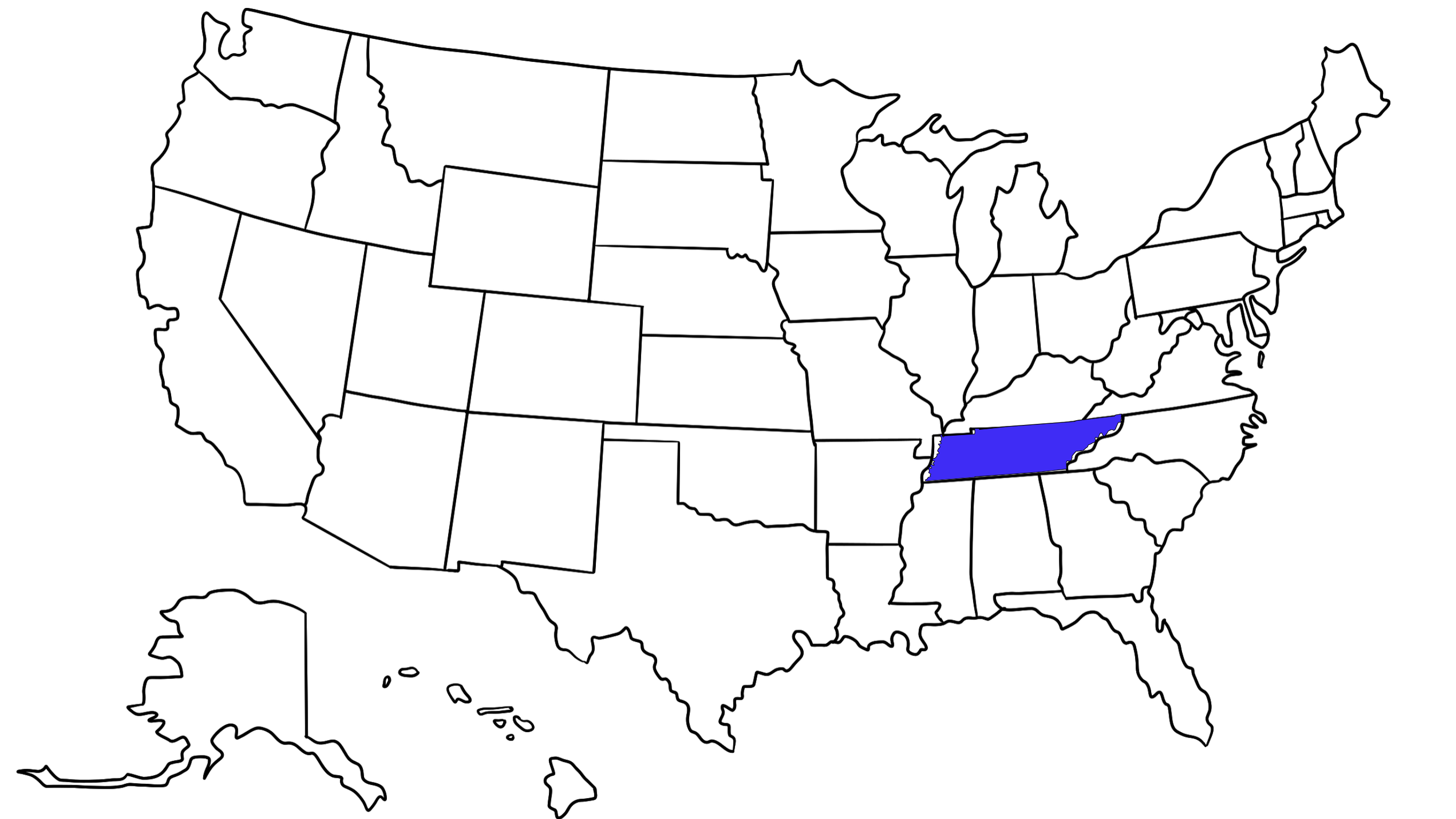
Memphis sits against Arkansas and Mississippi, Bristol is split down the middle by the Virginia line and Chattanooga is minutes from Georgia. Plenty of people live on the Tennessee side and clock in on the other. For them the question is not what Tennessee taxes, which is nothing on wages, but what the work state taxes.
Wages are generally taxed where the work is physically performed. If the state across the line has an individual income tax, a Tennessee resident working there can have that state's withholding taken from each check and a nonresident return to file. Tennessee offers no relief for that. There is no reciprocity form to hand your employer, because Tennessee has no wage tax of its own to trade. Whether the work state grants any exemption is entirely that state's decision.
The reverse is the easy case. Someone who lives in Georgia or Kentucky and drives into Tennessee for work owes Tennessee nothing on those wages. The home state's rules decide what happens next. Remote workers should track where each workday happened, since sourcing rules vary from state to state.
The Hall Tax Is Gone and Nothing Replaced It
Tennessee has no individual income tax on wages, salaries or other earned income in 2026. Employers do not withhold state income tax, employees do not complete a state withholding certificate and there is no annual Tennessee personal return. The last piece of personal income tax, the Hall tax on interest and dividends, was phased down and fully repealed for tax years beginning January 1, 2021.
Retirement income gets the same treatment. Pensions, Social Security, 401(k) and IRA distributions are untouched at the state level, though federal rules still apply to all of it. What Tennessee does tax is business activity. Taxable entities pay a 6.5% excise tax on net earnings from business conducted in the state plus a franchise tax based on net worth. Those are entity-level taxes filed apart from payroll, not a wage tax in disguise.
A Nashville Venue Worker's Biweekly Check
Take a production assistant at a Nashville music venue earning $24 an hour, single, working 40-hour weeks and paid every two weeks. Here is the 2026 breakdown from the Tennessee paycheck calculator.
| Line | Amount per check |
|---|---|
| Gross pay (80 hours at $24.00) | $1,920.00 |
| Federal income tax | $146.55 |
| Tennessee state income tax | $0.00 (none) |
| Social Security (6.2%) | $119.04 |
| Medicare (1.45%) | $27.84 |
| Estimated take-home pay | $1,626.57 |
Figures come from the Online Paystub Tennessee paycheck calculator for 2026. Local taxes, health premiums and retirement contributions are not included.
The absence is the point: no state income tax line, no state disability or family leave contribution and no local wage tax. Federal income tax, Social Security at 6.2% and Medicare at 1.45% account for the whole gap between gross and net. The federal W-4 controls the largest of those lines, so a low or missing federal amount usually traces back to how the W-4 was filled out.
The 7% State Rate, Your County's Add-On and 4% Groceries
Tennessee's state sales tax is 7% on most goods and taxable services. Every county adds a local rate within the state cap of 2.75%, so the combined rate runs from 7% to 9.75% depending on where the sale is sourced. Food and food ingredients get a reduced 4% state rate plus the local rate. Candy, prepared food, dietary supplements, alcohol and tobacco do not qualify and pay the full 7%.
Big-ticket items follow the single-article rule. Local tax applies only to the first $1,600 of a qualifying item's price, then a 2.75% state single-article tax covers the portion from $1,600 to $3,200. A 2026 legislative change lets a county with a metropolitan form of government, the structure Nashville and Davidson County use, reduce or eliminate its local-option tax on groceries by resolution, so shoppers there should watch for a local change.
Sellers register through TNTAP, receive a resale certificate automatically and file by the 20th of the month after the period ends. Out-of-state sellers with at least $100,000 of Tennessee sales in the previous year must collect. A registered business files even for a period with zero sales.
Seven Things to Check When You Start a Tennessee Job
- Confirm the pay schedule. Private employers must pay at least semi-monthly and post the regular paydays where employees can see them.
- Look at the first check for a state income tax line. There should not be one. A line labeled Tennessee state tax on ordinary wages is a payroll setup error.
- Review your federal W-4 elections, since federal withholding is the largest tax line you will see.
- If any of your work happens in another state, ask how the employer sources those days and whether that state's withholding will appear.
- Verify the hourly rate against the offer. Tennessee has no state minimum wage law, so the federal $7.25 floor applies.
- Make sure unemployment insurance is not being deducted from your pay. In Tennessee it is an employer premium, not an employee contribution.
- Keep every statement. Tennessee has no state return to reconcile them against, so your own records and the year-end W-2 are the check on the employer's math.
What a Tennessee Employer Owes Each Payday
Onboarding paperwork is lighter here than in most states, since there is no Tennessee withholding certificate to collect alongside the federal W-4. Beyond the semi-monthly minimum and the posted payday notice, the practical duty is a traceable record. A statement should identify employer and employee, the pay period and pay date, hours and rate, gross earnings, each federal tax, other authorized deductions, net pay and year-to-date totals, without printing a full Social Security number or bank account number.
Unemployment premiums are paid by the employer at its assigned rate and stay off the employee's deduction list. Franchise and excise taxes are filed at the entity level and never touch payroll. When wages and deductions for a period have been finalized, the Tennessee pay stub generator can lay them out as an itemized statement built from that period's actual figures rather than copied from an earlier one.
Frequently Asked Questions
Does Tennessee withhold state income tax from wages?
No. Tennessee has no individual income tax on earned income, so no state withholding line belongs on a wage statement.
I live in Tennessee but work in a neighboring state. Do I owe tax there?
Possibly. Wages are generally taxed where the work is performed and Tennessee has no reciprocity agreement to change that. Check the work state's nonresident rules.
What is the sales tax on groceries in Tennessee?
4% at the state level plus the local rate, which cannot exceed 2.75%. Candy, prepared food and alcohol pay the full 7% state rate.
What is the highest combined sales tax rate in Tennessee?
9.75%, the 7% state rate plus the maximum 2.75% local rate.
How often must Tennessee employers pay?
At least semi-monthly for private employees, with the regular paydays posted in a conspicuous place.