
Maryland Income Tax: 2026 Rates, County Taxes, and Filing Rules
Tuesday, Jul 28, 2026
· by Alexander Caldwell – Financial Expert
Maryland has a graduated individual income tax with state marginal rates ranging from 2% to 6.5% in 2026. Maryland residents generally pay an additional local income tax to their county or Baltimore City. Local rates range from 2.25% to 3.30% and are normally based on where the taxpayer lives, not where they work.
Maryland taxpayers may also need to consider an additional 2% tax on certain capital gains, state and local paycheck withholding, residency rules, interstate reciprocity agreements, deductions, exemptions, and tax credits.
Maryland Income Tax at a Glance
| Tax item2026 rule | |
| State income tax system | Graduated |
| Lowest state rate | 2% |
| Highest state rate | 6.5% |
| Local income tax | 2.25% to 3.30% |
| Highest general state and local marginal rate | 9.80% |
| Additional capital gains tax | 2% for certain taxpayers |
| Capital gains income threshold | Federal AGI above $350,000 |
| Resident return | Form 502 |
| Nonresident return | Form 505 with Form 505NR |
| Employee withholding form | Form MW507 |
| Statutory residency test | Place of abode for more than six months and at least 183 days in Maryland |
| 2026 maximum pension exclusion | $40,600 |
| Social Security benefits | Exempt from Maryland tax |
The state tax brackets shown for 2026 became effective through changes enacted for tax years beginning in 2025. Maryland law now provides marginal rates from 2% through 6.5%, with different high-income thresholds for individual and joint filing categories.
Does Maryland Have a State Income Tax?
Yes, Maryland imposes a personal income tax on residents and on qualifying Maryland-source income received by nonresidents. Maryland also allows its counties and Baltimore City to impose a local income tax.
The amount a person pays can depend on:
- Maryland taxable net income
- Federal adjusted gross income
- Filing status
- County or Baltimore City residency
- Full-year, part-year, or nonresident status
- State additions and subtractions
- Deductions and personal exemptions
- Available state and local tax credits
- Capital gain income
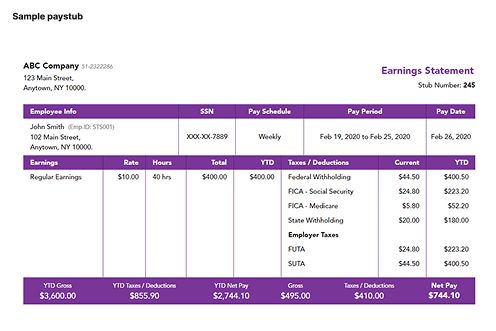
Maryland income tax is separate from federal income tax. An employee may therefore see federal withholding, Maryland state withholding, local Maryland withholding, Social Security tax, and Medicare tax on the same paycheck.
Maryland Income Tax Brackets for 2026
Maryland has ten taxable-income ranges and marginal rates from 2% to 6.5%. The first three brackets apply to relatively small portions of taxable income. Most middle-income taxpayers have income reaching the 4.75% bracket, while the 6.25% and 6.5% rates apply to higher taxable-income levels.
Single, Married Filing Separately, Dependent Taxpayers, and Fiduciaries
| Maryland taxable net income | State tax calculation |
| $1 to $1,000 | 2% |
| $1,001 to $2,000 | $20 plus 3% of income over $1,000 |
| $2,001 to $3,000 | $50 plus 4% of income over $2,000 |
| $3,001 to $100,000 | $90 plus 4.75% of income over $3,000 |
| $100,001 to $125,000 | $4,697.50 plus 5% of income over $100,000 |
| $125,001 to $150,000 | $5,947.50 plus 5.25% of income over $125,000 |
| $150,001 to $250,000 | $7,260 plus 5.5% of income over $150,000 |
| $250,001 to $500,000 | $12,760 plus 5.75% of income over $250,000 |
| $500,001 to $1 million | $27,135 plus 6.25% of income over $500,000 |
| More than $1 million | $58,385 plus 6.5% of income over $1 million |
Married Filing Jointly, Head of Household, and Qualifying Surviving Spouse
| Maryland taxable net income | State tax calculation |
| $1 to $1,000 | 2% |
| $1,001 to $2,000 | $20 plus 3% of income over $1,000 |
| $2,001 to $3,000 | $50 plus 4% of income over $2,000 |
| $3,001 to $150,000 | $90 plus 4.75% of income over $3,000 |
| $150,001 to $175,000 | $7,072.50 plus 5% of income over $150,000 |
| $175,001 to $225,000 | $8,322.50 plus 5.25% of income over $175,000 |
| $225,001 to $300,000 | $10,947.50 plus 5.5% of income over $225,000 |
| $300,001 to $600,000 | $15,072.50 plus 5.75% of income over $300,000 |
| $600,001 to $1.2 million | $32,322.50 plus 6.25% of income over $600,000 |
| More than $1.2 million | $69,822.50 plus 6.5% of income over $1.2 million |
These are marginal brackets. Reaching the 6.5% bracket does not mean that all income is taxed at 6.5%. Only the taxable income above the relevant threshold is subject to the highest rate.
Marginal Rate vs. Effective Maryland Tax Rate
The marginal tax rate applies to the highest portion of a taxpayer’s taxable income. The effective tax rate is the total tax paid divided by the taxpayer’s income.
For example, a single filer with exactly $100,000 in Maryland taxable net income would have a state tax calculation of:
$90 + 4.75% of $97,000 = $4,697.50
The taxpayer’s highest state marginal rate is 4.75%, but their effective state rate on $100,000 of taxable net income is approximately 4.70%.
Local income tax must then be added. A Montgomery County resident with $100,000 of Maryland taxable income would generally add $3,200 of local tax at the county’s 3.20% rate. Before credits, the combined state and local amount would be approximately $7,897.50.
This is only a simplified example. Gross salary and Maryland taxable net income are not necessarily the same because adjustments, deductions, exemptions, and other rules apply before final tax is calculated.
Maryland Local Income Tax Rates for 2026
Maryland’s 23 counties and Baltimore City impose local income tax. For 2026, rates range from 2.25% to 3.30%.
The applicable local rate is generally based on the taxpayer’s county of residence as of the last day of the tax year. It is not normally determined by the location of the taxpayer’s employer.
2026 Maryland County Income Tax Rates
| County or jurisdiction | 2026 local rate |
| Allegany County | 3.20% |
| Anne Arundel County | 2.70% to 3.20% |
| Baltimore City | 3.20% |
| Baltimore County | 3.20% |
| Calvert County | 3.20% |
| Caroline County | 3.20% |
| Carroll County | 3.03% |
| Cecil County | 2.74% |
| Charles County | 3.03% |
| Dorchester County | 3.30% |
| Frederick County | 2.25% to 3.20% |
| Garrett County | 2.65% |
| Harford County | 3.06% |
| Howard County | 3.20% |
| Kent County | 3.30% |
| Montgomery County | 3.20% |
| Prince George’s County | 3.20% |
| Queen Anne’s County | 3.20% |
| St. Mary’s County | 3.20% |
| Somerset County | 3.20% |
| Talbot County | 2.40% |
| Washington County | 2.95% |
| Wicomico County | 3.20% |
| Worcester County | 2.25% |
Allegany County increased its local rate to 3.20% for 2026, while Kent County increased its rate to 3.30%. Most other fixed county rates remained unchanged.
Anne Arundel County Rates
Anne Arundel County uses income-based local rates.
For single filers, married taxpayers filing separately, and dependent taxpayers, the rates are:
- 2.70% up to $50,000
- 2.94% from $50,001 through $400,000
- 3.20% above $400,000
For joint filers, heads of household, and qualifying surviving spouses, the thresholds are:
- 2.70% up to $75,000
- 2.94% from $75,001 through $480,000
- 3.20% above $480,000
The official tax instructions and computation method should be used rather than applying one listed percentage to all income without considering the county’s calculation rules.
Frederick County Rates
Frederick County also uses income-based rates.
For single filers, married taxpayers filing separately, and dependent taxpayers:
- 2.25% for income up to $25,000
- 2.75% from $25,001 through $50,000
- 2.96% from $50,001 through $150,000
- 3.20% at $150,001 or more
For joint filers, heads of household, and qualifying surviving spouses:
- 2.25% for income up to $25,000
- 2.75% from $25,001 through $100,000
- 2.96% from $100,001 through $250,000
- 3.20% at $250,001 or more
Frederick taxpayers should use the applicable local tax worksheet because the correct rate depends on both taxable income and filing status.
How Is Maryland Taxable Income Calculated?
Maryland income-tax calculations generally begin with federal adjusted gross income. Maryland additions and subtractions are then applied to determine Maryland adjusted gross income.
The basic process is:
- Prepare the federal income-tax return.
- Transfer federal adjusted gross income to the Maryland return.
- Apply required Maryland additions.
- Apply eligible Maryland subtractions.
- Claim the standard deduction or Maryland itemized deductions.
- Apply personal exemptions when eligible.
- Calculate state income tax.
- Calculate county or Baltimore City income tax.
- Add any additional capital gains tax.
- Subtract credits, withholding, and estimated payments.
Maryland specifically advises taxpayers to prepare their federal return first because the state return begins with federal adjusted gross income.
Maryland Standard Deduction
Maryland allows an individual to use the state standard deduction even when the taxpayer’s federal deduction choice differs in certain situations. However, a taxpayer who uses the federal standard deduction generally cannot claim Maryland itemized deductions.
Maryland law provides base standard deductions of $3,350 for single filers and married taxpayers filing separately, and $6,700 for joint filers, heads of household, and qualifying surviving spouses. Beginning with the 2026 tax year, these amounts are subject to a statutory cost-of-living adjustment. Taxpayers should use the final 2026 Maryland instructions when calculating the adjusted deduction.
Maryland also provides personal exemptions, although the available amount can be reduced for taxpayers with higher federal adjusted gross income.
Who Must File a Maryland Tax Return?
A Maryland resident generally must file a state return when they are required to file a federal return and their Maryland gross income reaches the filing threshold for their filing status.
A return may also be required when Maryland additions cause income to exceed the filing threshold, even if a federal return was not otherwise required. A person may file voluntarily to claim a refund of withholding or a refundable credit.
The final filing thresholds for income earned during 2026 should be taken from the official 2026 resident and nonresident tax booklets.
Which Maryland Tax Form Should You Use?
Full-year and part-year Maryland residents generally use Form 502.
Nonresidents generally use:
- Form 505, Maryland Nonresident Income Tax Return
- Form 505NR, Nonresident Income Tax Computation
Form 515 may apply to certain nonresidents who live in jurisdictions that impose a local income or earnings tax on Maryland residents. Amended resident returns are generally filed using Form 502X, while nonresidents use Form 505X.
Returns reporting income earned during the 2026 tax year will normally be filed in 2027. Taxpayers should check the final Comptroller instructions for the exact deadline and any filing extensions.
Maryland Residency and the 183-Day Rule
A person is generally a Maryland resident when Maryland is their domicile on the last day of the tax year.
A person domiciled elsewhere may also be treated as a Maryland statutory resident when both conditions apply:
- The person maintains a place of abode in Maryland for more than six months of the tax year.
- The person is physically present in Maryland for at least 183 days during the year.
A statutory resident can be taxed by Maryland on income from sources both inside and outside the state.
Domicile is the location a person considers their permanent home and intends to return to. Maryland may consider the location of a person’s home, family, employment, personal property, financial accounts, driver’s license, voter registration, and other personal connections.
A person moving out of Maryland should retain records showing when the move occurred and what steps were taken to establish a new domicile.
Maryland Nonresident Income Tax
A Maryland nonresident is generally taxed on Maryland-source income rather than income from all sources.
Maryland-source income can include:
- Wages for services performed in Maryland
- Business or professional income earned in Maryland
- Rental income from Maryland property
- Income from tangible property located in Maryland
- Gains connected with Maryland real property
- Maryland gambling winnings
- Partnership or S corporation income allocated to Maryland
Nonresidents are subject to the applicable state tax brackets and a special nonresident tax. For 2026 withholding purposes, the special nonresident rate is 2.25%, equal to the lowest Maryland local income-tax rate.
The nonresident tax calculation uses Form 505NR to determine the portion of income attributable to Maryland.
Maryland Tax Reciprocity
Maryland has reciprocal wage-tax agreements with Pennsylvania, Virginia, West Virginia, and Washington, D.C.
A resident of one of these jurisdictions whose only Maryland-source income is qualifying wages may generally be exempt from Maryland state income tax on those wages. The employee can normally claim a withholding exemption using Form MW507.
Reciprocity generally applies to employee compensation such as:
- Wages
- Salaries
- Tips
- Commissions
- Other compensation for personal services
It does not automatically cover:
- Self-employment income
- Business income
- Partnership distributions
- Rental income
- Capital gains
- Income from Maryland real estate
Except for the West Virginia agreement, reciprocity may not apply when the person maintains a place of abode in the work state for more than six months and is physically present there for at least 183 days.
Maryland does not have the same wage-tax reciprocity arrangement with Delaware. A Delaware resident working in Maryland may therefore face Maryland filing and withholding requirements.
Maryland Paycheck Withholding
Maryland paycheck withholding normally includes both state and local income tax for residents. The local portion is based on the employee’s county or Baltimore City residence.
Employees use Form MW507 to report exemptions, request additional withholding, or claim an applicable reciprocity exemption. Withholding is a payment toward the employee’s expected annual tax bill, not a separate tax.
A worker’s final liability may differ from the amount withheld because of:
- Multiple jobs
- Spousal income
- Bonuses and commissions
- Self-employment income
- Investment income
- Capital gains
- A change of county
- A move into or out of Maryland
- Deductions and tax credits
Employees should submit a new MW507 after a significant change in residency, exemptions, marital status, or expected income.
Maryland Capital Gains Tax
Maryland generally includes taxable capital gains in ordinary state taxable income. For qualifying high-income taxpayers, Maryland also imposes an additional 2% tax on certain net capital gain income.
The additional tax applies when an individual’s federal adjusted gross income exceeds $350,000, regardless of filing status. It is calculated on applicable net capital gain included in Maryland adjusted gross income. Form 502CG is used to report and calculate the additional amount.
This means an affected gain may be subject to:
- Maryland’s ordinary state income-tax brackets
- Maryland local income tax
- The additional 2% capital gains tax
- Federal capital gains tax
Certain gains are excluded from the additional 2% tax. These include qualifying gains from a taxpayer’s primary residence when the property meets the statutory requirements and sells for less than $1.5 million. Gains within qualifying retirement arrangements, including 401(k), 403(b), 457(b), IRA, Roth IRA, and similar plans, are also excluded from the additional tax.
Stock sales, cryptocurrency gains, business-sale gains, real-estate gains, and capital gains passed through from an LLC, partnership, S corporation, estate, or trust may need to be reviewed separately.
Nonresident Real-Estate Withholding
When a nonresident individual sells Maryland real property, Maryland generally requires withholding at 8.75% of the payment unless an exemption or adjusted withholding procedure applies. The rate for nonresident entities is 8.25%.
The withholding is an advance payment toward possible Maryland tax. It is not necessarily the seller’s final tax liability. A taxpayer may be able to claim a refund if the amount withheld exceeds the actual tax due.
Maryland Income Tax for Self-Employed Workers
Self-employed Maryland residents generally pay state and local income tax on taxable business profits. Federal self-employment tax may also apply separately.
Freelancers, independent contractors, and sole proprietors may need to make quarterly estimated tax payments when withholding does not cover their expected Maryland liability. Maryland generally expects estimated payments when the amount owed after withholding and credits exceeds $500. Common payment dates are April 15, June 15, September 15, and January 15, subject to weekend and holiday adjustments.
LLC members, partners, and S corporation shareholders may also receive pass-through income. An eligible Maryland pass-through entity can elect entity-level taxation, while mandatory payments can apply for nonresident members.
For the 2026 tax year, Maryland issued special timing guidance for PTE elections. The Comptroller stated that the election or nonelection made with the first filing or payment after April 15, 2026 would generally control for that year. The additional 2% capital gains tax is not included in the entity-level PTE tax calculation and may need to be paid separately by an individual member.
Does Maryland Tax Retirement Income?
Maryland does not tax Social Security benefits or qualifying Railroad Retirement benefits. If these benefits are included in federal adjusted gross income, Maryland provides a subtraction that removes them from state and local taxable income.
For 2026, a qualifying taxpayer who is at least 65 years old or totally disabled may claim a pension exclusion of up to $40,600. The exclusion can apply to qualifying pension, annuity, 401(a), 401(k), 403(b), and 457(b) income.
Traditional IRAs, Roth IRAs, SEP plans, Keogh plans, and certain nonqualified deferred compensation arrangements do not qualify for the standard Maryland pension exclusion. The actual exclusion can also be reduced by Social Security or Railroad Retirement benefits included in the pension-exclusion calculation.
Military retirees and qualifying public-safety retirees may have access to separate Maryland retirement-income subtractions.
Maryland Tax Deductions and Credits
Maryland offers deductions, subtractions, exemptions, and credits that can reduce taxable income or the final tax bill.
Common provisions include:
- Standard or itemized deductions
- Personal exemptions
- Two-income married couple subtraction
- Maryland Earned Income Tax Credit
- Child and dependent care credit
- Poverty-level credit
- Credit for taxes paid to another state
- College savings deductions
- Student loan debt relief credit
- Homeowner and renter property-tax credits
- Pension and military retirement subtractions
A married couple filing jointly may generally subtract up to $1,200, or the taxable income of the spouse with the lower income if that amount is smaller, when both spouses have qualifying taxable income.
A Maryland resident who pays income tax to another state on the same income may qualify for a credit using Form 502CR. The credit helps reduce double taxation, but it does not always equal the full amount paid to the other state.
Maryland income-tax rates range from 2% to 6.5% for the 2026 tax year. Residents also generally pay county or Baltimore City income tax ranging from 2.25% to 3.30%.
The highest general combined state and local marginal rate is 9.80%. Certain taxpayers with federal adjusted gross income above $350,000 may also owe an additional 2% tax on applicable net capital gains.
Maryland residents and part-year residents generally use Form 502. Nonresidents normally use Form 505 and Form 505NR. Residents of Pennsylvania, Virginia, West Virginia, and Washington, D.C. may qualify for wage-tax reciprocity when their Maryland income consists only of eligible employee compensation.
Taxpayers should pay particular attention to their county of residence, the 183-day statutory-residency test, capital gains, interstate work arrangements, estimated-tax obligations, and retirement-income exclusions.
This article provides general information and is not personalized tax or legal advice.

Alexander Caldwell – Financial Expert
Alexander Caldwell is a financial expert specializing in payroll management, with over 12 years of experience in the industry. He earned his bachelor's degree in finance from the University of California, Berkeley. Throughout his career, Alexander has worked with businesses of all sizes, helping them streamline payroll processes and ensure compliance with tax regulations. At Online Pay Stub, he is dedicated to providing accurate and reliable payroll solutions, making it easier for employees and businesses to manage their financial records efficiently.


Comments (0)
Loading comments...


