
Massachusetts State Income Tax: Rates, Surtax, and Filing Rules 2026
Tuesday, Jul 28, 2026
· by Alexander Caldwell – Financial Expert
Massachusetts generally taxes wages, interest, dividends, and most long-term capital gains at a 5% state income tax rate in 2026.
Taxable income above $1,107,750 is also subject to an additional 4% surtax, creating a 9% marginal state rate on the portion exceeding that threshold. Short-term capital gains and gains from collectibles can be taxed under different rules.
Massachusetts does not use a traditional graduated bracket system for most ordinary income. However, the additional surtax and special capital gains rates mean that describing the state as having a simple flat 5% tax does not tell the whole story.
Massachusetts Income Tax at a Glance
| Tax item2026 rule | |
| General income tax rate | 5% |
| 4% surtax threshold | $1,107,750 |
| Rate on income above the threshold | Generally 9% |
| Short-term capital gains rate | 8.5% |
| Collectible gains rate | 12%, subject to a 50% deduction |
| Resident filing threshold | More than $8,000 |
| Full-year resident return | Massachusetts Form 1 |
| Nonresident and part-year return | Form 1-NR/PY |
| Employee withholding form | Form M-4 |
| Estimated tax threshold | More than $400 expected to be due |
| Child and Family Tax Credit | $440 per qualifying individual |
| Massachusetts EITC | Generally 40% of the federal EITC |
| Social Security benefits | Exempt from Massachusetts income tax |
The standard 5% rate applies to most wages, salaries, interest, dividends, business income, rental income, and long-term capital gains. The 4% surtax can apply in addition to the regular rate when total Massachusetts taxable income exceeds the annual threshold.
Does Massachusetts Have a State Income Tax?
Yes, Massachusetts imposes an individual state income tax. Most ordinary taxable income is taxed at 5%, but taxpayers with income above the surtax threshold can face an additional 4% tax.
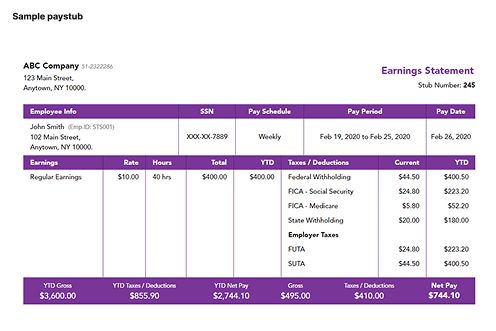
Massachusetts income tax is separate from federal income tax. An employee may therefore see federal income tax, Massachusetts income tax, Social Security tax, Medicare tax, and other deductions on the same paycheck.
Unlike Maryland and certain large cities in other states, Massachusetts does not generally add a separate county or municipal individual income tax. A Boston resident normally pays Massachusetts state income tax but does not pay an additional Boston personal income tax.
What Is the Massachusetts Income Tax Rate for 2026?
The general Massachusetts state income tax rate is 5% for the 2026 tax year. This rate applies to most earned and unearned income included in Massachusetts taxable income.
Income commonly taxed at 5% includes:
- Wages and salaries
- Tips and commissions
- Bonuses
- Interest income
- Dividend income
- Self-employment and business income
- Rental income
- Most pension and retirement distributions
- Most long-term capital gains
The 5% rate is applied after Massachusetts adjustments, deductions, exemptions, and other tax calculations. Gross salary and Massachusetts taxable income are therefore not always the same amount.
Does Massachusetts Have Tax Brackets?
Massachusetts does not have traditional income tax brackets for most ordinary income. A taxpayer earning $100,000 and a taxpayer earning $500,000 generally face the same 5% base rate on ordinary taxable income.
The system becomes progressive when income exceeds the annual surtax threshold. The additional 4% tax creates a higher marginal rate for high-income taxpayers. Special capital gains rates can also apply independently of the ordinary 5% rate.
How Does the Massachusetts Millionaires Tax Work?
Massachusetts imposes an additional 4% surtax on taxable income exceeding $1,107,750 for the 2026 tax year. Only the portion above the threshold is subject to the additional tax.
The surtax threshold changes annually for inflation:
| Tax yearSurtax threshold | |
| 2023 | $1,000,000 |
| 2024 | $1,053,750 |
| 2025 | $1,083,150 |
| 2026 | $1,107,750 |
A taxpayer with exactly $1,107,750 of Massachusetts taxable income would not owe the surtax. A taxpayer with income above that amount generally pays the additional 4% only on the excess.
The surtax can apply to:
- Wages and bonuses
- Business and pass-through income
- Interest and dividends
- Rental income
- Short-term and long-term capital gains
- Gains from the sale of a business
- Taxable gains from real estate
- Other income included in Massachusetts taxable income
Income that is exempt from Massachusetts tax is not included when determining the surtax. Taxpayers subject to the surtax also face specific electronic filing, payment, withholding, and estimated-tax requirements.
Does the Surtax Apply to All Income?
No. The additional 4% applies only to Massachusetts taxable income exceeding the annual threshold.
For ordinary income, this produces:
- A 5% rate on income up to $1,107,750
- A combined 9% marginal rate on ordinary income above $1,107,750
The same principle applies when capital gains push total taxable income above the threshold. However, the underlying capital gain may already be taxed at 5%, 8.5%, or another applicable rate before the surtax is added.
Is the Threshold Doubled for Married Couples?
The surtax threshold is applied to the taxable income reported on the Massachusetts return. It is not automatically doubled merely because a married couple files jointly.
Beginning with the 2024 tax year, couples filing a joint federal return generally must also file jointly in Massachusetts unless a specific exception applies. This rule can be significant when the spouses’ combined taxable income exceeds the surtax threshold.
Massachusetts Capital Gains Tax Rates
Massachusetts taxes different types of capital gains at different rates. Most long-term gains are taxed at 5%, while short-term and collectible gains receive different treatment.
Long-Term Capital Gains
Most gains from assets held for more than one year are taxed at 5%. This can include gains from:
- Stocks
- Exchange-traded funds
- Cryptocurrency
- Investment property
- Business interests
- Other capital assets
The federal tax treatment and Massachusetts treatment may differ. A gain that receives a preferential federal rate can still be included in Massachusetts income at the state’s 5% rate.
Short-Term Capital Gains
Short-term gains from assets held for one year or less are generally taxed at 8.5%.
This rate can apply to short-term gains from stocks, cryptocurrency, business assets, real estate, and other capital investments. If total taxable income exceeds the 2026 surtax threshold, the additional 4% tax may also apply to the income above that threshold.
Collectible Gains
Long-term gains from collectibles are generally subject to a 12% rate and a 50% deduction. Collectibles may include certain artwork, antiques, coins, metals, stamps, and similar assets.
The actual calculation depends on the gain, available capital losses, the 50% deduction, and whether the taxpayer is also subject to the 4% surtax.
Real Estate Sales
Gains from a primary residence may qualify for the federal home-sale exclusion if the ownership and use requirements are met. Massachusetts generally begins with federal income concepts, but state-specific adjustments and surtax rules still need to be considered.
Starting November 1, 2025, sales or exchanges of Massachusetts real property with a gross sale price of at least $1 million can trigger Form NRW reporting requirements. Nonresident sellers may also face withholding obligations. The amount withheld is an advance payment and may not equal the seller’s final Massachusetts tax liability.
How Is Massachusetts Taxable Income Calculated?
Massachusetts taxable income generally starts with income reported for federal purposes, followed by state-specific additions, exclusions, deductions, exemptions, and classifications.
The basic calculation usually involves:
- Determining federal gross and adjusted gross income.
- Identifying income included in Massachusetts gross income.
- Separating income into the appropriate Massachusetts income classes.
- Applying state deductions and exemptions.
- Calculating tax using the applicable 5%, 8.5%, or collectible-gain rules.
- Adding the 4% surtax when applicable.
- Subtracting credits, withholding, and estimated payments.
Massachusetts does not simply adopt every federal tax rule. Some federal deductions and exclusions are treated differently for Massachusetts purposes.
Does Massachusetts Have a Standard Deduction?
Massachusetts does not use a general standard deduction equivalent to the federal standard deduction. It instead provides personal exemptions, dependent exemptions, specific deductions, and state tax credits.
Common Massachusetts deductions can include:
- Rent paid for a principal residence
- Certain commuting expenses
- Student loan interest
- Qualifying college tuition payments
- Certain childcare expenses
- Contributions to qualifying Massachusetts savings plans
- Certain Social Security, Medicare, and government pension contributions
Massachusetts renters can generally deduct 50% of rent paid for a principal residence in Massachusetts, up to a maximum deduction of $4,000. Separate-return limitations apply to married taxpayers filing separately.
Who Must File a Massachusetts Tax Return?
A full-year Massachusetts resident generally must file a state return when annual Massachusetts gross income is more than $8,000. This state filing requirement can apply even when the taxpayer is not required to file a federal return.
Full-year residents normally use Form 1.
Part-Year Residents
A part-year resident generally must file when annual Massachusetts gross income is more than $8,000.
A person is a part-year resident when they:
- Move into Massachusetts and establish residency during the year
- Move out of Massachusetts and terminate residency during the year
Part-year residents use Form 1-NR/PY and report income according to the resident and nonresident portions of the year.
Nonresidents
A nonresident may need to file when Massachusetts gross income exceeds the smaller of:
- $8,000
- The taxpayer’s prorated Massachusetts personal exemption
Nonresidents use Form 1-NR/PY. The same form is used by part-year residents, but the income allocation and exemption calculations differ.
When Is the Massachusetts Tax Return Due?
A Massachusetts personal income tax return is normally due on April 15 following the end of the tax year. Income earned during 2026 will generally be reported on a return filed in 2027.
Massachusetts provides an automatic six-month filing extension when the taxpayer qualifies and has paid at least 80% of the total tax due by the original filing deadline. The extension provides additional time to file, not additional time to pay.
Taxpayers should confirm the final 2027 filing date after the Massachusetts Department of Revenue publishes its 2026 forms and filing calendar.
Massachusetts Residency and the 183-Day Rule
A person can be treated as a Massachusetts full-year resident based on domicile or statutory residency. Residents are generally taxed on income from all sources, including income earned outside Massachusetts.
A person domiciled outside Massachusetts can still be considered a resident when both conditions apply:
- The person maintains a permanent place of abode in Massachusetts.
- The person spends more than 183 days in Massachusetts during the tax year.
Partial days generally count as Massachusetts days.
Domicile refers to the place considered a person’s permanent home. Factors that can affect a residency determination include:
- Location of the primary home
- Time spent in each state
- Family location
- Employment and business connections
- Driver’s license
- Vehicle registration
- Voter registration
- Financial accounts
- Personal possessions
- Address used on legal and financial documents
A person moving out of Massachusetts should retain travel records, housing documents, employment records, and evidence showing the establishment of a new domicile.
Massachusetts Income Tax for Nonresidents and Remote Workers
Nonresidents generally pay Massachusetts income tax only on Massachusetts-source income. Compensation for services physically performed in Massachusetts is normally Massachusetts-source income regardless of where the employer is located or where the payment is made.
A nonresident who works both inside and outside Massachusetts generally allocates compensation based on Massachusetts workdays compared with total workdays. A day partly worked in Massachusetts can be treated as a Massachusetts workday unless the employee proves that more than half of the workday was spent outside the state.
A person working entirely from a home outside Massachusetts for a Massachusetts employer is not automatically taxed solely because the company is located in Massachusetts. The location where services are performed is generally important.
However, special sourcing rules may apply to:
- Bonuses
- Deferred compensation
- Severance payments
- Noncompete payments
- Restricted stock
- Stock options
- Business and partnership income
Massachusetts can tax certain stock-option and deferred compensation income connected with earlier Massachusetts employment even when the taxpayer is a nonresident when the income is received.
A Massachusetts resident working in another state may qualify for a credit against Massachusetts tax for income taxes paid to that state, subject to statutory limits.
Massachusetts Paycheck Withholding
Employers generally withhold Massachusetts income tax from wages paid to Massachusetts residents and from wages earned by nonresidents for services performed in Massachusetts.
Employees use Form M-4 to report withholding exemptions and request additional withholding. Form M-4 is separate from federal Form W-4.
Massachusetts issued 2026 withholding tables using the 5% rate. The percentage method tables were also updated to account for the additional 4% surtax.
The amount withheld from a paycheck is not necessarily the employee’s final tax rate. Withholding can differ from final liability because of bonuses, multiple jobs, investment income, business income, exemptions, credits, and surtax exposure.
Massachusetts Income Tax for Self-Employed Workers
Self-employed Massachusetts residents generally pay the 5% personal income tax on taxable business profits. Federal self-employment tax may also apply separately.
Freelancers, independent contractors, sole proprietors, and business owners generally need to make estimated payments when they expect to owe more than $400 in Massachusetts tax on income not subject to withholding.
For 2026, estimated payments are generally due in four installments:
- April 15, 2026
- June 16, 2026
- September 15, 2026
- January 15, 2027
Taxpayers generally need to pay at least 80% of their annual Massachusetts liability through withholding and estimated payments to reduce the risk of underpayment penalties.
Massachusetts Pass-Through Entity Taxes
Eligible partnerships, S corporations, and certain trusts can elect to pay Massachusetts tax at the entity level. Massachusetts has separate entity-level elections for the regular 5% tax and, beginning in 2026, certain income above the surtax threshold.
Under Chapter 63D, an eligible pass-through entity can elect to pay a 5% excise. Qualified members generally receive a refundable credit equal to 90% of their share of the excise paid. The election is made annually and is generally irrevocable for that year.
A new Chapter 63E election applies for tax years beginning on or after January 1, 2026. An eligible pass-through entity can elect to pay a 4% excise on qualifying income allocated to members above the surtax threshold. Qualified members generally receive a refundable credit equal to 90% of their proportional share of the Chapter 63E tax paid.
These elections do not remove the owners’ personal filing obligations. Business owners should review both entity-level systems because the eligibility, income base, credits, registration, and payment procedures differ.
Does Massachusetts Tax Retirement Income?
Massachusetts does not tax Social Security benefits. Certain federal, Massachusetts, military, and qualifying reciprocal out-of-state government pensions can also be excluded.
Private pensions, traditional IRA distributions, 401(k) withdrawals, and other private retirement payments are generally taxable to the extent included in Massachusetts gross income. Massachusetts basis rules can sometimes produce a different taxable amount from the federal return.
U.S. military retirement pay is excluded from Massachusetts gross income. Certain out-of-state public pensions may also qualify for an exclusion when the other state provides comparable treatment for Massachusetts public pensions.
Massachusetts Tax Credits
Massachusetts provides several refundable and nonrefundable credits that can reduce the final income tax bill.
Child and Family Tax Credit
The refundable Child and Family Tax Credit is generally $440 for each qualifying individual.
Qualifying individuals can include:
- A dependent child under age 13
- A disabled dependent
- A disabled spouse
- A dependent age 65 or older
There is no general limit on the number of qualifying individuals for whom the credit can be claimed. Full-year nonresidents and married taxpayers filing separate returns generally cannot claim the credit.
Massachusetts Earned Income Tax Credit
The Massachusetts Earned Income Tax Credit generally equals 40% of the taxpayer’s qualifying federal EITC. It is refundable, meaning an eligible taxpayer can receive the unused amount even when the credit exceeds their Massachusetts tax liability.
Senior Circuit Breaker Credit
Qualifying residents age 65 or older may be eligible for the Senior Circuit Breaker Tax Credit when property taxes or qualifying rent exceed the applicable portion of household income.
Eligibility and the maximum credit depend on annual income, property value, residency, and age requirements.
Credit for Taxes Paid to Another State
A Massachusetts resident who pays income tax to another state on the same income may qualify for a credit. The credit is limited and may not equal the full amount paid to the other jurisdiction.
Final Summary
Massachusetts generally applies a 5% state income tax to wages, interest, dividends, business income, and most long-term capital gains in 2026.
Taxable income above $1,107,750 is subject to an additional 4% surtax. Only the amount above the threshold receives the additional tax. Short-term capital gains are generally taxed at 8.5%, while long-term collectible gains are taxed at 12%, subject to a 50% deduction.
Full-year residents with more than $8,000 in Massachusetts gross income generally file Form 1. Part-year residents and nonresidents generally use Form 1-NR/PY. Nonresidents are normally taxed only on Massachusetts-source income, while residents generally report income from all sources.
Self-employed taxpayers may need estimated payments when expected tax due exceeds $400. High-income taxpayers, business owners, investors, remote workers, and people moving into or out of Massachusetts should pay particular attention to the surtax, capital gains classifications, residency rules, workday allocation, and new 2026 pass-through entity provisions.
This article provides general information and is not personalized tax or legal advice.

Alexander Caldwell – Financial Expert
Alexander Caldwell is a financial expert specializing in payroll management, with over 12 years of experience in the industry. He earned his bachelor's degree in finance from the University of California, Berkeley. Throughout his career, Alexander has worked with businesses of all sizes, helping them streamline payroll processes and ensure compliance with tax regulations. At Online Pay Stub, he is dedicated to providing accurate and reliable payroll solutions, making it easier for employees and businesses to manage their financial records efficiently.


Comments (0)
Loading comments...


