Connecticut Finance Research: Income, Sales Tax and Pay
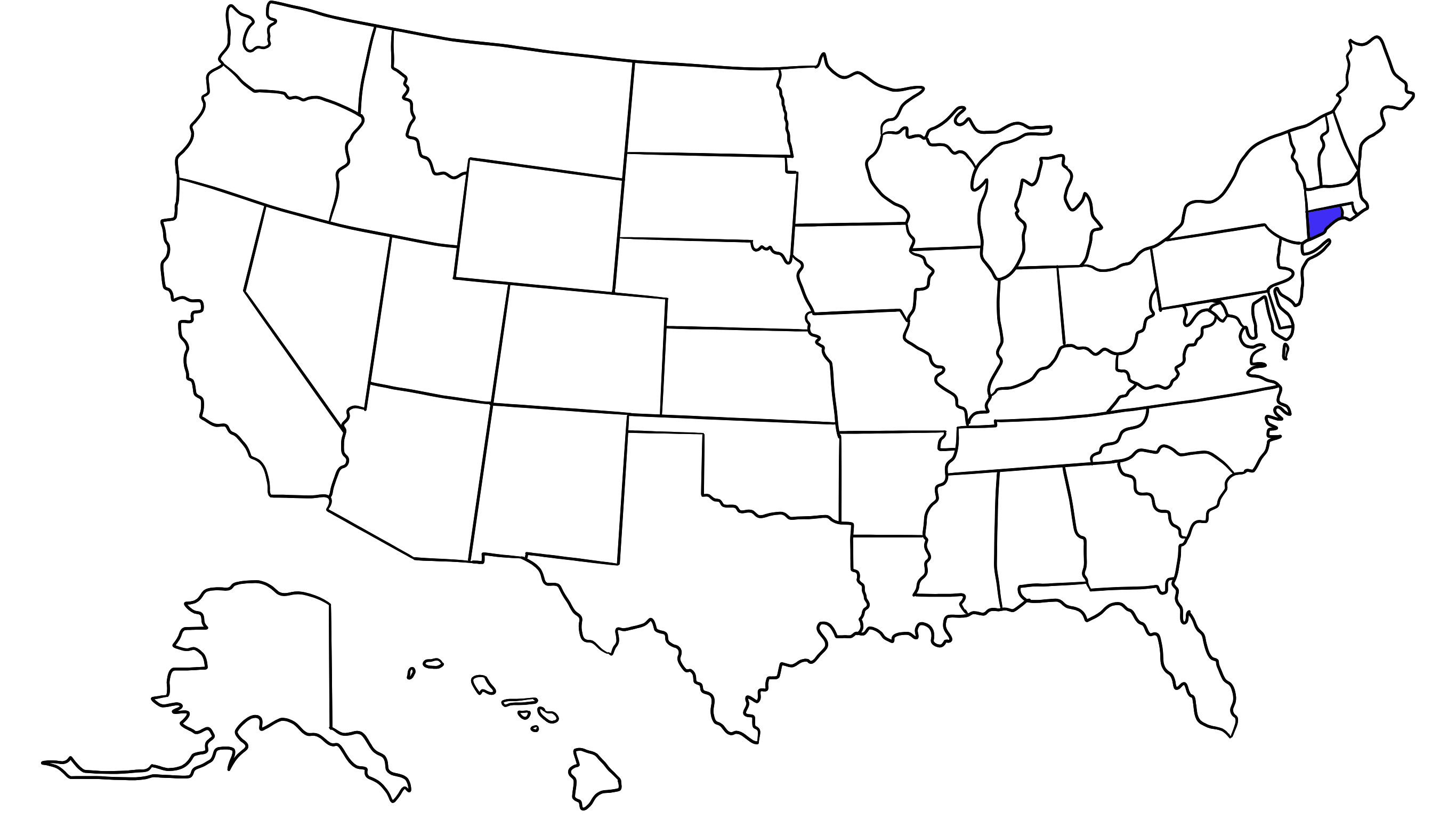
Connecticut did not join the flat-tax movement and it does not exempt wages either. Instead the state leans on a graduated income tax with seven rates, a single statewide sales tax of 6.35% and a small paid leave contribution. This guide walks through how those pieces show up on a Hartford worker's biweekly check in 2026 and where the surprises hide.
 Create Your Connecticut Pay Stub
Connecticut Resources
Jump straight to what you need.

Neither flat nor free: how the state pays its bills
Some states sell themselves on a single tax rate for every dollar earned. A few skip wage taxes altogether and lean on the cash register instead. Connecticut does neither. The Department of Revenue Services collects a graduated income tax with seven marginal rates, from 2% at the bottom to 6.99% at the top, alongside a 6.35% sales and use tax that reads the same in Hartford, Bridgeport and every other town because no municipality is allowed to add a general local sales tax.
The rate table is only the opening move. The CT-1040 calculation layers on a personal exemption that shrinks as income rises, a 2% rate phase-out add-back, a tax recapture for higher earners and a personal tax credit that can erase up to 75% of the calculated tax at modest incomes. Two Connecticut workers with identical gross pay can finish the year owing noticeably different amounts, which is why the withholding on a paycheck rarely matches a back-of-envelope bracket estimate.
The 2026 rate ladder, filing status by filing status
These are marginal rates. Crossing into the 5.5% band taxes only the dollars above $50,000 for a single filer, not the whole year's wages.
| Rate | Single or married filing separately | Married filing jointly |
|---|---|---|
| 2% | Up to $10,000 | Up to $20,000 |
| 4.5% | $10,000 to $50,000 | $20,000 to $100,000 |
| 5.5% | $50,000 to $100,000 | $100,000 to $200,000 |
| 6% | $100,000 to $200,000 | $200,000 to $400,000 |
| 6.5% | $200,000 to $250,000 | $400,000 to $500,000 |
| 6.9% | $250,000 to $500,000 | $500,000 to $1,000,000 |
| 6.99% | Over $500,000 | Over $1,000,000 |
Head of household thresholds sit between the two columns, with the 2% band ending at $16,000 and the 6.99% rate starting above $800,000. Three adjustments then reshape the result:
- Personal exemption. A single filer keeps the full $15,000 exemption through $30,000 of Connecticut AGI. It phases out in $1,000 steps and reaches zero above $44,000. Joint filers start at $24,000 and lose it above $71,000.
- 2% phase-out add-back. Above $56,500 of AGI a single filer starts giving back the benefit of the 2% band, up to a $250 add-back. For joint filers the line is $100,500 and the ceiling is $500.
- Tax recapture. Single filers above $105,000 of Connecticut AGI and joint filers above $210,000 owe an extra recapture amount that grows with income.
Five deductions on a Hartford paycheck, plus one that should never be there
Everything starts from gross pay. Connecticut's floor for that is $16.94 an hour as of January 1, 2026. Open a Connecticut earnings statement and the deduction column usually holds five lines: federal income tax, Social Security at 6.2% on wages up to $184,500, Medicare at 1.45% with no cap, Connecticut income tax withholding driven by Form CT-W4 and the 2026 withholding tables, then CT Paid Leave at 0.5% of wages up to the Social Security base.
The one line that should never appear is state unemployment insurance. Connecticut UI is an employer cost, charged on the first $27,000 of each worker's wages at a rate that starts at 1.90% for new employers. If it shows up as an employee deduction, something is wrong.
Connecticut also tells employers what a wage statement must show: hours worked, gross earnings, straight-time and overtime earnings, itemized deductions and net earnings. When a code on that statement looks unfamiliar, the common pay stub abbreviations such as FIT, FICA and SIT are the usual suspects.
A claims adjuster in Hartford, paid every two weeks
Insurance is the industry Hartford is known for, so take an insurance claims adjuster earning $31 an hour, working a standard 40-hour week and filing single with no dependents. Paid biweekly, that is 80 hours per check. Here is how the site's calculator splits the gross into taxes and take-home pay for 2026:
| Line | Amount per check |
|---|---|
| Gross pay (80 hours at $31.00) | $2,480.00 |
| Federal income tax | $213.75 |
| Connecticut state income tax | $76.02 |
| CT Paid Leave (0.5%) | $12.40 |
| Social Security (6.2%) | $153.76 |
| Medicare (1.45%) | $35.96 |
| Estimated take-home pay | $1,988.10 |
Figures come from the Online Paystub Connecticut paycheck calculator for 2026. Local taxes, health premiums and retirement contributions are not included.
Two things stand out. Connecticut withholding is not a clean 4.5% of gross, because the withholding method spreads the exemption and the rate bands across the year. The CT Paid Leave line is small but separate. It keeps coming out until wages pass the Social Security base. At $31 an hour the annualized wage lands above the $44,000 point where the single exemption is fully gone and past the $56,500 line where the 2% add-back begins, so the April return can differ from what 26 paychecks of withholding suggest. Running other hourly rates or pay frequencies through the Connecticut paycheck calculator shows how quickly those thresholds change the picture.
At the register: when 6.35% is not the number
Most taxable purchases in Connecticut carry the flat 6.35%. The exceptions are about what is bought, not where:
- Computer and data processing services, plus certain business-use software delivered electronically: 1%
- Vessels, vessel motors and qualifying vessel trailers: 2.99%
- Luxury goods above the statutory price thresholds: 7.75%
- Passenger car rentals of 30 consecutive days or less: 9.35%
Groceries for home consumption and prescription medicines are exempt. Two changes landed in 2026. Nonelectronic school supplies such as pens, notebooks, binders and lunch boxes became permanently exempt for personal purchases on July 1, 2026. The annual Sales Tax Free Week ran August 16 through 22 and now covers cleated shoes and backpacks along with most clothing and footwear under $300 per item.
Out-of-state sellers must register through myconneCT once they reach 200 retail sales into Connecticut and $100,000 in Connecticut receipts in the 12 months ending September 30. None of this belongs on a paycheck. Sales tax is a transaction tax and it should never appear as an employee deduction.
What the withholding tables never see
Withholding is a prepayment. The CT-1040 filed by April 15, 2027 settles the real bill. Several items only exist on that return:
- Connecticut's Earned Income Tax Credit equals 40% of the federal credit, plus an extra $250 for filers with at least one qualifying child. It is refundable, so it can push a low-wage household into refund territory.
- Social Security benefits are fully exempt when federal AGI is below $75,000 for single filers or $100,000 for joint filers, with a partial adjustment above those lines.
- Anyone expecting to owe $1,000 or more after withholding needs quarterly estimated payments on Form CT-1040ES, using 90% of 2026 tax or 100% of 2025 tax as the safe harbor.
- Part-year residents and nonresidents with Connecticut-source wages file Form CT-1040NR/PY instead.
For a small employer, the practical takeaway is to keep year-to-date columns accurate from the first payday, because the paid leave cap, the Social Security cap and the exemption phase-out all depend on cumulative wages. The year-to-date totals on each statement are what an employee will compare against the W-2 in January. Once the numbers are verified, the Connecticut pay stub generator can lay them out as an itemized statement.
Frequently Asked Questions
Does Connecticut have a flat income tax?
No. Connecticut uses seven marginal rates from 2% to 6.99% for 2026, with thresholds that depend on filing status. The final tax also reflects a personal exemption, a phase-out add-back, recapture and a personal tax credit.
Is there a local sales tax in Hartford or any other Connecticut town?
No. The 6.35% state rate applies everywhere. Only the type of item changes the rate, such as 1% on computer and data processing services or 9.35% on short car rentals.
What is the CT Paid Leave deduction on my check?
It is a 0.5% employee contribution on wages up to the Social Security wage base, remitted to the CT Paid Leave Authority. It is separate from Connecticut income tax withholding.
Why does my Connecticut withholding differ from what the bracket table suggests?
Withholding follows Form CT-W4 and the 2026 tables, which annualize wages and spread the exemption across pay periods. The annual return then adds the exemption phase-out, the 2% add-back, recapture and credits.
Should Connecticut unemployment tax appear on my earnings statement?
No. Unemployment insurance is an employer-paid tax on the first $27,000 of each worker's wages. Employees do not contribute to it.