Paystubs
What Is SDI on Your Paystub? State Disability Insurance Rates for 2026
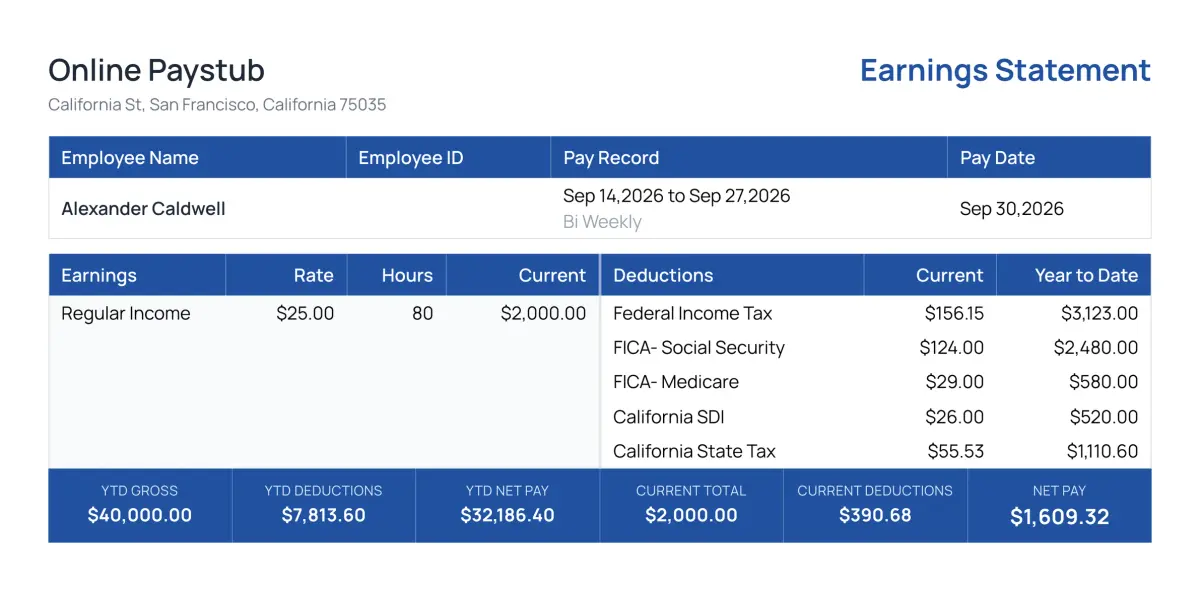
SDI is state disability insurance, a required deduction in California, New York, New Jersey, Rhode Island, Hawaii and Puerto Rico. The 2026 rates, labels and limits.
Your first pay stub is FREE.First pay stub FREE Use codewith at checkout.
Create yoursCategory
Paystub guides covering earnings, deductions, net pay and what a compliant pay stub should include.
20 articles · Page 1 of 2
SDI is state disability insurance, a required deduction in California, New York, New Jersey, Rhode Island, Hawaii and Puerto Rico. The 2026 rates, labels and limits.
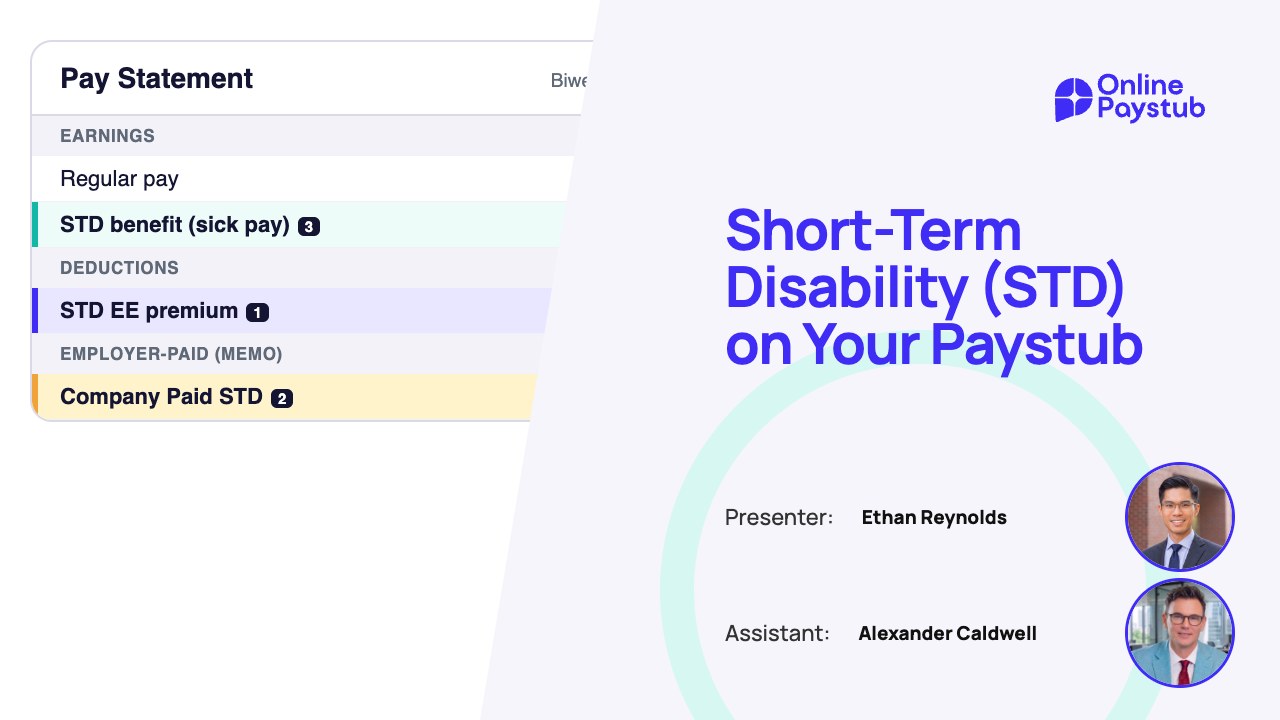
STD on a paystub means short-term disability insurance. Whether the line is your premium, your employer's share or benefits paid to you, and how it differs from state SDI.
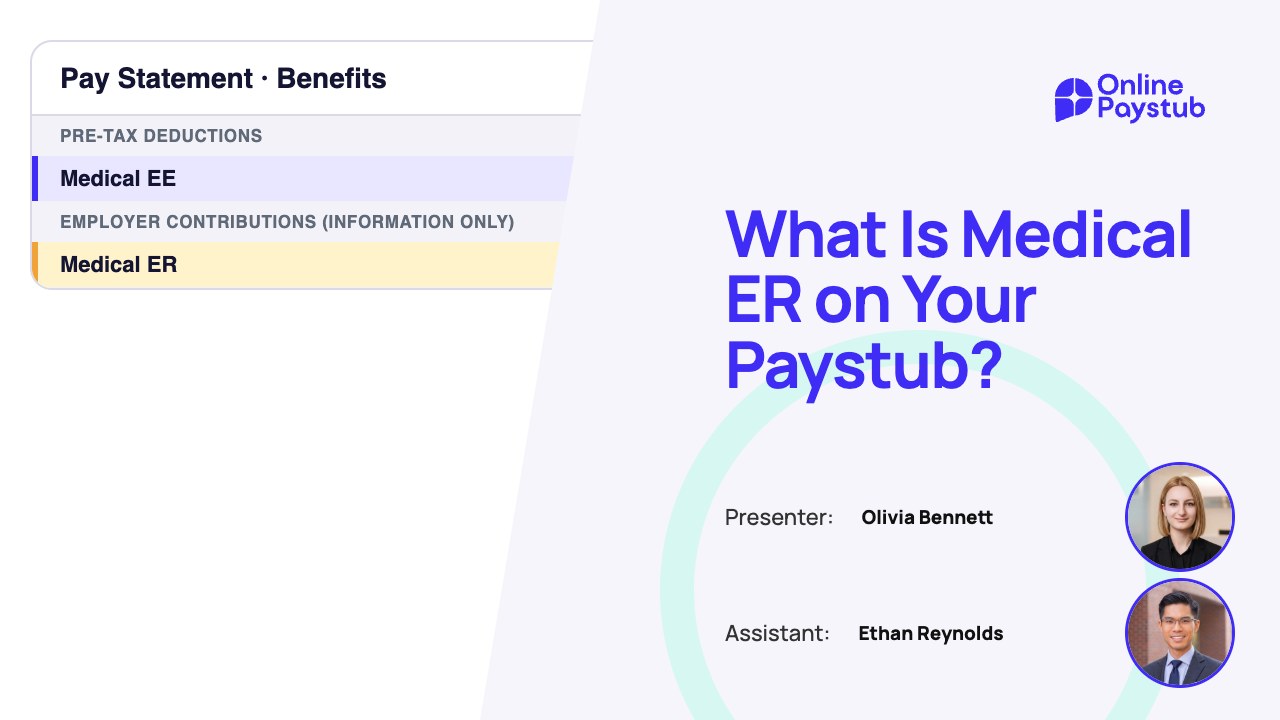
Medical ER, or ER Health, is what your employer pays toward your health insurance. Why it is not taken from your pay, what is normal and where it shows on your W-2.
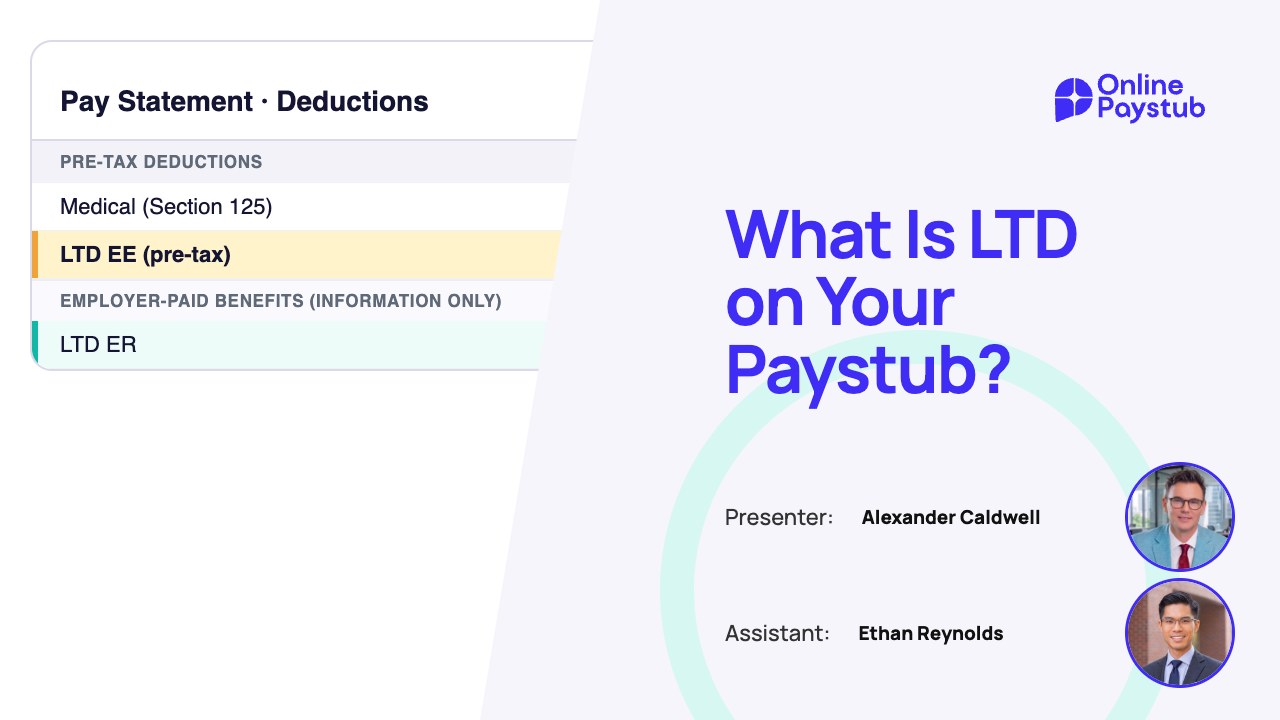
LTD is the premium for long-term disability insurance. Who pays it, why pre-tax or after-tax matters if you ever claim and how LTD can show up as earnings.
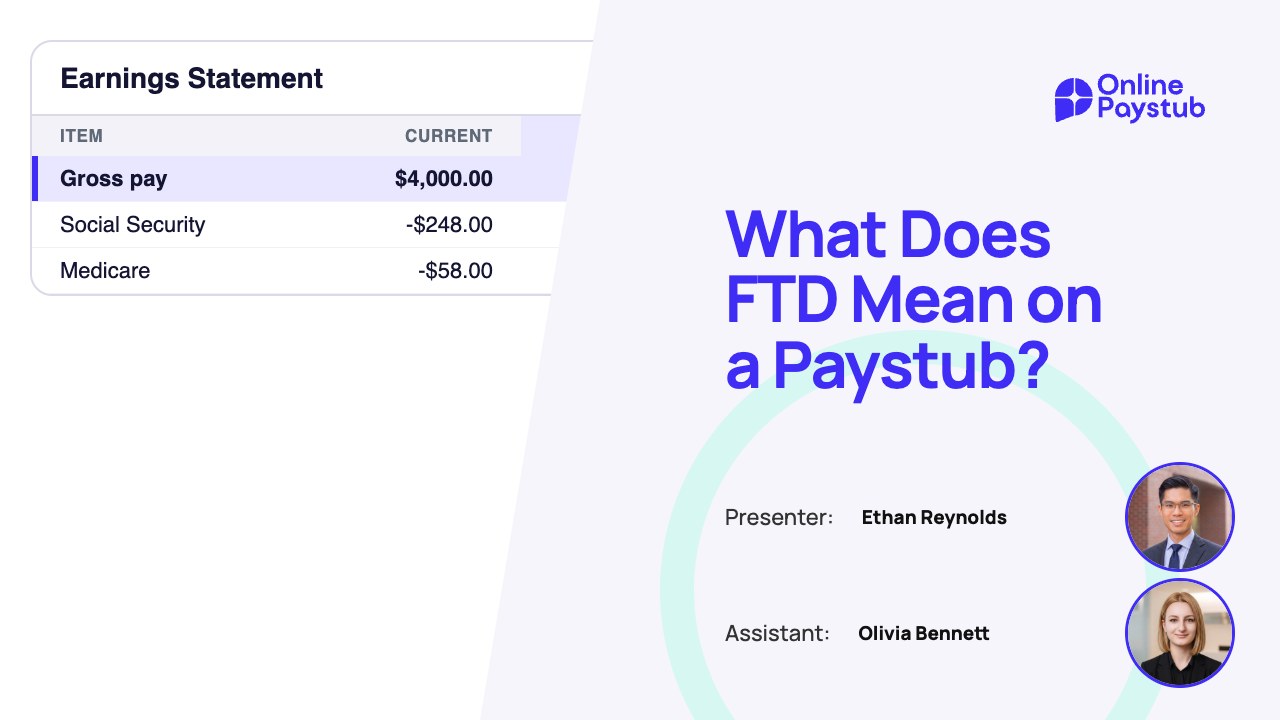
FTD on a paystub usually means fiscal year to date, a column common on teacher and school paystubs. How it differs from YTD and from a federal tax deposit.
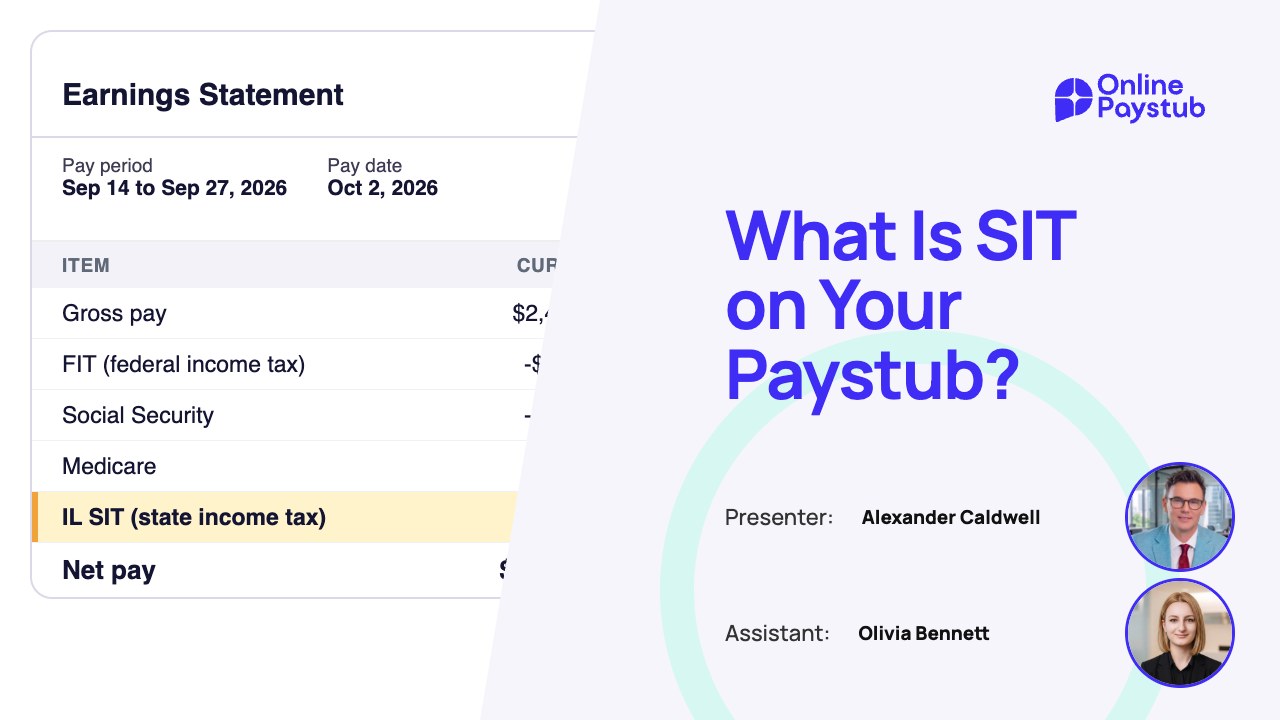
SIT withheld is the state income tax taken from each paycheck. What SIT, SWT and RES SIT mean, how the amount is calculated and why some paystubs show $0.
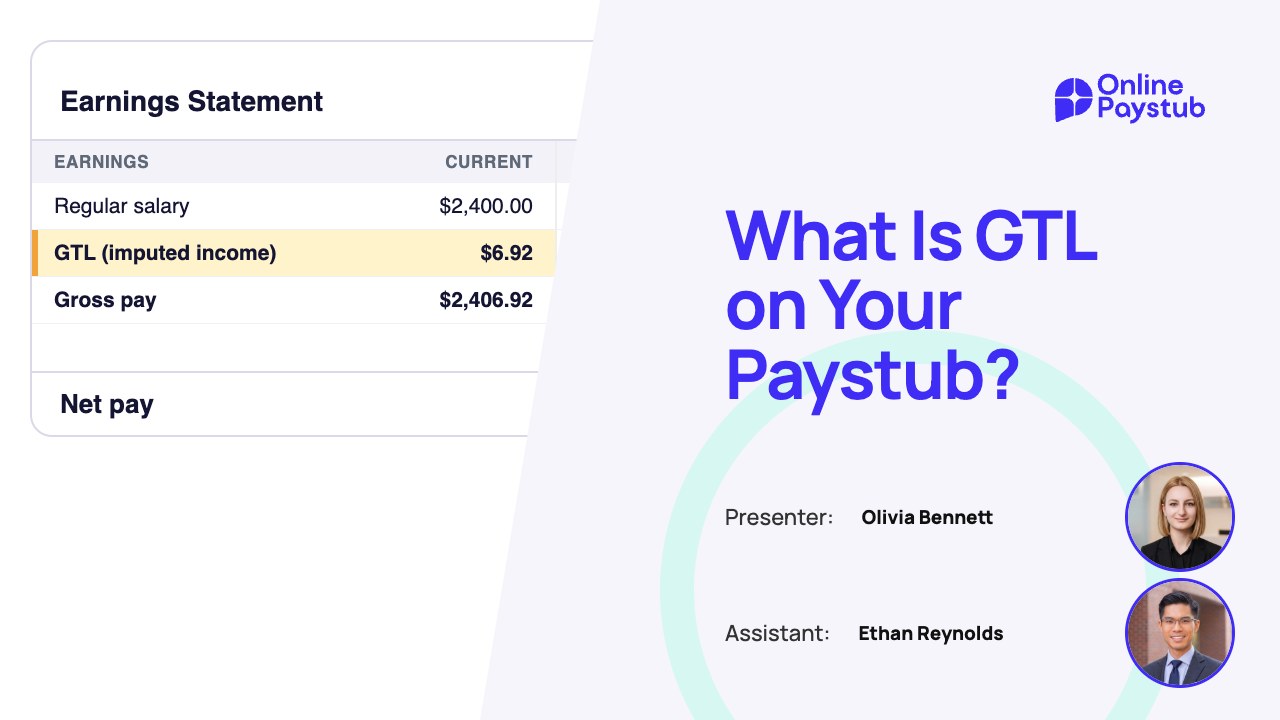
GTL is the taxable value of employer-paid group term life insurance above $50,000. Why it shows up as both an earning and a deduction and what it really costs.
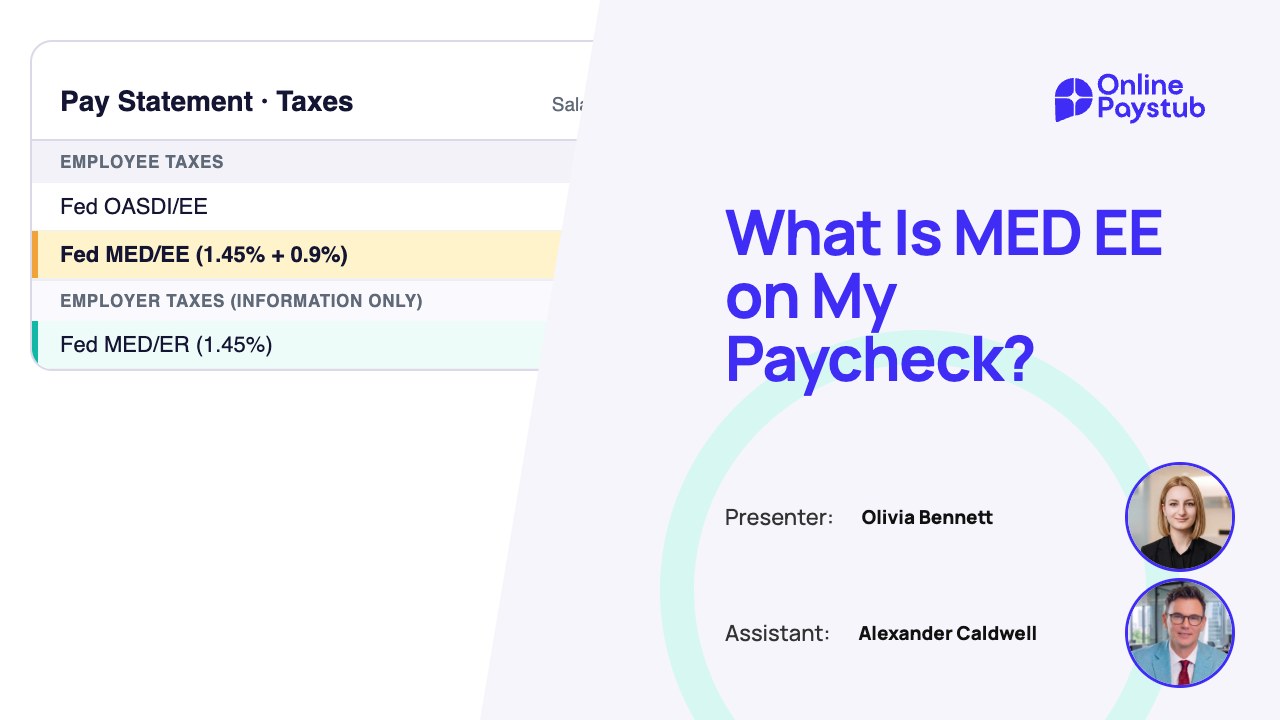
MED EE, or Fed MED/EE, is the 1.45% Medicare tax on every paycheck. How it is calculated, when the extra 0.9% starts, who is exempt and how it shows on your W-2.
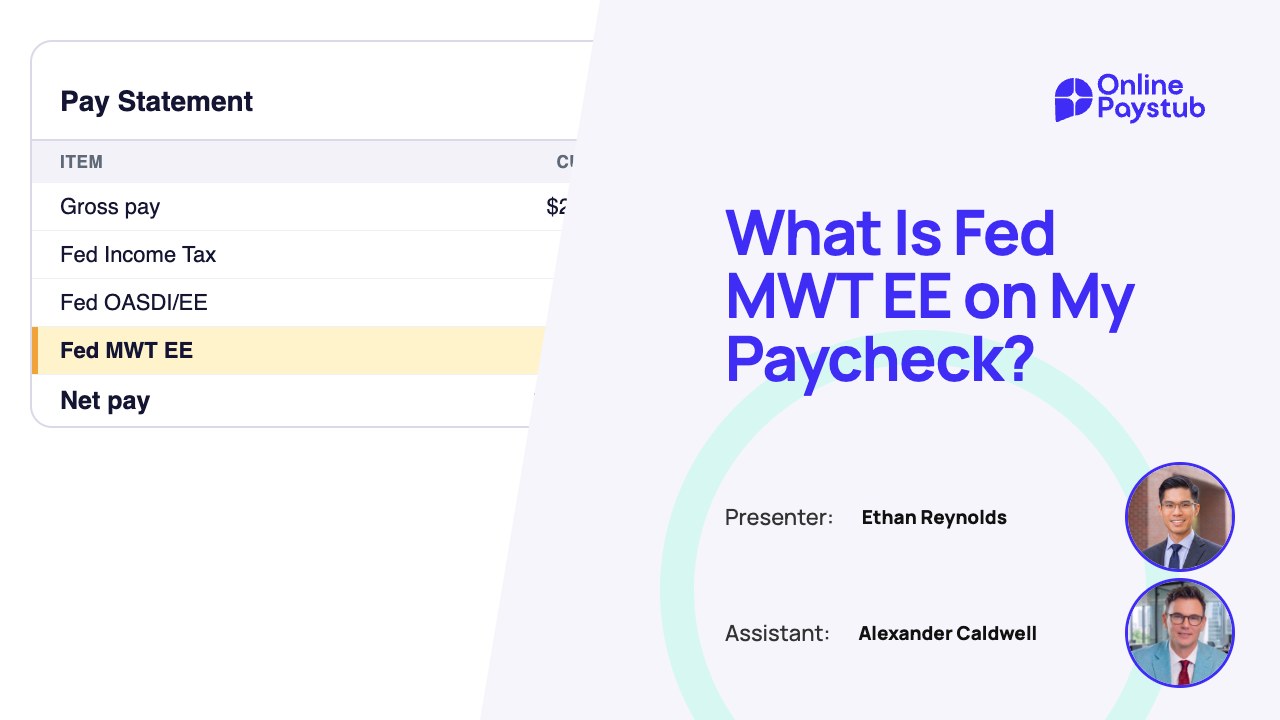
Fed MWT EE is usually the employee share of Medicare tax. How to confirm it with the 1.45% check and how it differs from FIT, FICA EE and OASDI EE.
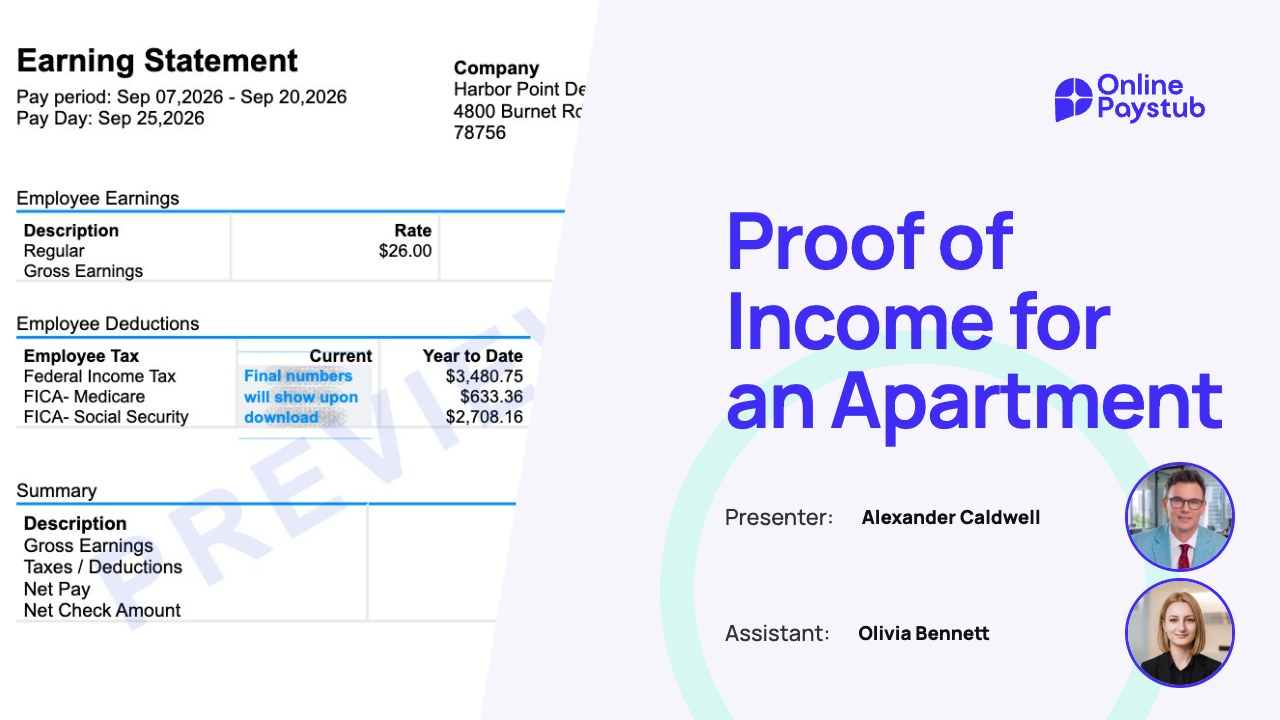
Pay stubs, W-2s, tax returns, bank statements or benefit letters: what landlords accept as proof of income, how the 3x rent rule works, how they verify it and what to do if you are self-employed.
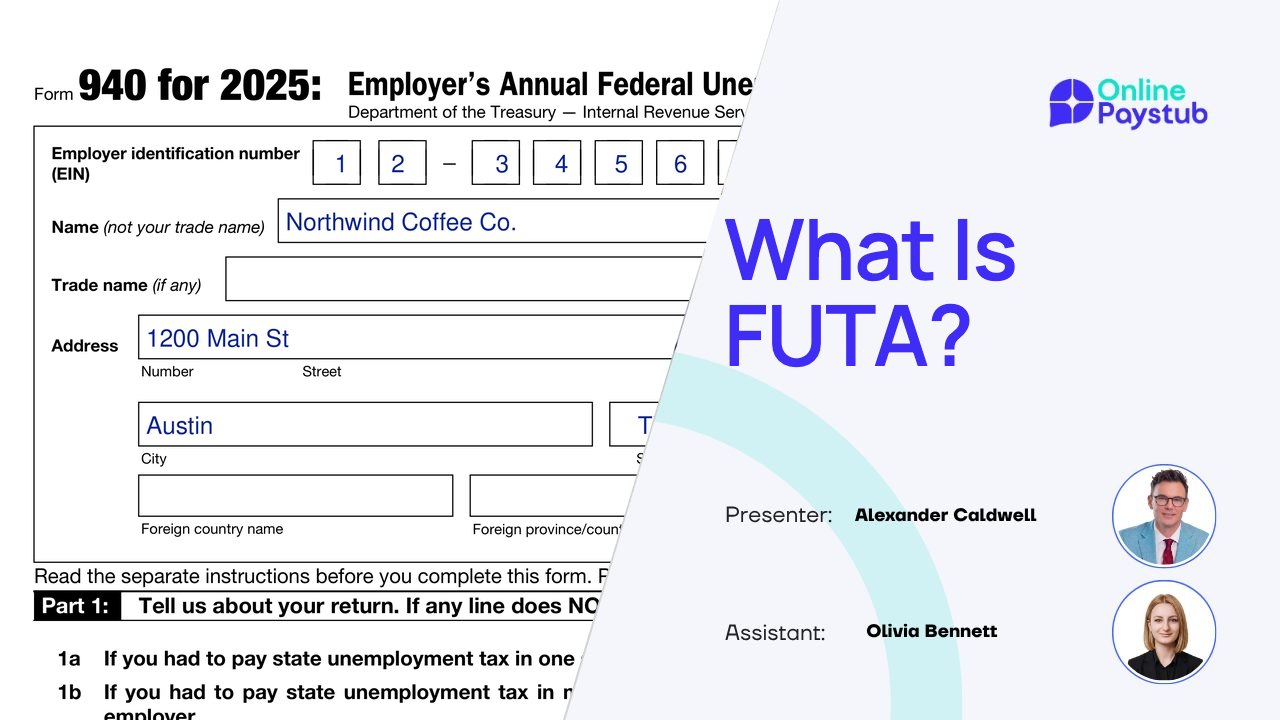
FUTA is a federal unemployment tax only employers pay: 6.0% on the first $7,000 of wages, usually 0.6% after the state credit. Rates, Form 940 and paystubs.
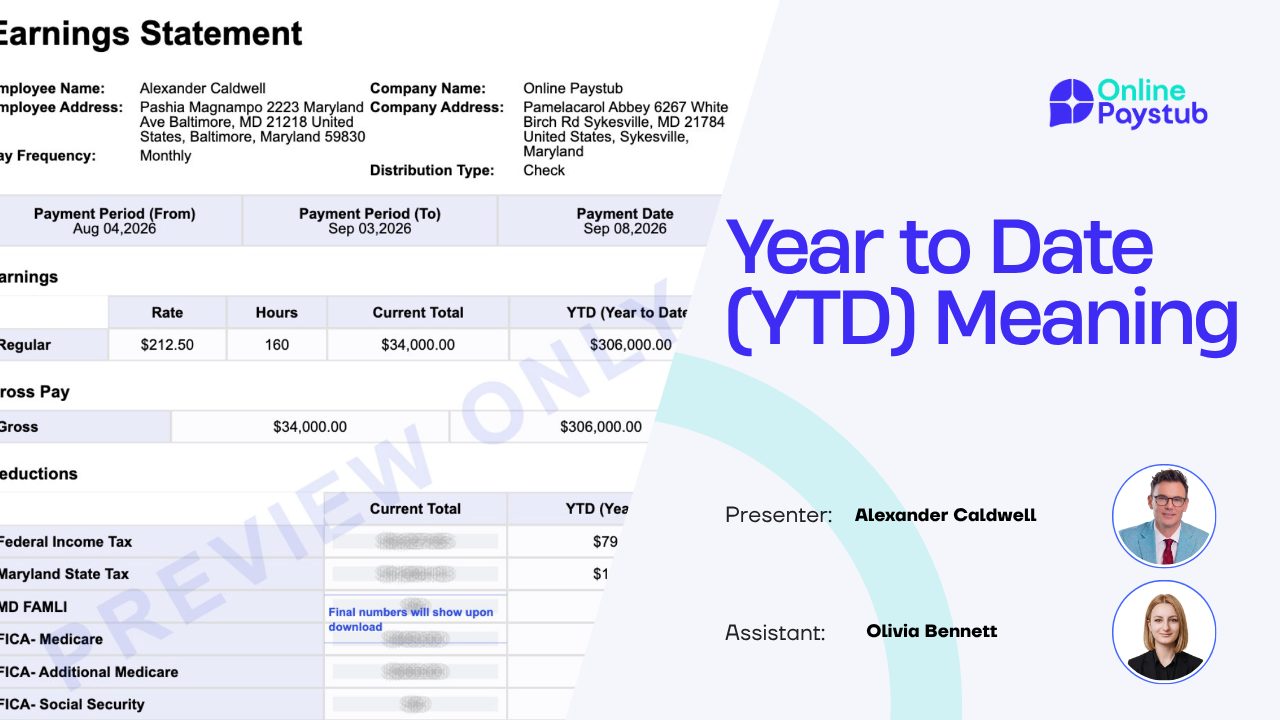
YTD means year-to-date: your totals so far this year. Where YTD appears, how it is calculated, when it resets and how it maps to your W-2.
A pay stub is the itemized record behind every payment an employer makes. It shows the hours or salary the pay was based on, the gross amount earned, each tax and deduction taken out and the net figure that reaches the bank account. Most stubs also carry year-to-date totals that build up with every pay date.
The guides in this category explain what each section of a stub means, how to read the abbreviations payroll systems print and how to use stubs as proof of income for a lease or a loan. If you want to see how the numbers themselves are produced, our guides on how gross pay becomes take-home pay walk through the calculation. At the end of the year your stubs feed into the annual wage statement, which is covered in our guides to reading your W-2 form.
Topics
Find the guide you need, from reading your first pay stub to state withholding rules and year-end tax forms.


 Meet the authors
Put the guide into practice
Enter company, employee and pay details. Federal, state and FICA taxes are calculated as you type, you review a free preview, then download a print-ready PDF.